The Morocco collection - jewelry of one thousand and one nights
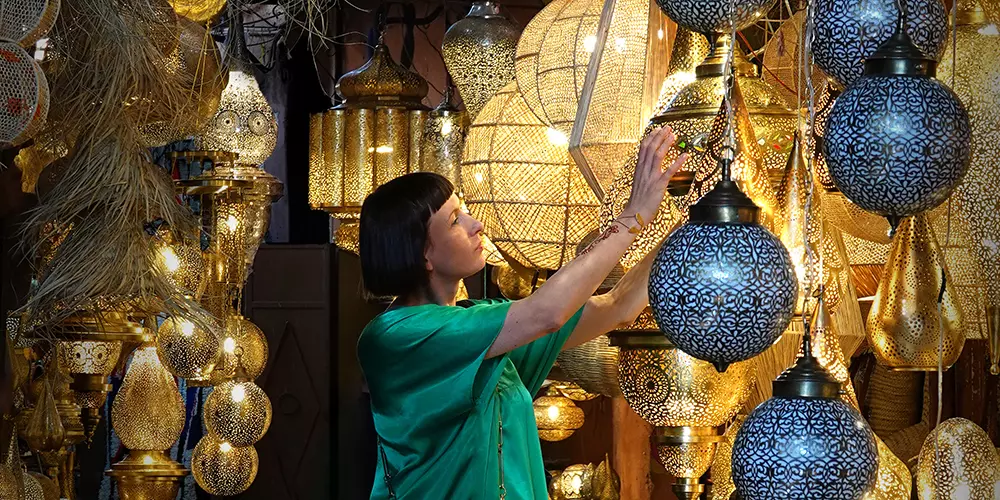
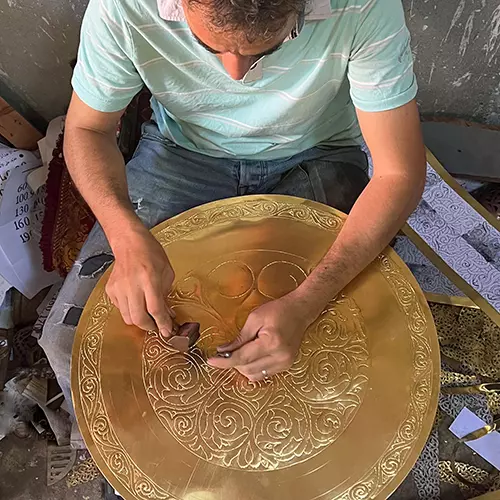
Morocco delights with its colors, flavors and richness of crafts, which caught the attention of Anna Orska. The artist, during her latest design trip, visited metalwork workshops where traditional Moroccan lamps - one of the most recognizable products of this African country - are made. The metal lanterns give off a diffused, muffled light, casting delightful reflections on the walls. The light shines through the intricate patterns of the openwork, imitating the starry sky over a desert landscape. Traditionally designed to be illuminated by candlelight, today they use electricity. However, they have additional power. In Morocco it is believed that they fill the room with barakah, or a state of spiritual grace. Amid the rhythmic clatter of hammers and the buzz of jewelers' saws, the designer decided to adapt this non-jewelry craft to jewelry forms.

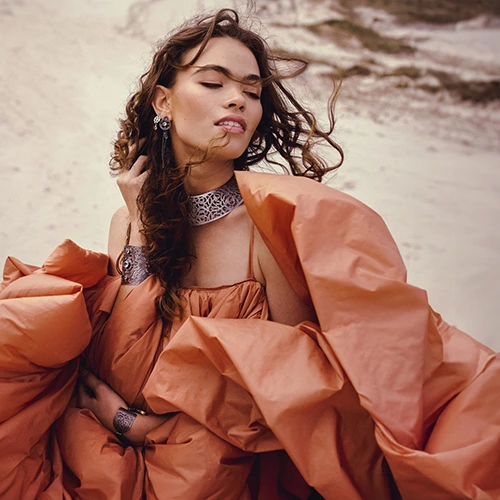

How was the Morocco collection jewelry created?
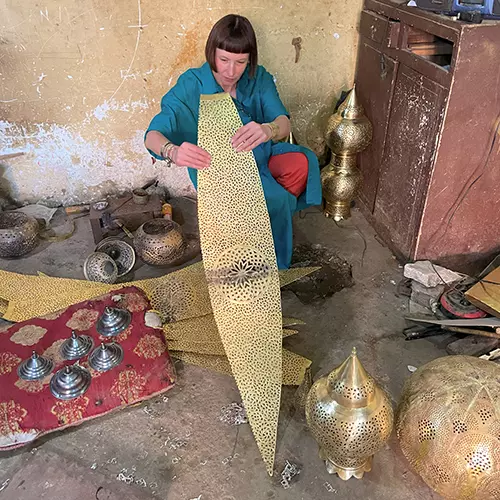
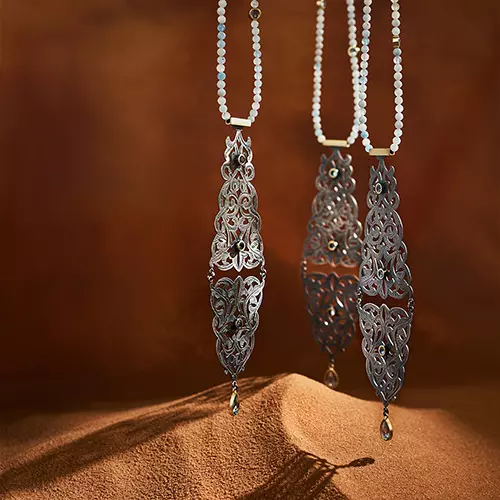
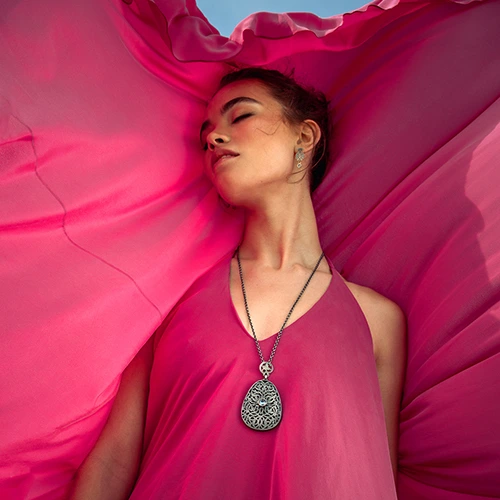
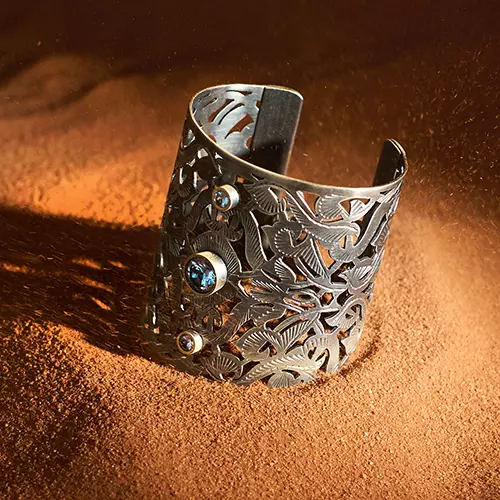
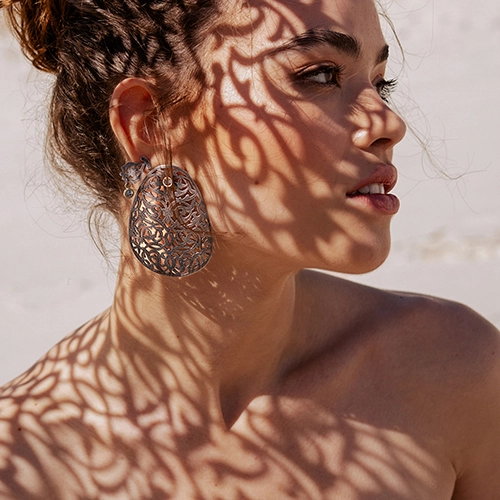
Learning about the country's crafts and culture, Anna Orska traced patterns on thin paper, which were then pasted onto sheet metal. The templates prepared in this way served as a model for masters specialized in specific activities, who cut, sawed and repoussed intricate ornaments according to the drawings. This resulted in lace-like compositions of rich openwork, decorated with flowers, leaves or finely interlaced vines.
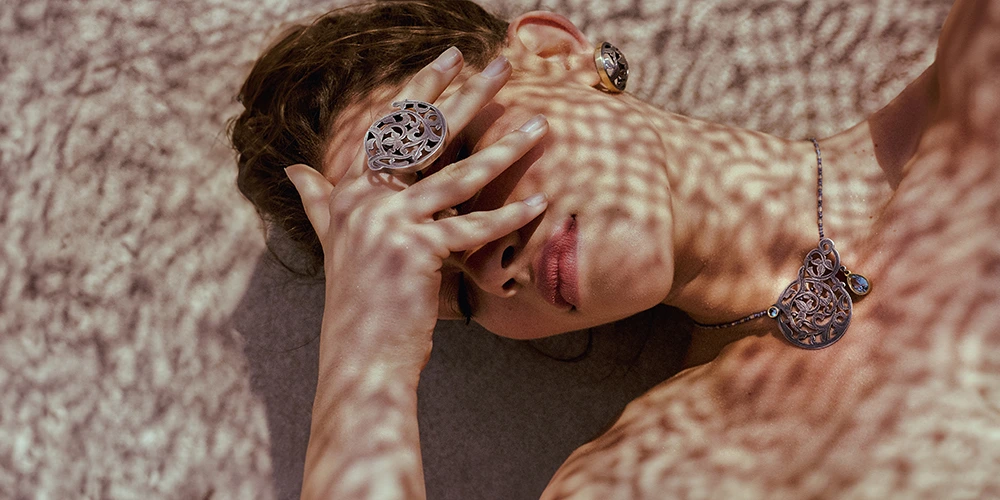
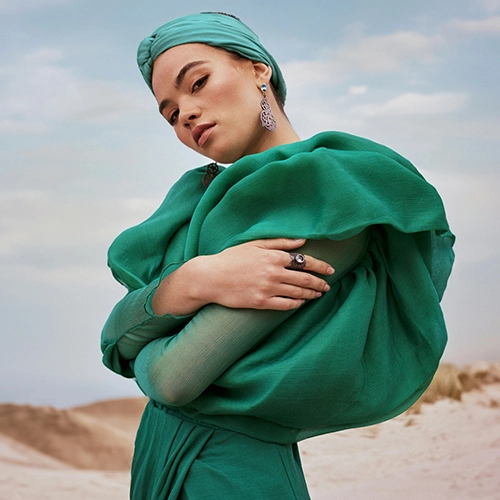
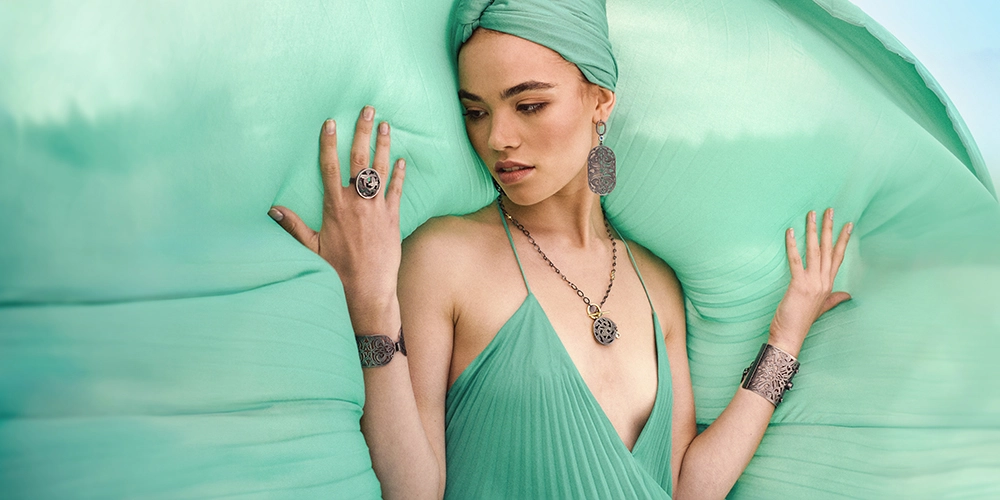
Handcrafted in the workshop of the Machnou brothers, the pieces came straight from Marrakech to the ORSKA atelier. Anna Orska added a touch of her own style to the rich design of Morocco. She prepared the elements, which are traditionally made of golden brass, from silver and nickel silver, additionally coating them with graphite oxidation to enhance the embossed patterns. She contrasted the dark texture of the main elements with gold-plated details in the form of stone settings, decorative links or ornament edges. She complemented many of the designs with sea-blue zirconias, and additionally she used faceted aquamarines and sapphires in necklaces and bracelets. The collection, which has a strong ethnic character, was given a more contemporary look, thanks to the skillful combination of minimalist accents with glamorous elements.
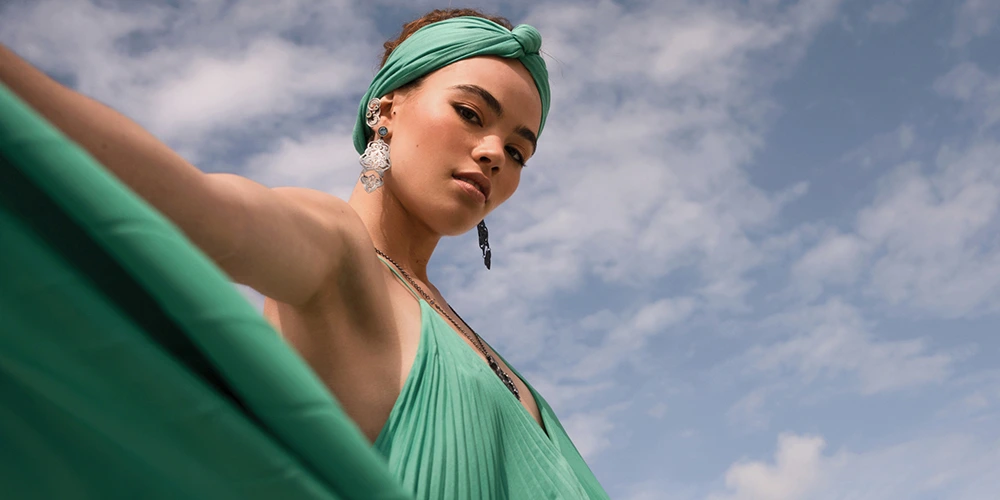
Travel inpirations
One of the inspirations for the Moroccan jewelry was the mashrabiya, or openwork covers for window and balconies, which on the one hand protected houses from the hot air, and on the other hand provided a shield for women, making them invisible to foreign eyes. Today, mashrabiya are used mainly as a decorative element, but they can also be found in mosques, where they separate the prayer section meant for women from the male gaze. ORSKA, adapting the ornaments adorning the mashrabiya to jewelry forms, symbolically moved them from the area of concealment into the area of interest, turning motifs that cover into eye-catching designs.
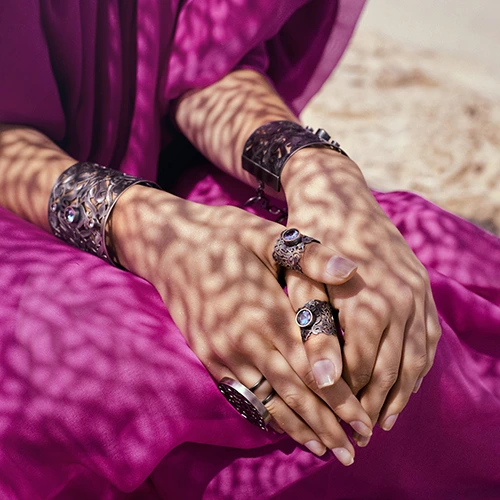

A journey through Moroccan traditional techniques
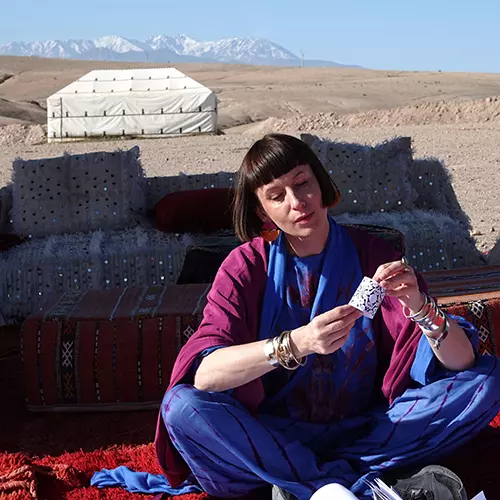
Morocco teaches that drawing from other cultures enriches. The same idea has guided Anna Orska's artisanal travels from the beginning, and she has visited Morocco as many as five times to choose from among various techniques the one she will translate into jewelry forms. Before all her attention was stolen by traditional metal lamps, she traveled to the workshops of weavers and dyers, learned the secrets of making gebs, tried wood carving and admired hand-cut ceramic zellij mosaics. Full descriptions of these adventures can be found on our blog.
Why Morocco?
- I chose Morocco because of the diversity of crafts. This country brings together a whole spectrum of workshops and artisans. Craftsmanship and handwork are appreciated, respected and very common here. Techniques intermingle in delightful ways and quietly blend into everyday life. I came to Africa precisely because of this vibrant craftsmanship, surrounding me from every side, popular, and practiced on every corner. - says Anna Orska.