A country that speaks color
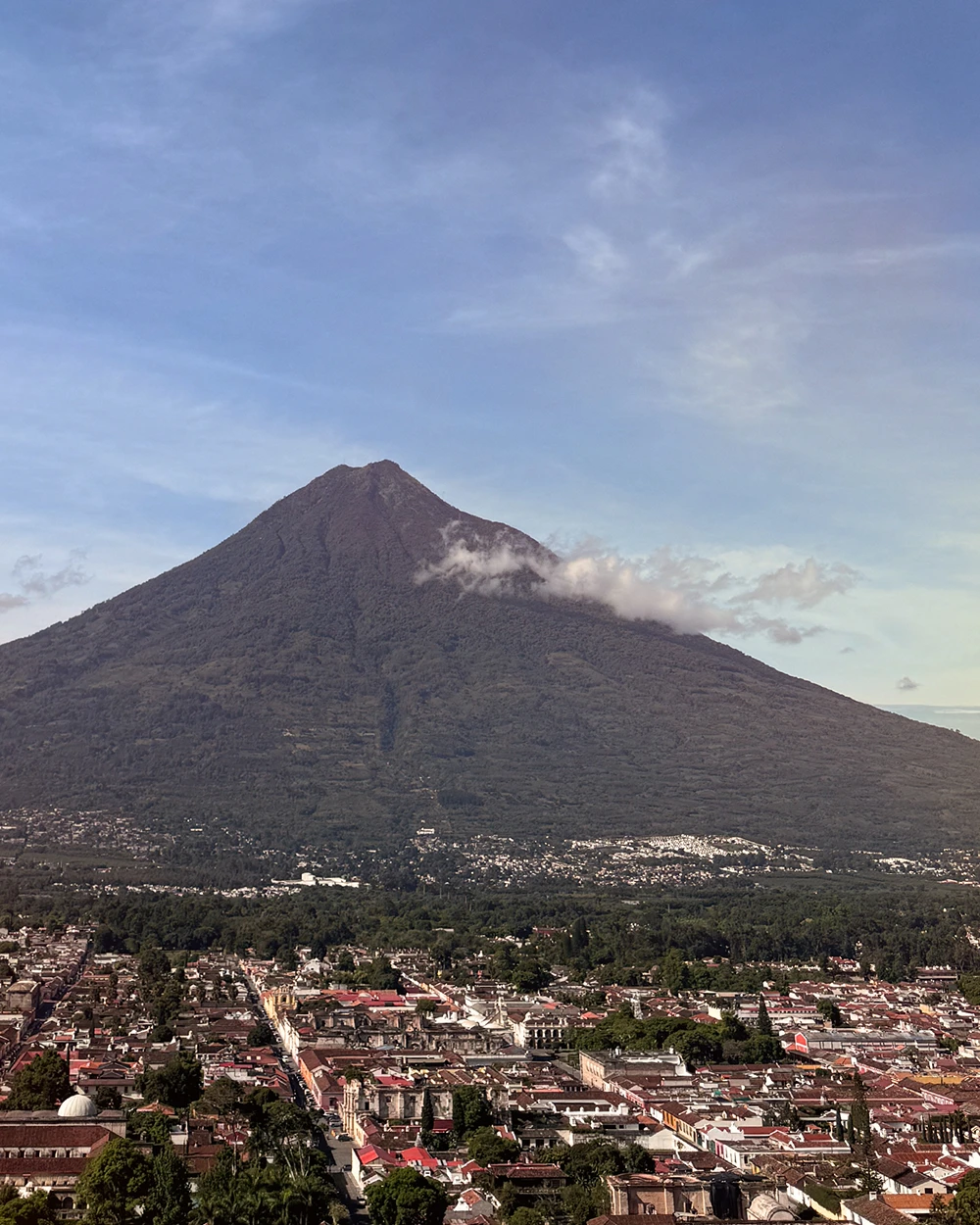
In Guatemala, colors matter. The green of the jungle, the blue of the lakes, the red of the earth, and the yellow of the sun—every shade tells a story. This is a country where tradition intertwines with everyday life like warp and weft. K'iche women weave their memories into fabric, and artisans transform raw stone into talismans. Amid the mountains and volcanoes, jade is born—a sacred Mayan stone, a symbol of balance and life. Here, everything has rhythm: from the footsteps in the market in Chichicastenango to the sound of workshops in Antigua. Guatemala is more than a place—it is the energy of color, the touch of nature, and the spirit of the past that inspires the present. It is a country that reminds us that beauty arises from patience, passion, and authenticity.
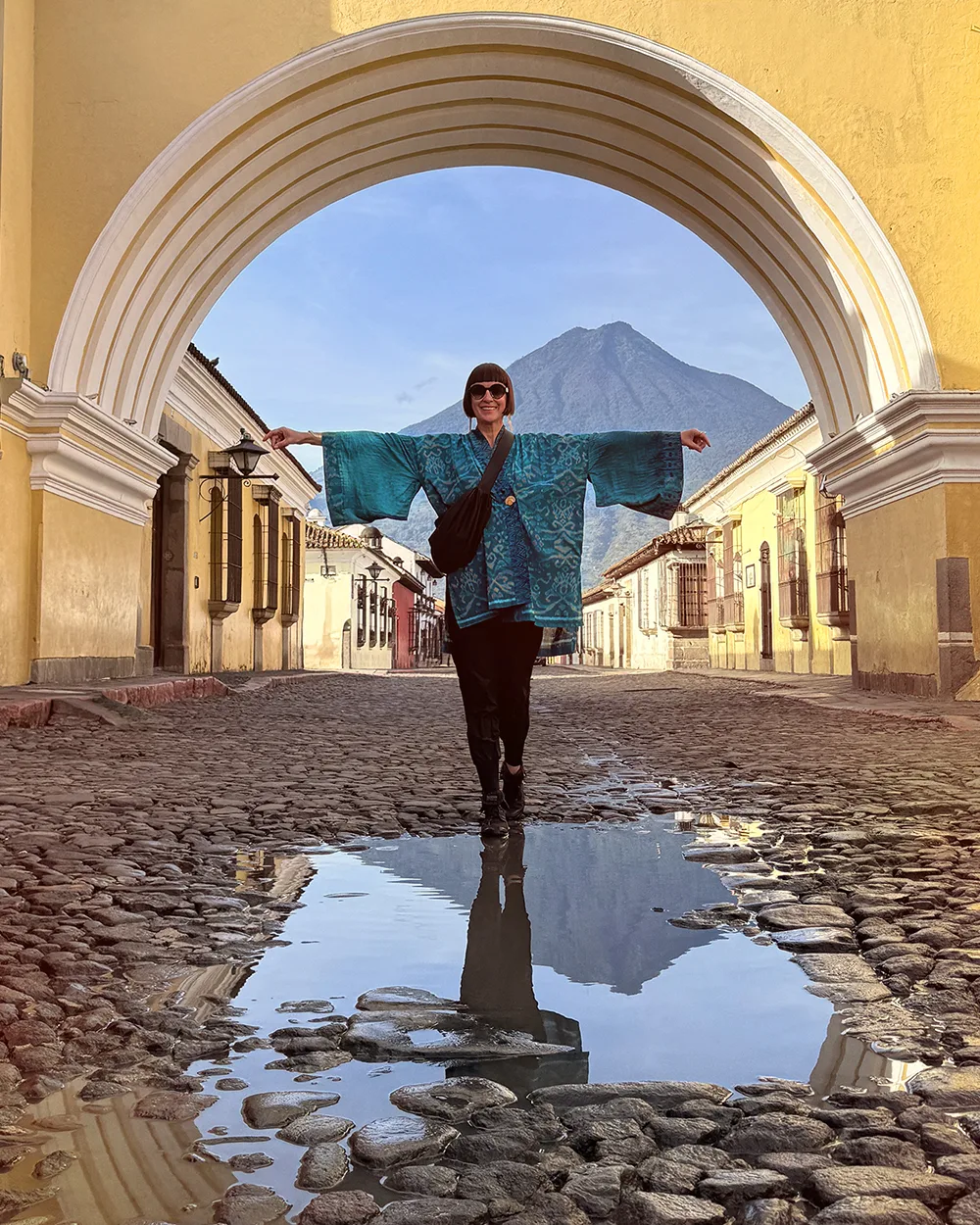
Guatemala was the next destination on the world workshop map, where Anna Orska traveled in search of traditional techniques and materials. - I want to shout with joy that I'm on the road again, that unknown places, people, crafts, and workshops await me. I landed with a backpack in the center of Antiqua Guatemala, changing my reality for a month. It's time to start searching for craft workshops, to look for handmade crafts, to delve deeper into the Guatemalan lands, and to explore this part of the world more deeply. Anna wrote on the road.
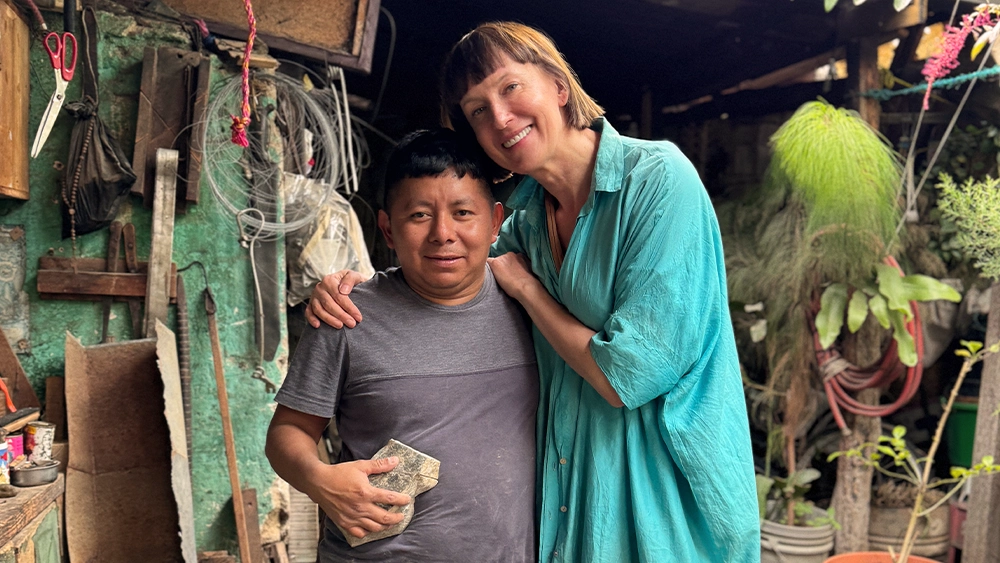
In Stanislvo's studio
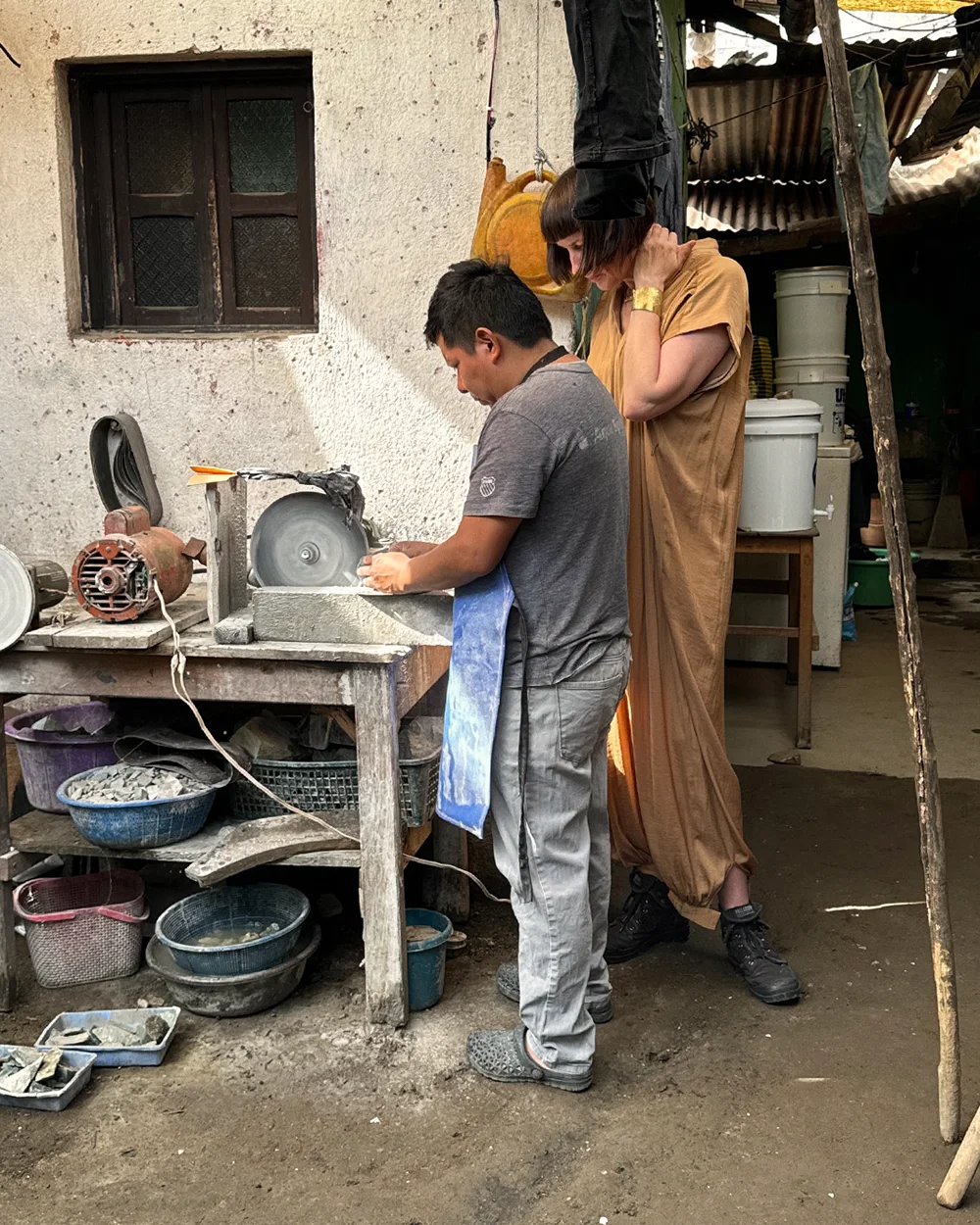
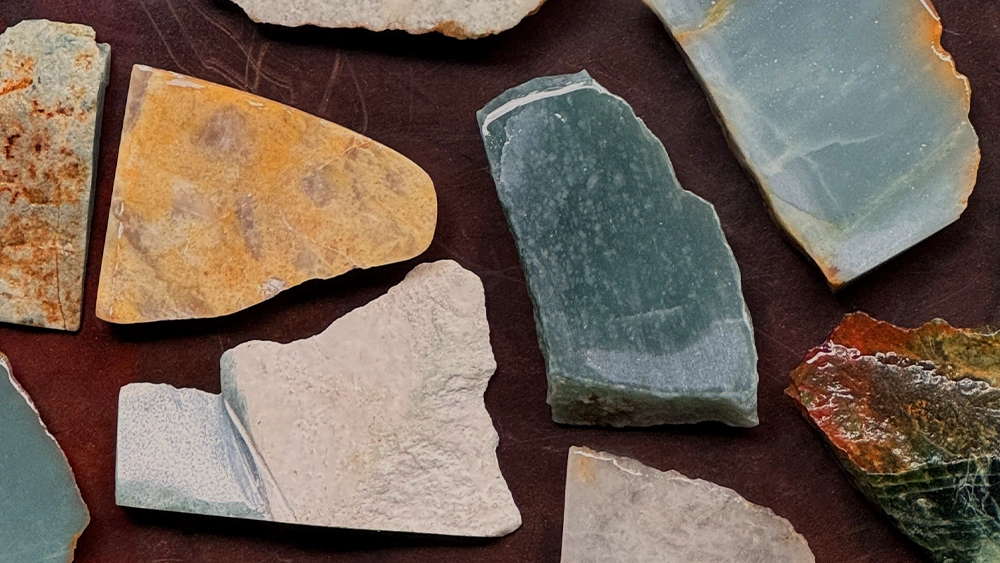
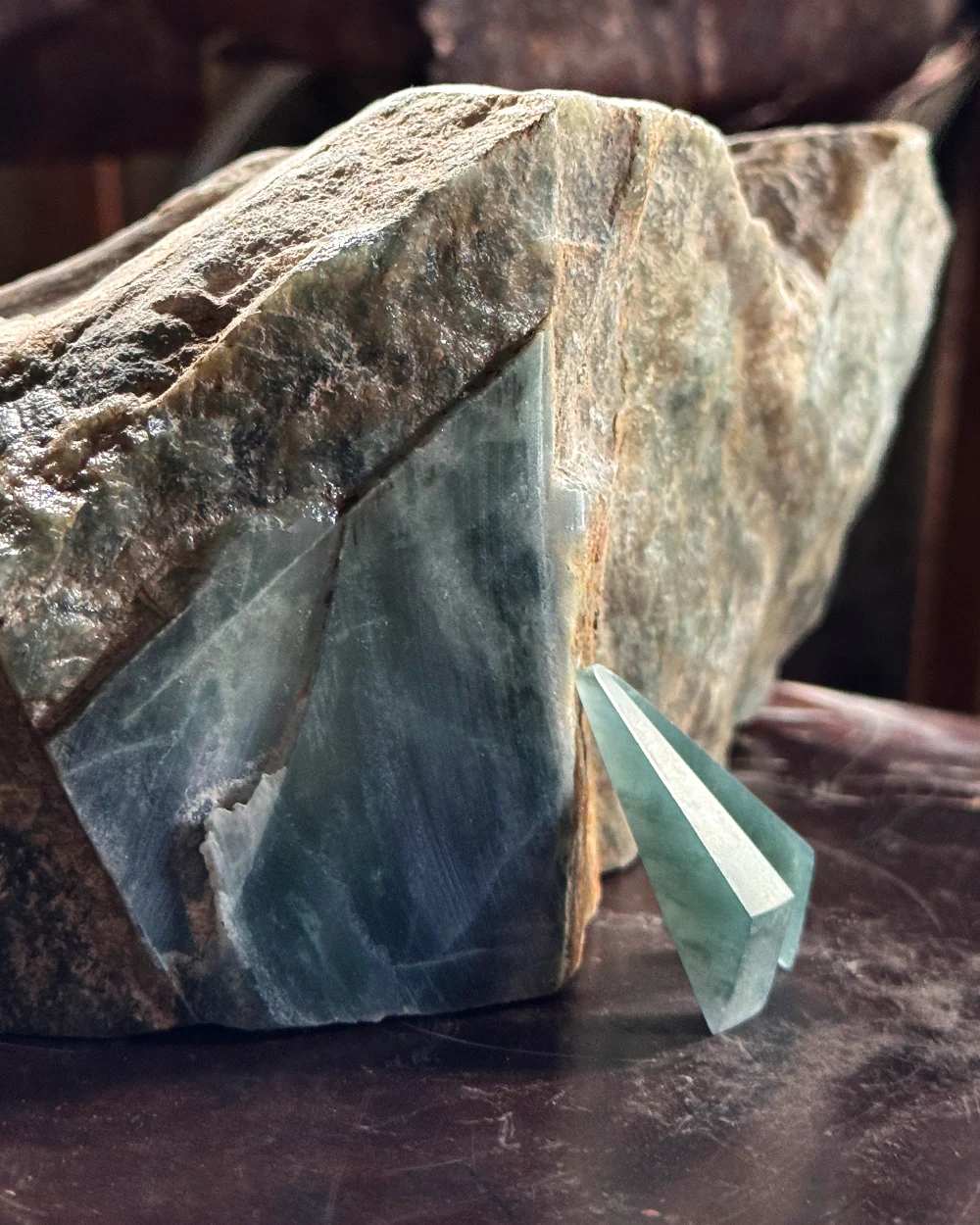
She found what she was looking for in the workshop of master Stanislavo, who has been extracting shine and color from raw, irregular jadeites in his home workshop for decades. From large gray blocks, he uses traditional methods to reveal the most beautiful shades and shape the most exquisite shapes. This cheerful, kind man first took jade into his hands when he was 12. His uncle introduced him to the secrets of the craft, showing him how to recognize the stunning color hidden beneath a layer of inconspicuous gray. Over the years, Stanislavo acquired his own polishing workshop, which Anna later visited and which she described as follows: I appeared in the workshop and in the house simultaneously, because in both cases, it's the same space of the entire family's adjoining rooms. This hallway, which is an extension of the kitchen, is the heart of this place. There's parking space for scooters and motorbikes, lines of laundry hang overhead, and there's a workspace, an office, and a meeting space. Life smolders here under the cloud, a tree has found its footing in the earth, rain is soaking into the laundry, the children are rejoicing with me in the change of everyday life. Often in this world, the workshop blends with life, operating in or around the house, behind a wall, under a fence, in a separate room. Often, it's simply good to have it close by. This way, you can learn craftsmanship through empathy, being nearby, soaking in the experience. Often, too, you don't need much, because mastery is brought to such a level that a few pairs of tools, one or two machines, are simply enough.
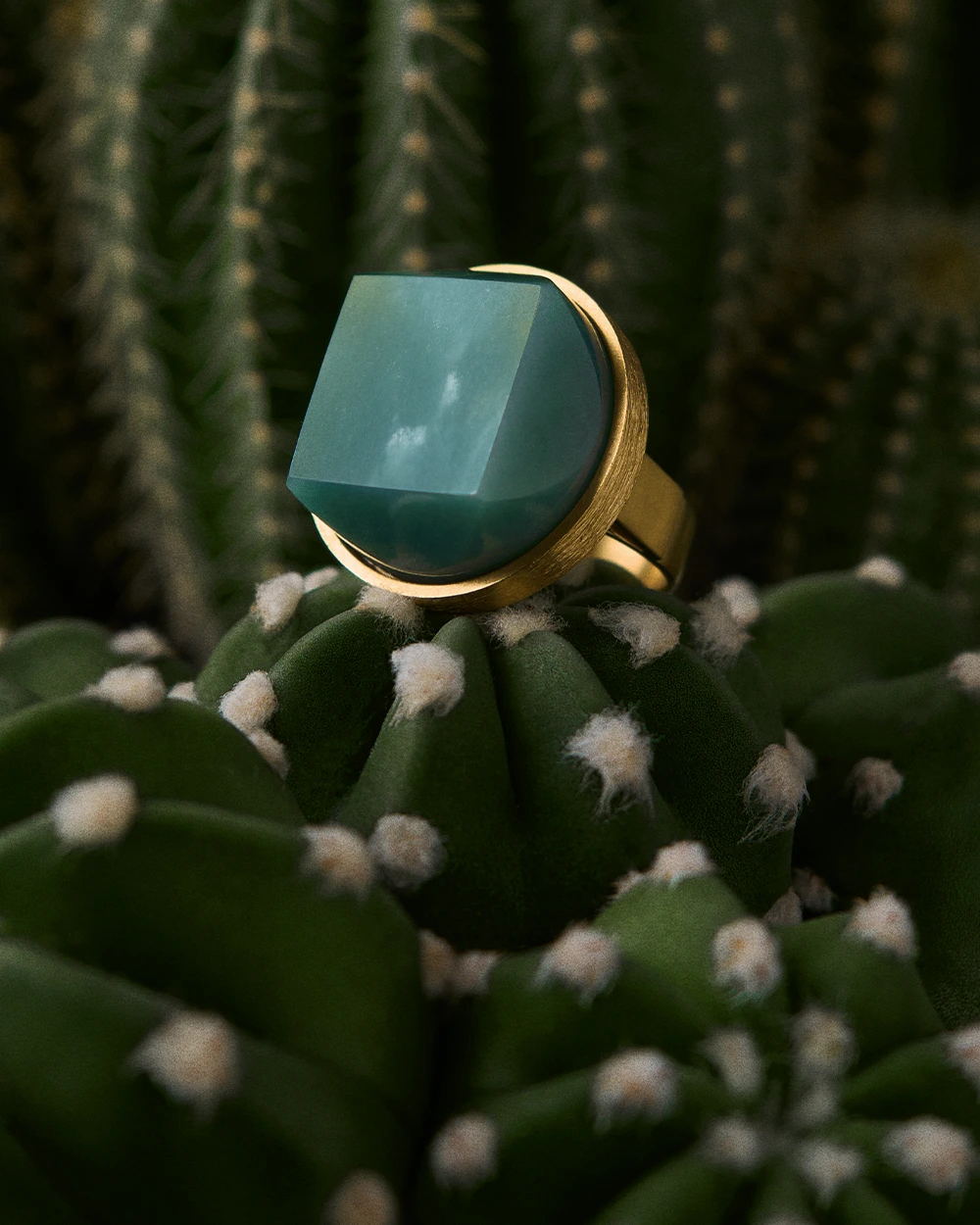
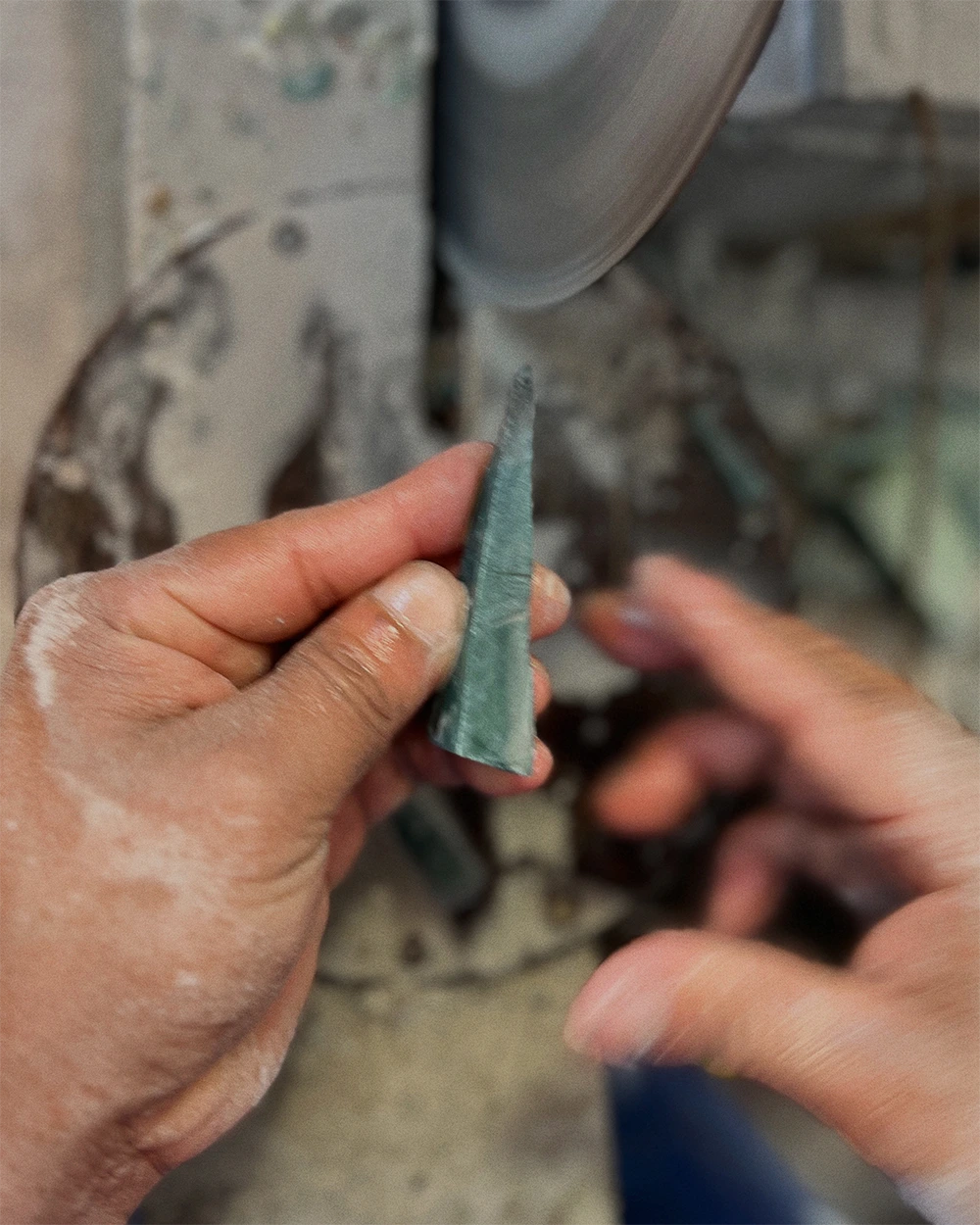
Stanislavo himself cut the stones that became the heart of the Guatemala collection. Their selection and processing took exactly one year, from Orska's first steps into his workshop. In the hands of the master, the stone gained a new context: purity of form, precise geometry, and a contemporary edge. The stones, in the form of pyramids, cones, and round cabochons, delight with their precision of craftsmanship and spectacular colors.
Yax, or the sacred stone of the Maya
It's no coincidence that jadeite has appeared in the Guatemala collection. In the culture of this Central American country, it holds exceptional significance – for the Mayans, it was more valuable than gold. It was an amulet, a totem, a symbol of balance: between body and spirit, between the human world and the incomprehensible. The Mayans believed that jade was the blood of mountains and the tears of gods, and that volcanoes were gateways to other worlds. In Mayan culture, there is even a clear symbolic distinction between the general color green and the green jadeite stone. Jadeite stands out as a stone full of power and sacredness, while green is a more universal symbol of life and harmony in nature.
Before settling into jewelry, jade travels a long journey: from the bowels of the earth into the hands of a polisher. The touch of his hand brings out the hidden elements in the stone—its coolness, texture, weight, and inner light. It's unhurried work, a conversation with matter that remembers a time before man. From workshops in Guatemala, the stones travel to Poland, where they meet cool, precise metal. At the ORSKA studio, jewelry is created that combines the rawness of nature with modern form.
Barwy Guatemali
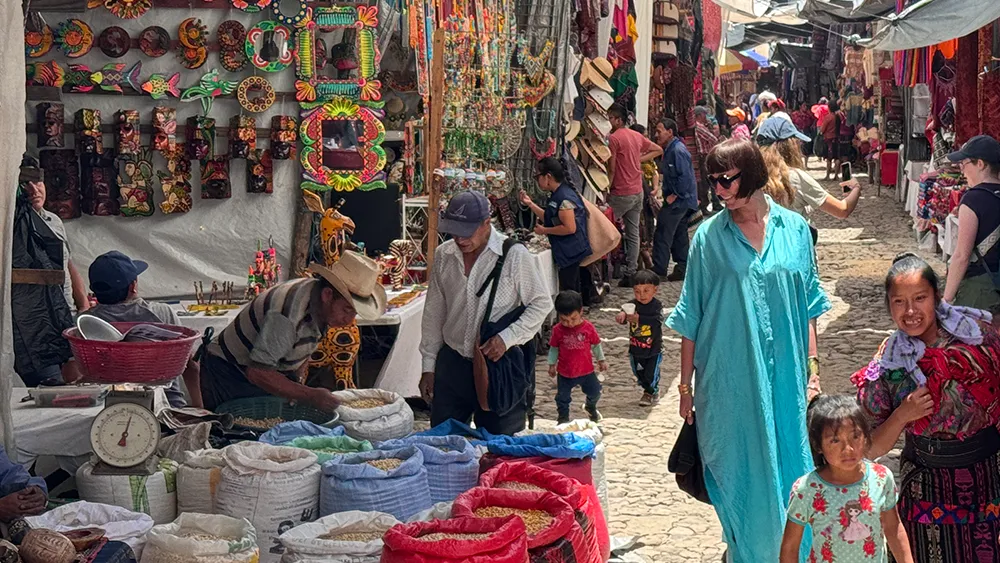
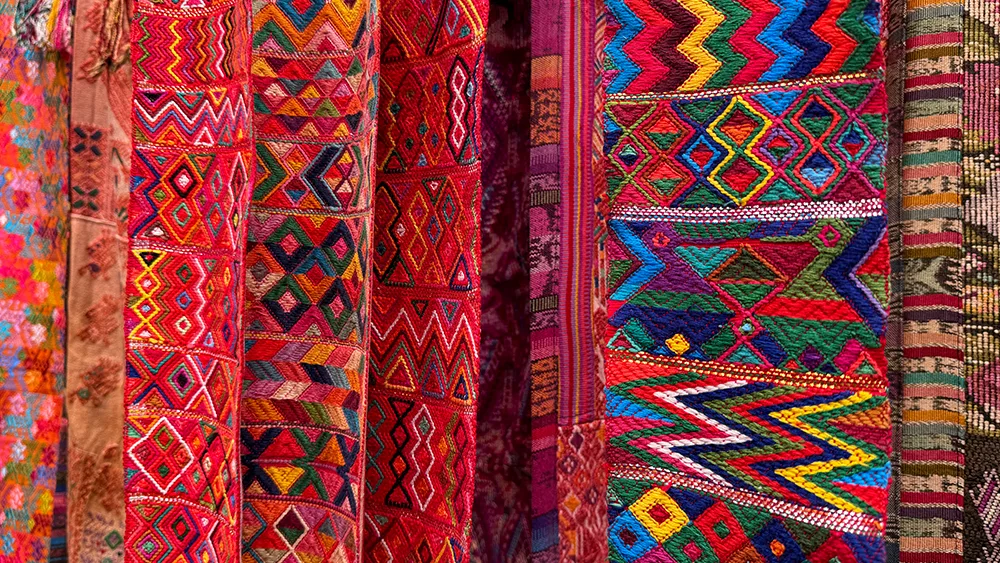
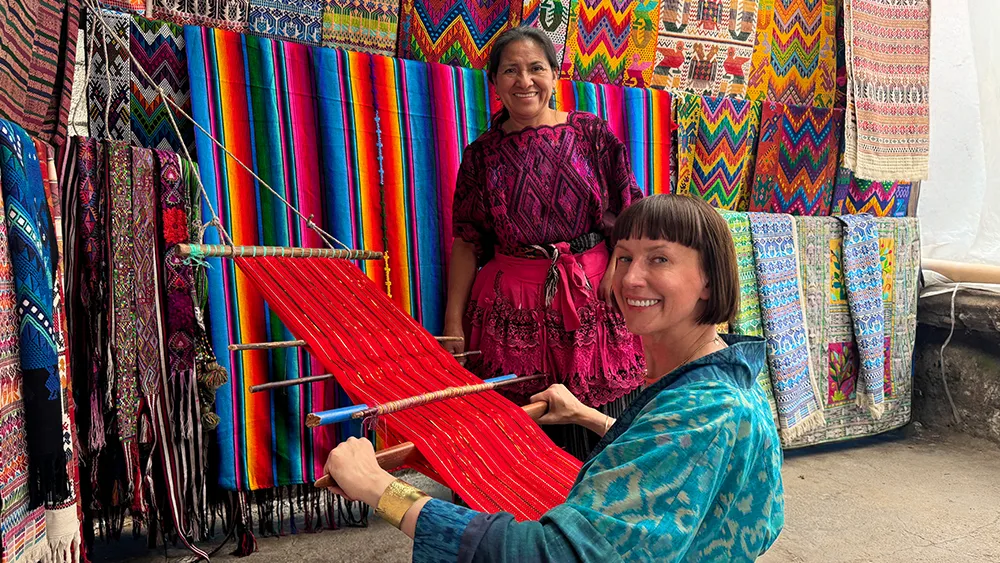
But Guatemala is not just jade! It's also a pulsating color, a riot of colors encapsulated in traditional fabrics, which are like an alphabet. For generations, K'iche' women have been writing stories about ancestors, rituals, beliefs, and everyday life in it. Every weave and color has a meaning. Red symbolizes the east and signifies the beginning of life, activity. Black represents the west, associated with the end of the day and rest. White is the north, the place of spirituality, wisdom, and the resting place of the ancestors. Yellow signifies the south, symbolizing fertility and harvest. The designer brought fabrics from the city of Chichicastenango to the Poznań studio, from which we sewed a limited line of colorful kimonos in Poland. This is the first project of its kind at ORSKA! Anna found the inspiration for its creation in a very interesting and locally significant place – the market. The Chichicastenango market is an incredible experience, a rainbow dream unlike any other I've ever experienced anywhere else in the world. The colors pulsate before your eyes, the smoke hangs in the air, the bustle and the phenomenally dressed people make you swallow it all. This market for locals is a celebration and an opportunity to build relationships and show off your beautifully woven garments. You can't take your eyes off the women and men; they're a part of this experience. Honestly, a certain joy permeates you, a certain fascination, an inspiration," Orska recalls.
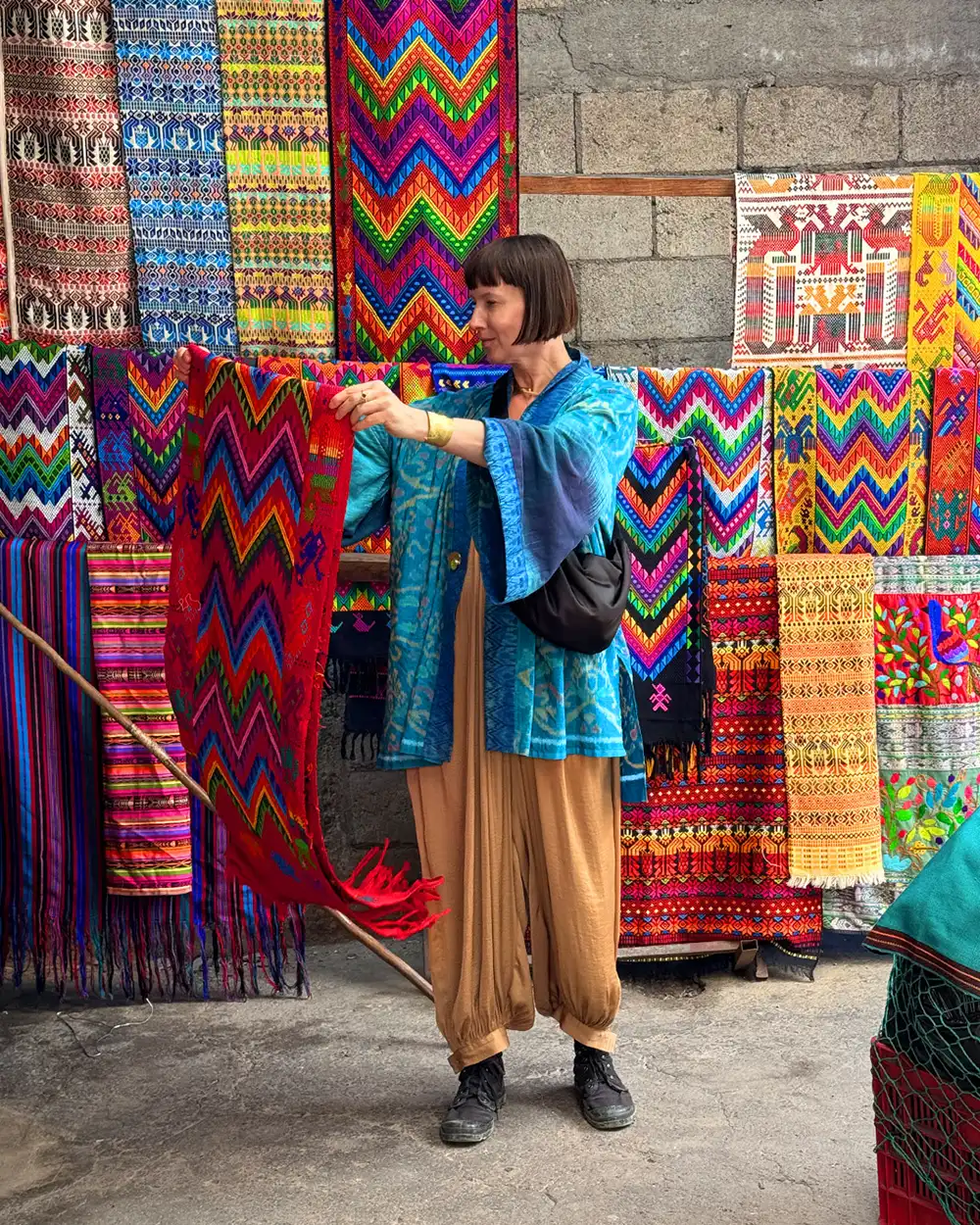
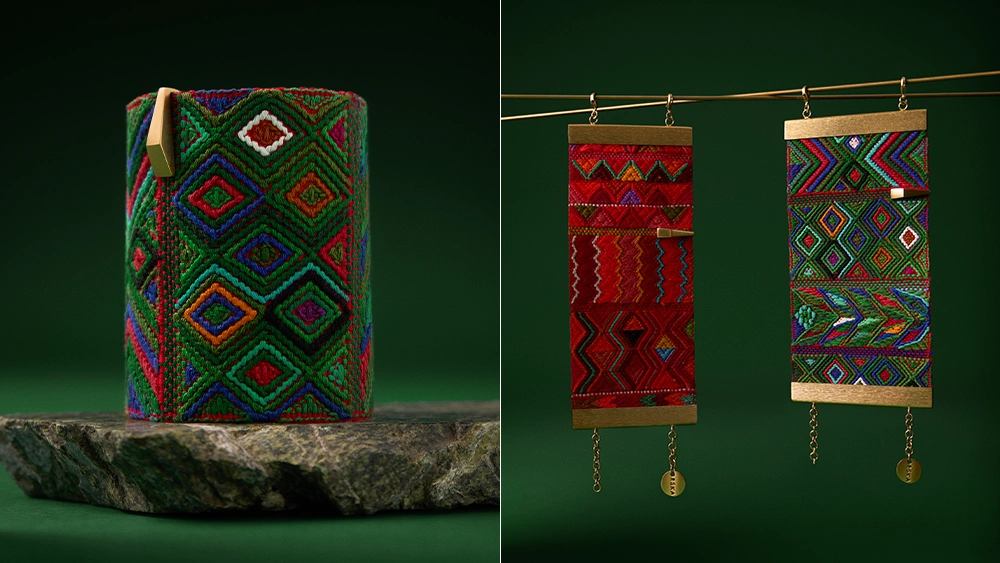
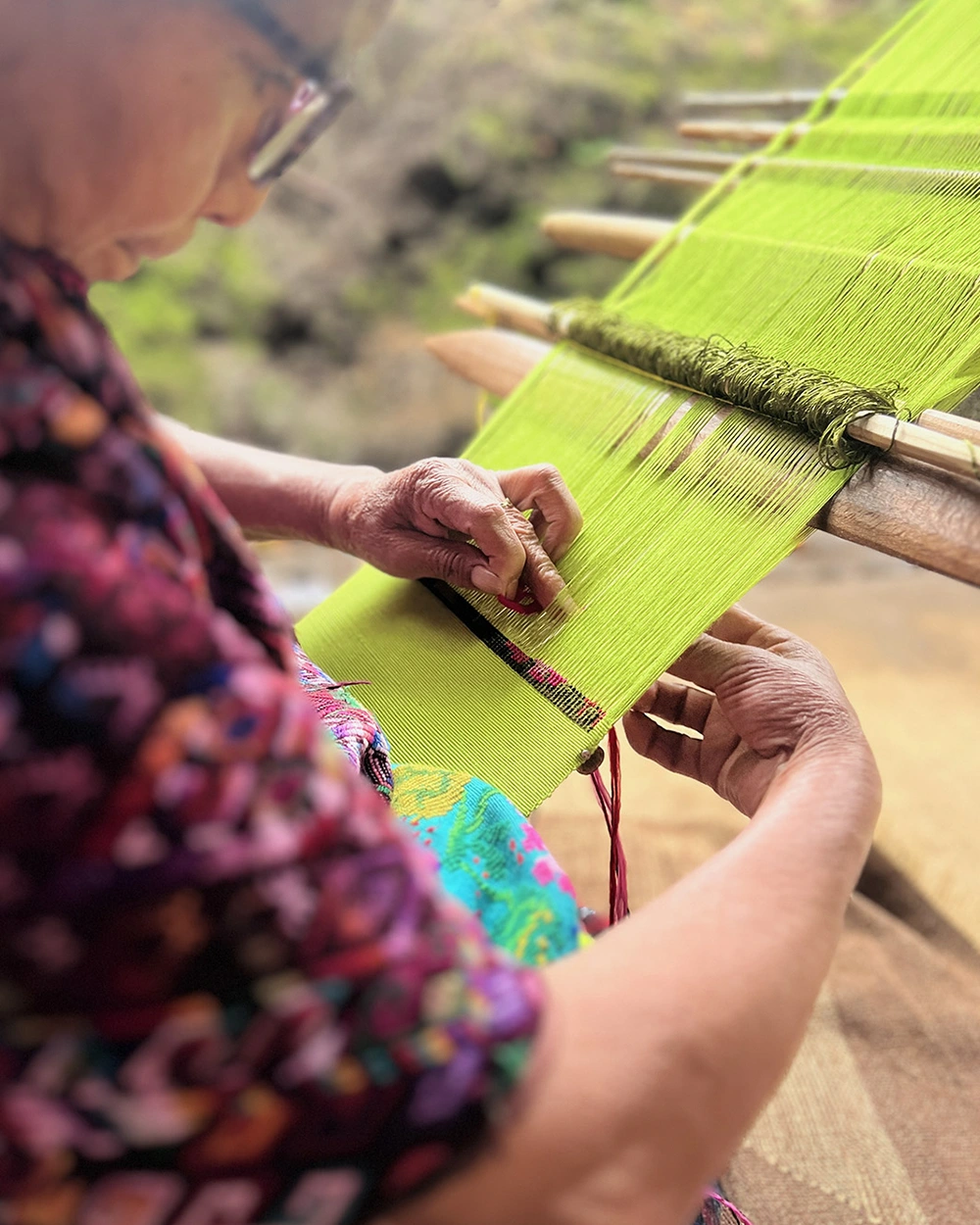
You'll also find the fabric in wide, limited-edition bracelets. They're made from authentic belts, hand-woven in the mountainous regions of Guatemala—where women still cultivate ancient techniques passed down from mother to daughter. The process of their creation has remained unchanged for centuries: the threads are naturally dyed using herbs and insects, then woven on traditional looms, in sync with the rhythm of daily life. Each belt is the result of patient work, intertwining respect for nature with a deep connection to the culture of their ancestors. Historically, it was an important element of the Maja women's attire—it wrapped around the waist, supporting the huipil, a traditional blouse, and skirt. The colors and patterns were not accidental: they revealed the origin, social standing, and sometimes even the marital status of the wearer. Symbolic motifs represented the four cardinal directions, ancestral spirits, and the cosmic order. Today, these fabrics are gaining new life – transformed into unique, limited-edition bracelets, each differing in detail and color, preserving a piece of history engraved in the weave of the threads.
Just a stone, just a weave
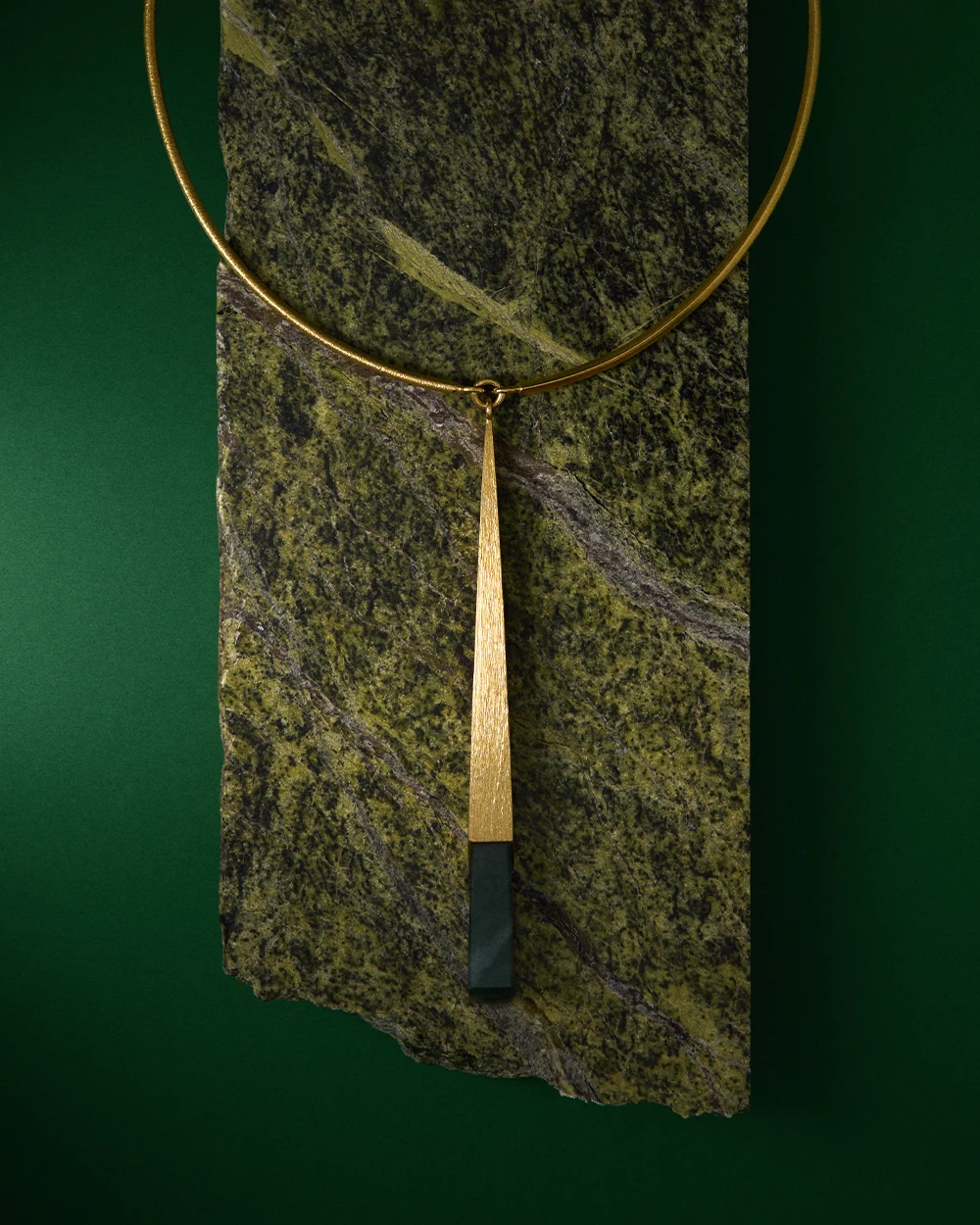
At the Poznań-based ORSKA studio, fabrics and jade have been given a new context – framed in noble, cool metal. The result is simple, geometric forms: rings, earrings, necklaces, and bracelets that combine contemporary design with the spirit of craftsmanship. Each piece of the Guatemala collection is like an amulet – a symbol of balance between nature and humanity. This is jewelry that is not only worn but also felt – the coolness of the stone, the warmth of the hand, the pulse of the place where it was created. Jewelry from the Guatemala collection is proof that true beauty is created where hands and hearts work in unison.