India Painted in Silver
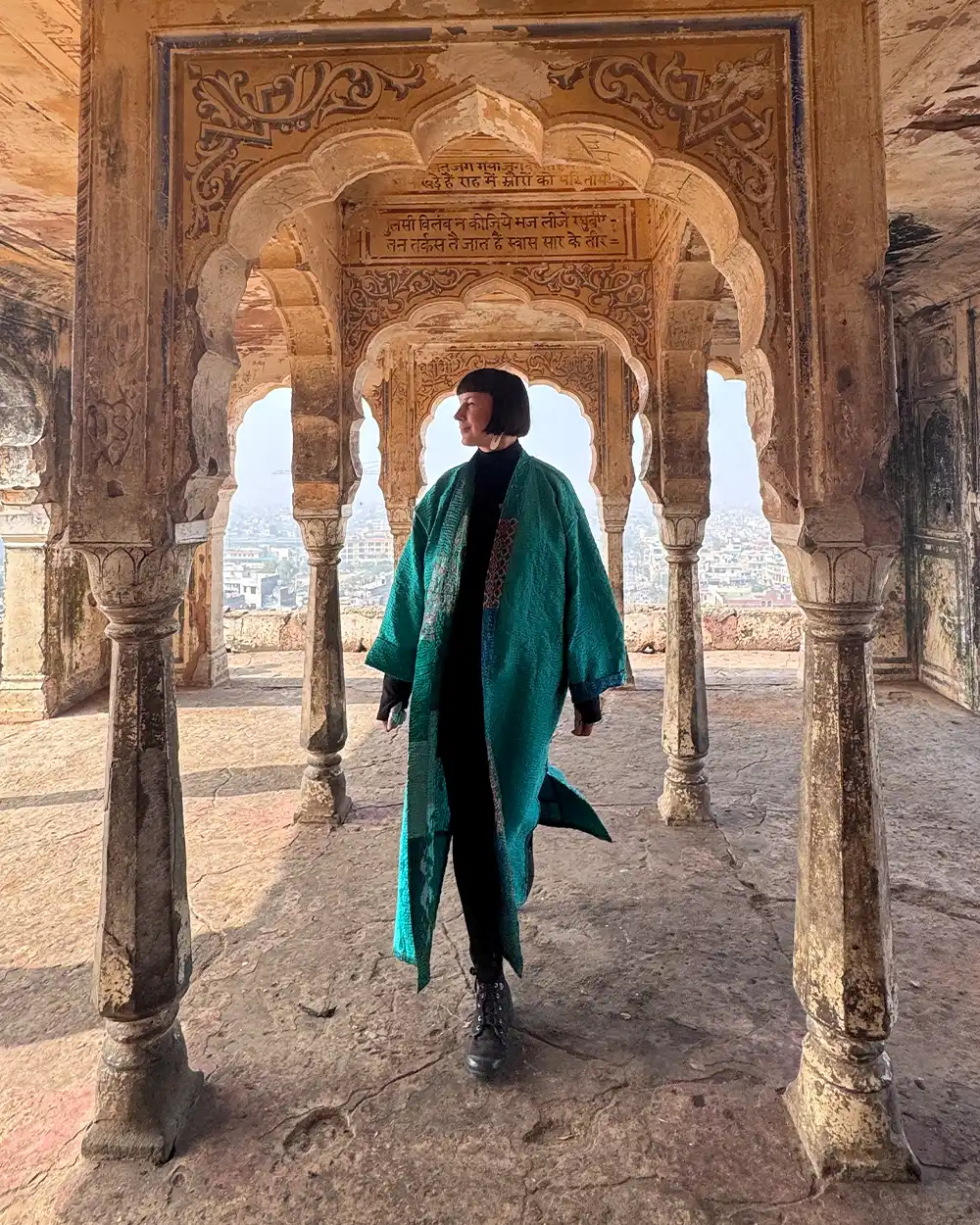
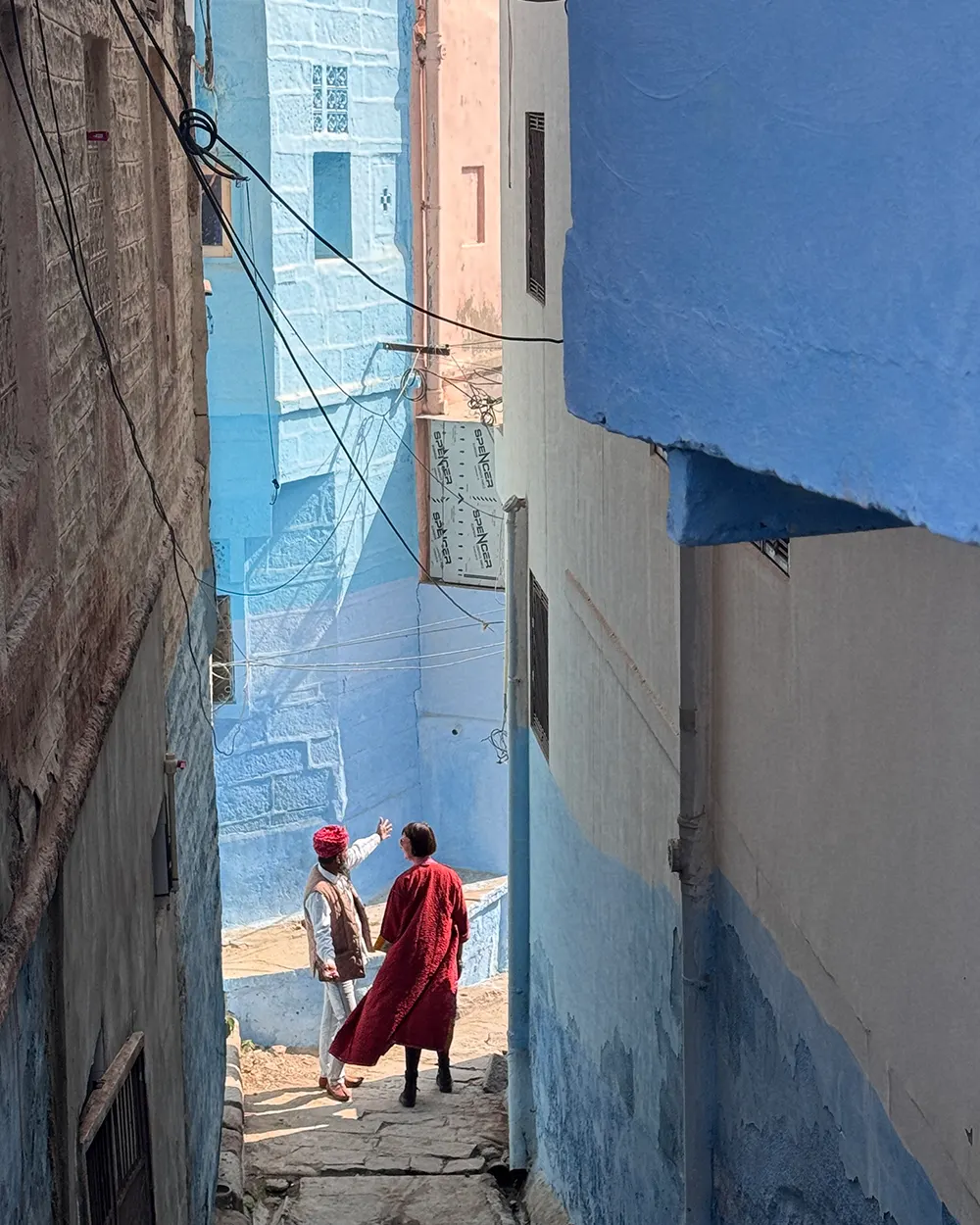
“Sometimes I need to change my horizon. To let gravity pull me to another place on Earth so I can hear myself again and do things differently. To look for masters, touch real craftsmanship, and find authorities who inspire rather than impose direction. That’s why for the past ten years I’ve been a design nomad. I wander through workshops around the world in search of skill, handcraft, and tradition. Recently, my inner compass pointed to Rajasthan,” says Anna Orska, who set out for India on her latest design journey.
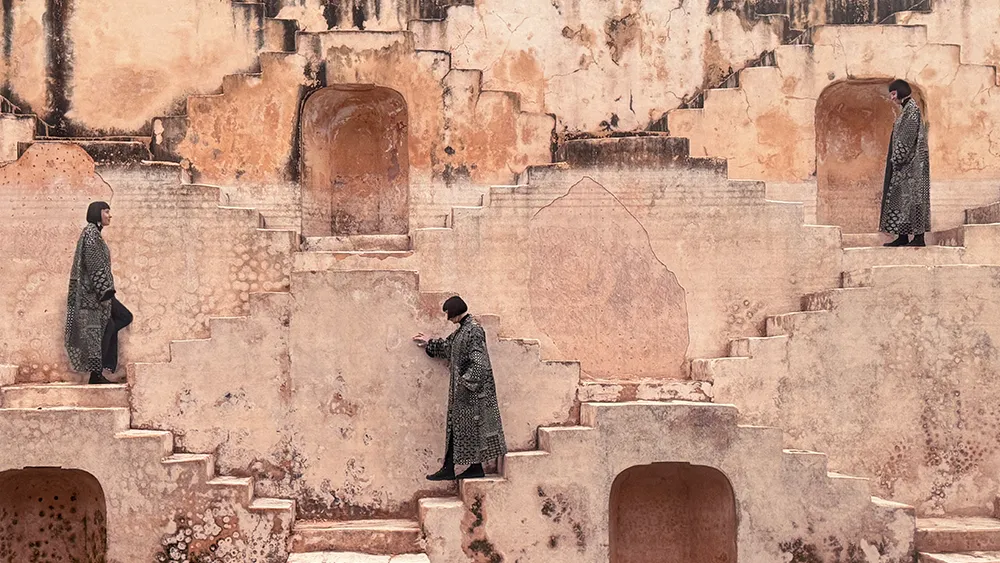
Jaipur, the city where she stayed, revealed workshops hidden in hundreds of nooks and crannies—on staircases, in basements, and on rooftops. She moved through them like a labyrinth, finding local masters by chance or through recommendations. Eventually, she settled in a minakari workshop, where engraved metal surfaces are decorated with colorful enamel.
Craft Measured in Patience
Minakari is one of the oldest enameling techniques in the world—its roots go back more than 2,500 years to ancient Persia. For centuries, it was an art reserved mainly for royal courts and temples, as objects decorated in this way were considered exceptionally valuable and almost divine. This is also reflected in the name itself, derived from the Persian words mina (heaven) and kari (work), together meaning “work in the color of the sky.” The technique arrived in India in the 16th century, where it was further developed and refined.
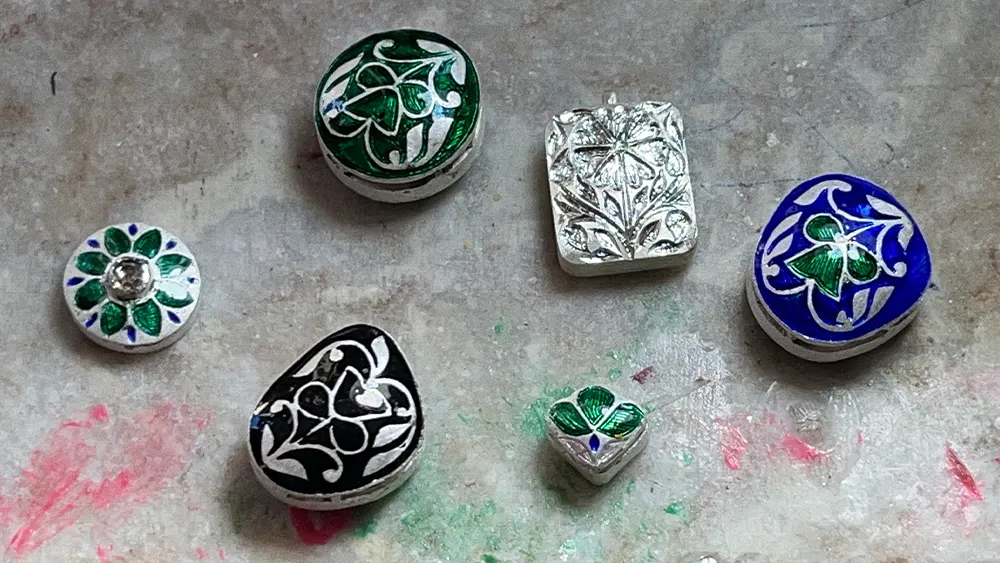
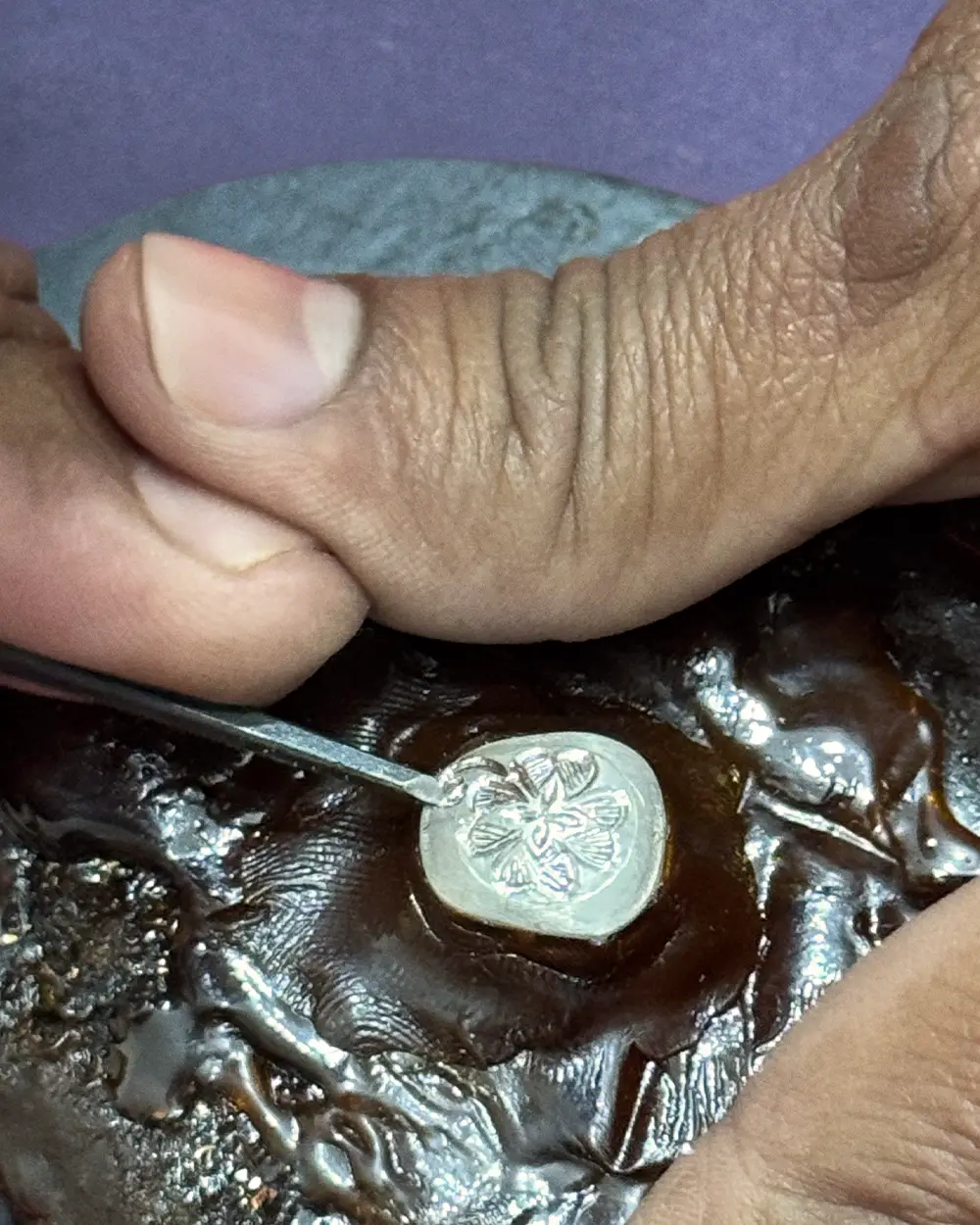
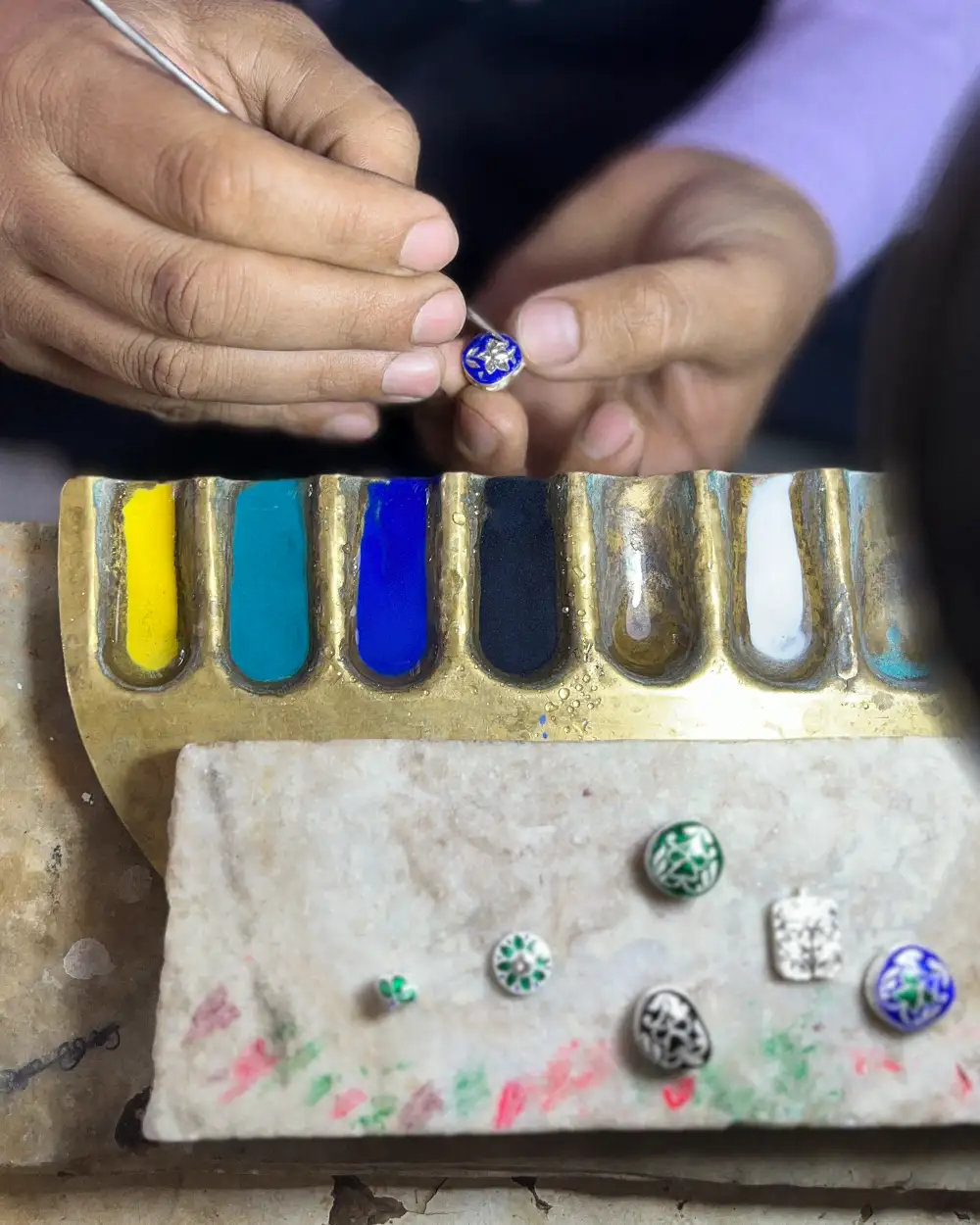
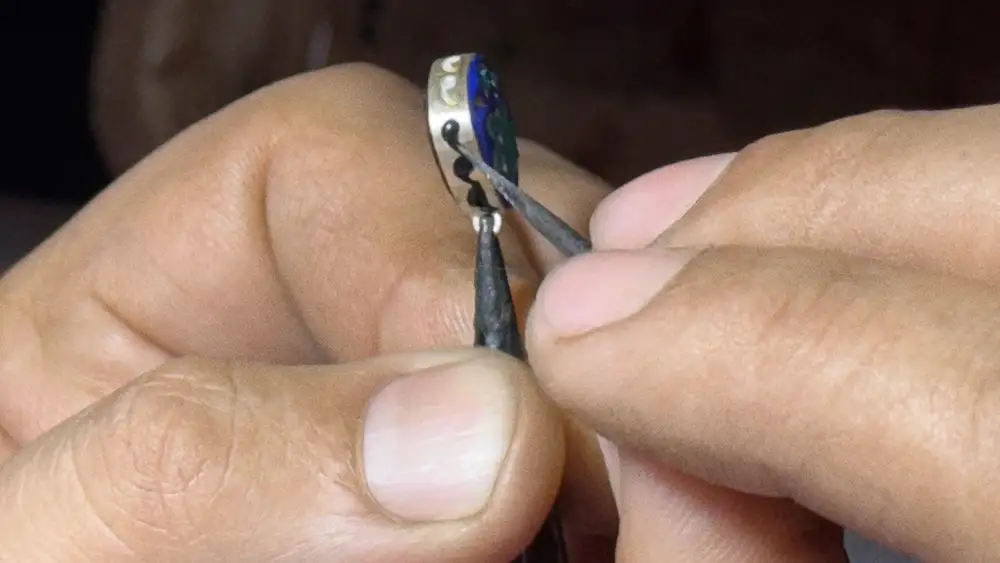
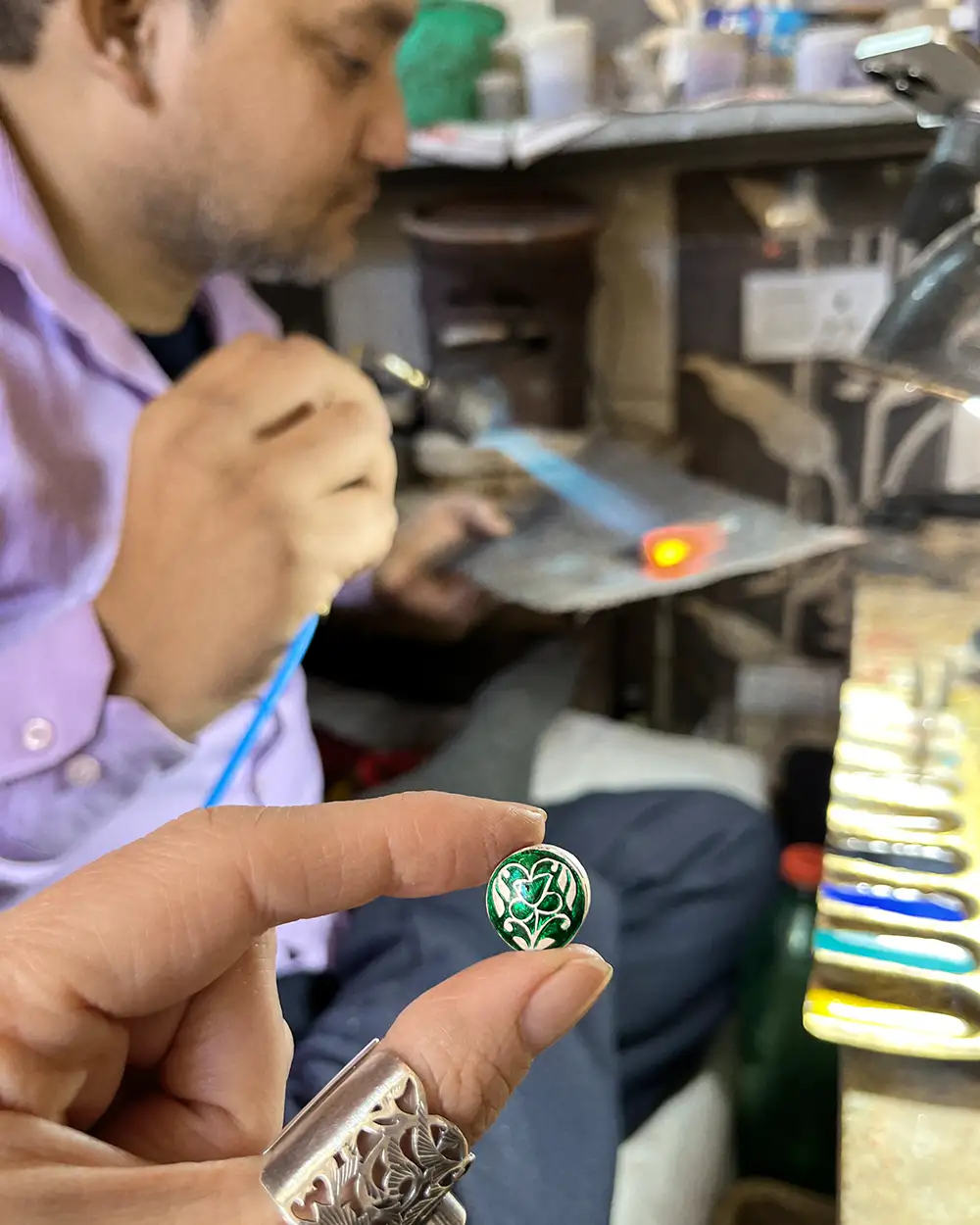
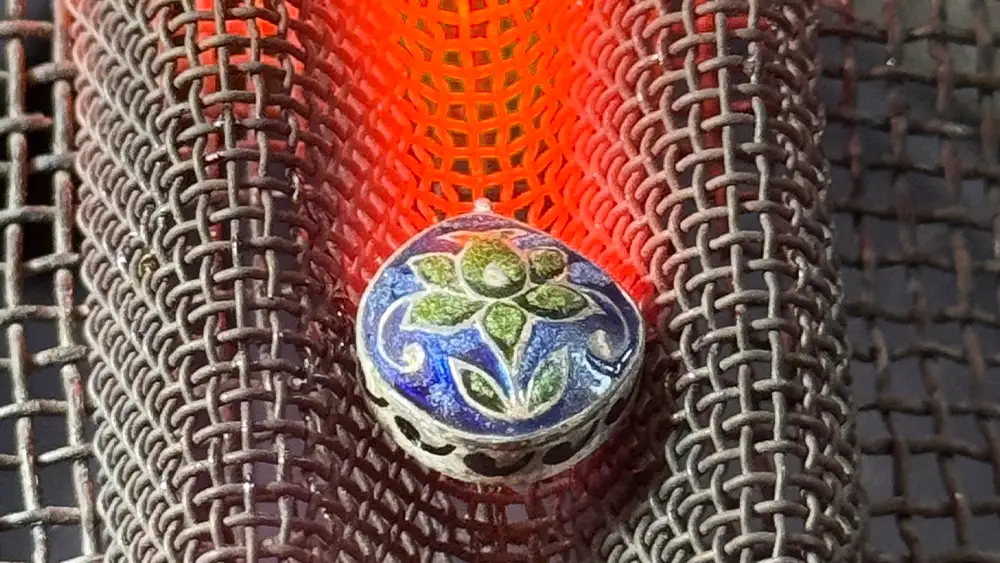
Every object made using the minakari technique is unique. Traditional patterns are engraved by hand into metal by the artist. Enamel is then applied in layers and fired in a kiln multiple times. This process gives the colors a depth and durability that cannot be achieved by other methods. In classical minakari, human and animal figures are not depicted—a result of Persian artistic tradition, which focuses on abstraction, geometry, and nature as expressions of divine order.
Two sides. Whole meaning.
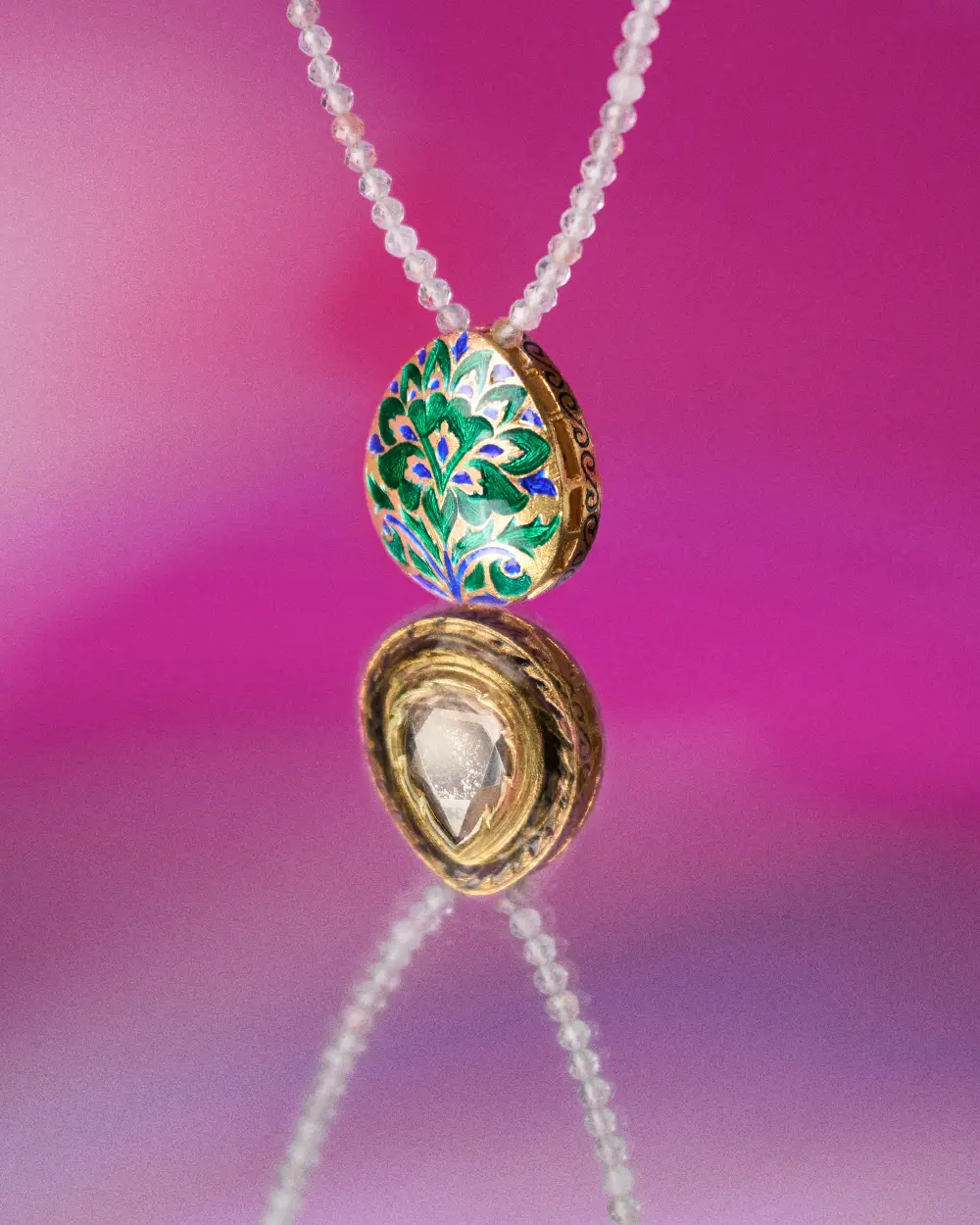
One of the most fascinating features of traditional minakari is its dual-sided nature. In many classic works, enamel does not decorate only the visible surface; the master also covers the back or interior of the object. As a result, the decoration seems to “flow” around the metal, and beauty does not end where the viewer’s gaze does. This reflects a Persian philosophy that true value also lies in what is not visible at first glance. Minakari is also known for its hidden details—patterns often contain microscopic lines, symmetries, and repetitions that can only be noticed up close. These elements are not accidental; they symbolize infinity, continuity, and the order of the world. Every dot and every line has its place, like in a precisely planned map of the universe.
Traditional works also rely on layering. Colors are not applied all at once; each layer of enamel is fired separately in the kiln. This creates delicate color transitions beneath the surface, giving the patterns depth and a sense of movement. As a result, minakari “comes alive” in the light, changing depending on the viewing angle. Many designs also include subtle signatures of the master—small deviations from perfect symmetry or tiny motifs added as a personal mark. In Persian tradition, only the divine can be perfect, so the human hand always leaves a trace of imperfection in the work.
“I chose this collaboration because I was moved by the simplicity of the tools: a small jeweler’s table, an almost painterly palette of colors, engraving chisels, a kiln the size of a vase, a handful of polishing nuts in a bowl of water, torches, grinding discs, tongs… and a comfortable cushion instead of a chair,” Anna recalls. She adds that although applying enamel may look quite innocent, like coloring a children’s illustration, it is difficult and demanding. Combined with engraving, it requires near-surgical precision and concentration. It is like a meditation hidden in the repetitive movement of the hands.

Where Rajasthan Meets Poznań
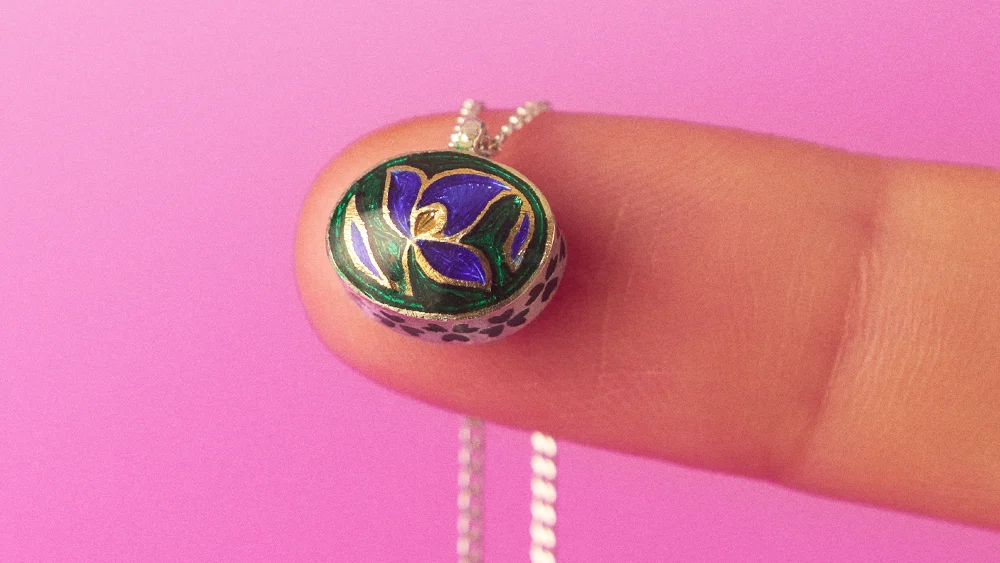
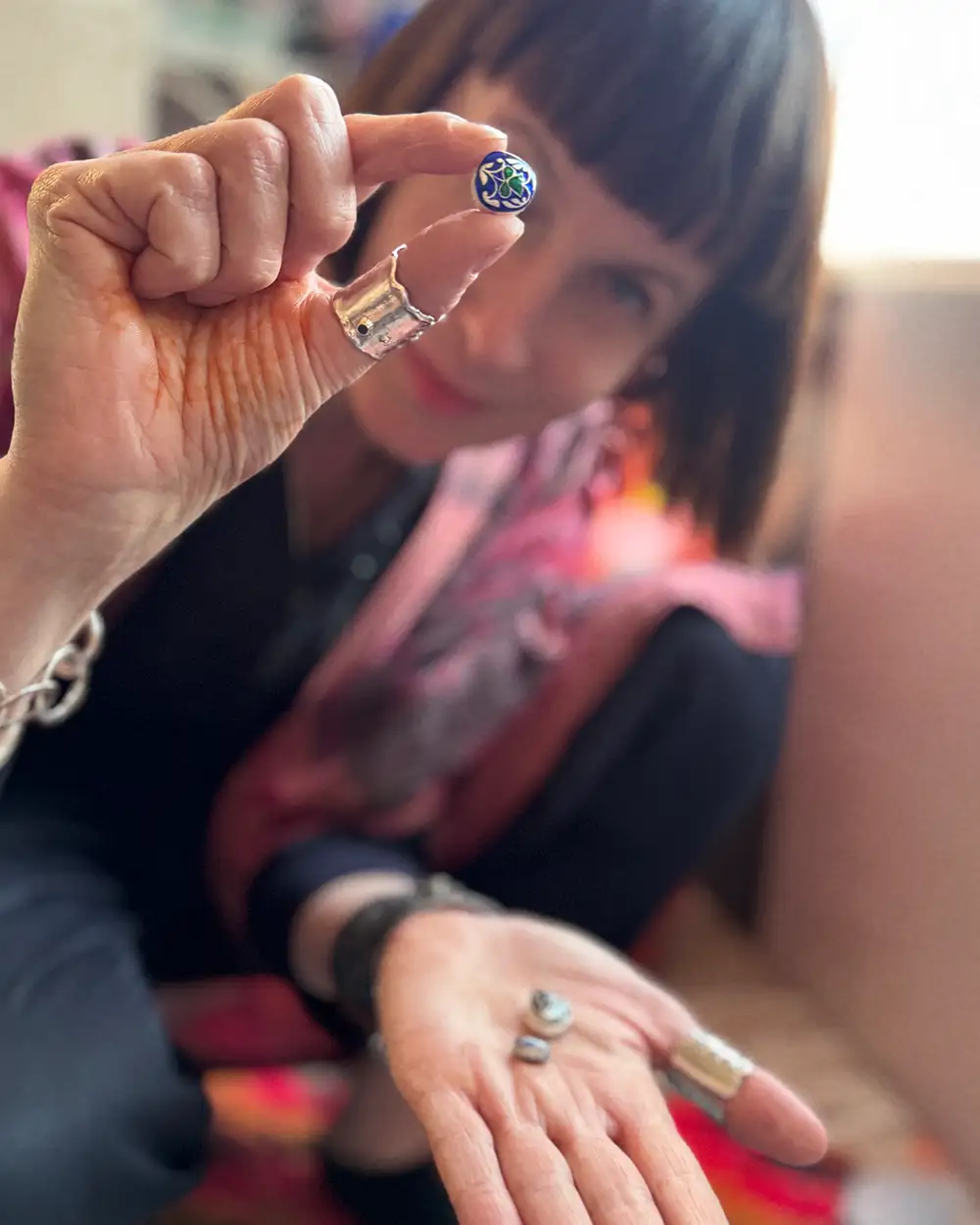
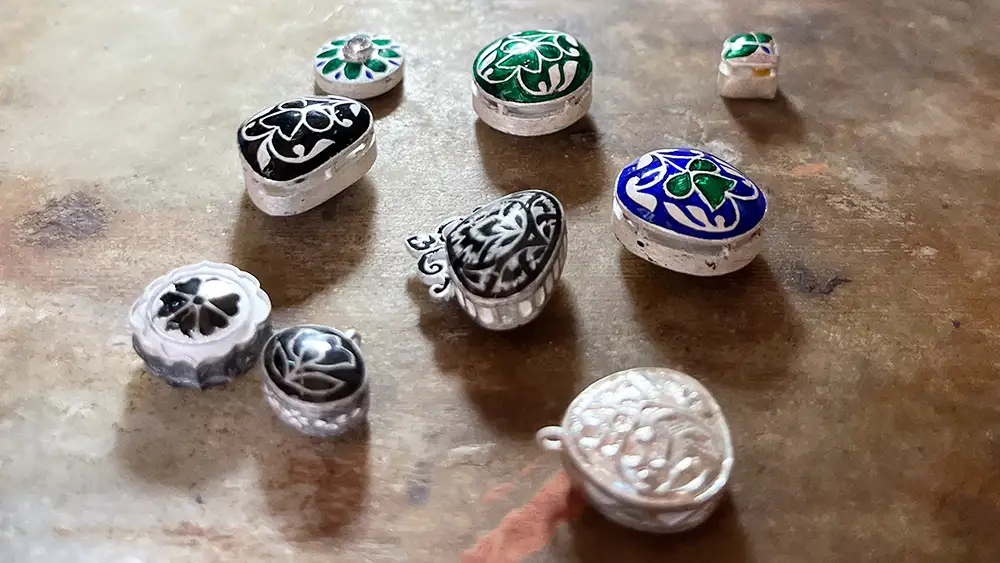
After nearly four weeks of work, prototypes were created that served as references for the craftsmen in further stages. Almost a year later, the small, richly decorated components arrived at our Poznań workshop, where we transformed them into silver and gold-plated jewelry. Each piece in the collection is delicate, precise, and deeply intimate, because it has two faces, two sides. One is for the eyes, for the world. The other is created for the heart and, if you choose, can be worn against the skin like a secret.
“What was richest and most beautiful in the minakari tradition was often invisible, because in India it is believed that true beauty matures in hiding, not for display. That’s why in this collection you decide which side you show to the world and which you keep for yourself,” explains the designer.
Every Detail Matters
The shapes and colors of the ornaments found in the Minakari collection are not accidental, but deeply rooted in the culture and tradition of India. Green carries harmony and life force, blue surrounds the wearer with divine protection, and black reminds us of the mystery of existence and that not everything needs to be named. The ornaments draw from nature, which for centuries has served craftsmen as a map of the world. Leaves and vines speak of bonds, tradition, and continuity. The lotus—the flower of the soul—symbolizes purity and rebirth. Stars and geometric rosettes evoke the order of the universe, while floral arabesques invite harmony into life. Intertwining lines, circles, and spirals remind us of infinity—of the fact that everything endures, changes, and returns.
Small pendants on delicate necklaces, tiny stud earrings, slender bracelets, and rings—subtlety dominates the Minakari collection. Precise craftsmanship and a small scale make the jewelry elegant, lightweight, and functional for everyday wear.