Return to Nepal
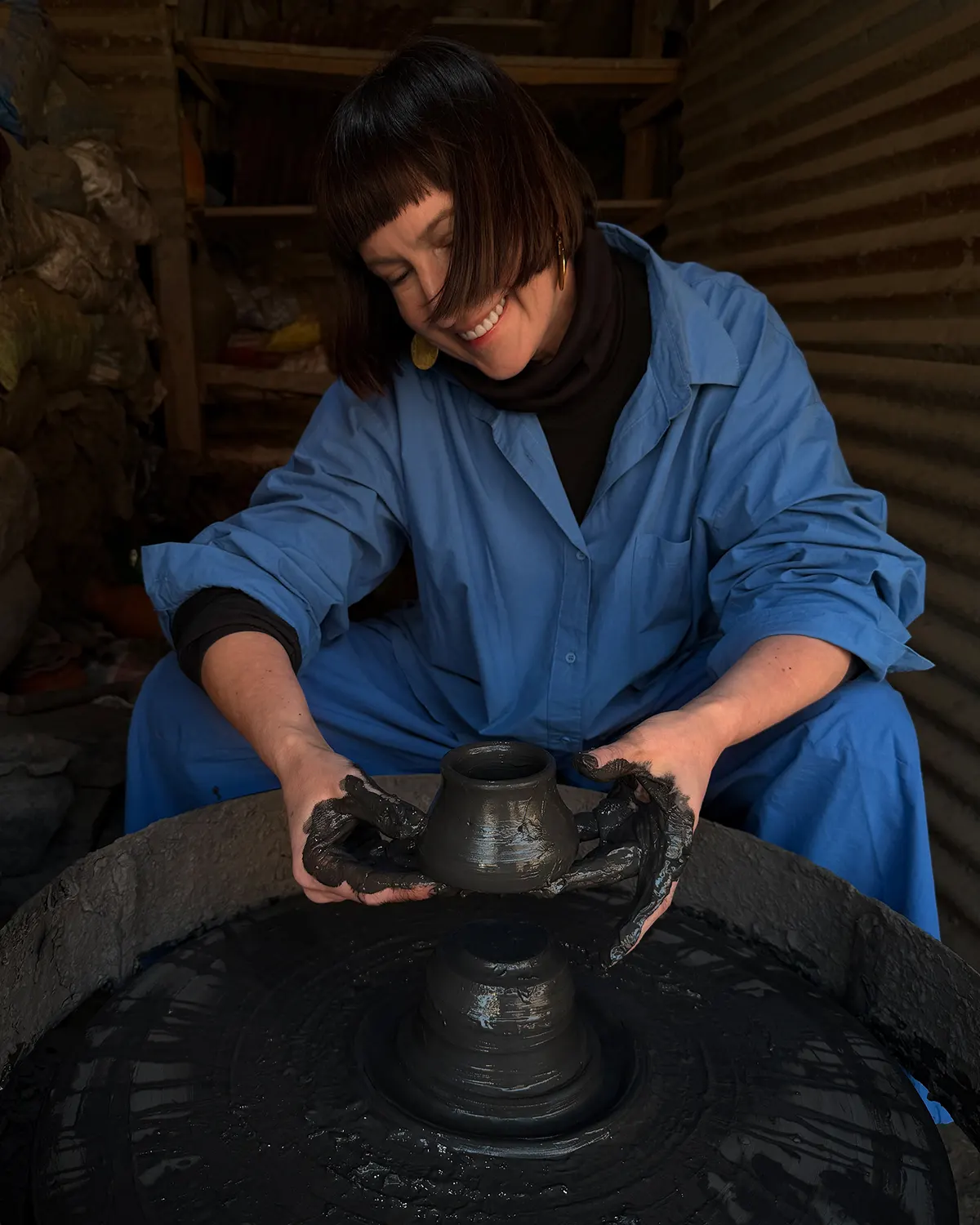
For more than a decade, Anna Orska has been searching for traditional crafts in different corners of the world. She ventures into the unknown, finding workshops that are not on the map, to immerse herself for several weeks in the world of local masters. Between the designer’s imagination and the knowledge of a person who has spent years learning the material and technique, jewellery designs are born. During this exchange, something third emerges; something neither of them would create separately. Each such journey ends with a collection, and the resulting object becomes a link between their worlds. “I like to sit down in a workshop and simply experience: touch the material, pick up the tools, test the possibilities of the technique, the raw material, but also my own. I want to understand the language of a given craft, not in order to copy it. I look for a way to use it to tell something of my own,” says the designer, who has so far worked with lacquer in Vietnam, carved in Indonesia, polished jade in Guatemala, woven in Peru, explored alebrijes in Mexico, created minakari in Rajasthan and worked with metal in Marrakesh. Her latest collection was created in Nepal.
Return to Nepal
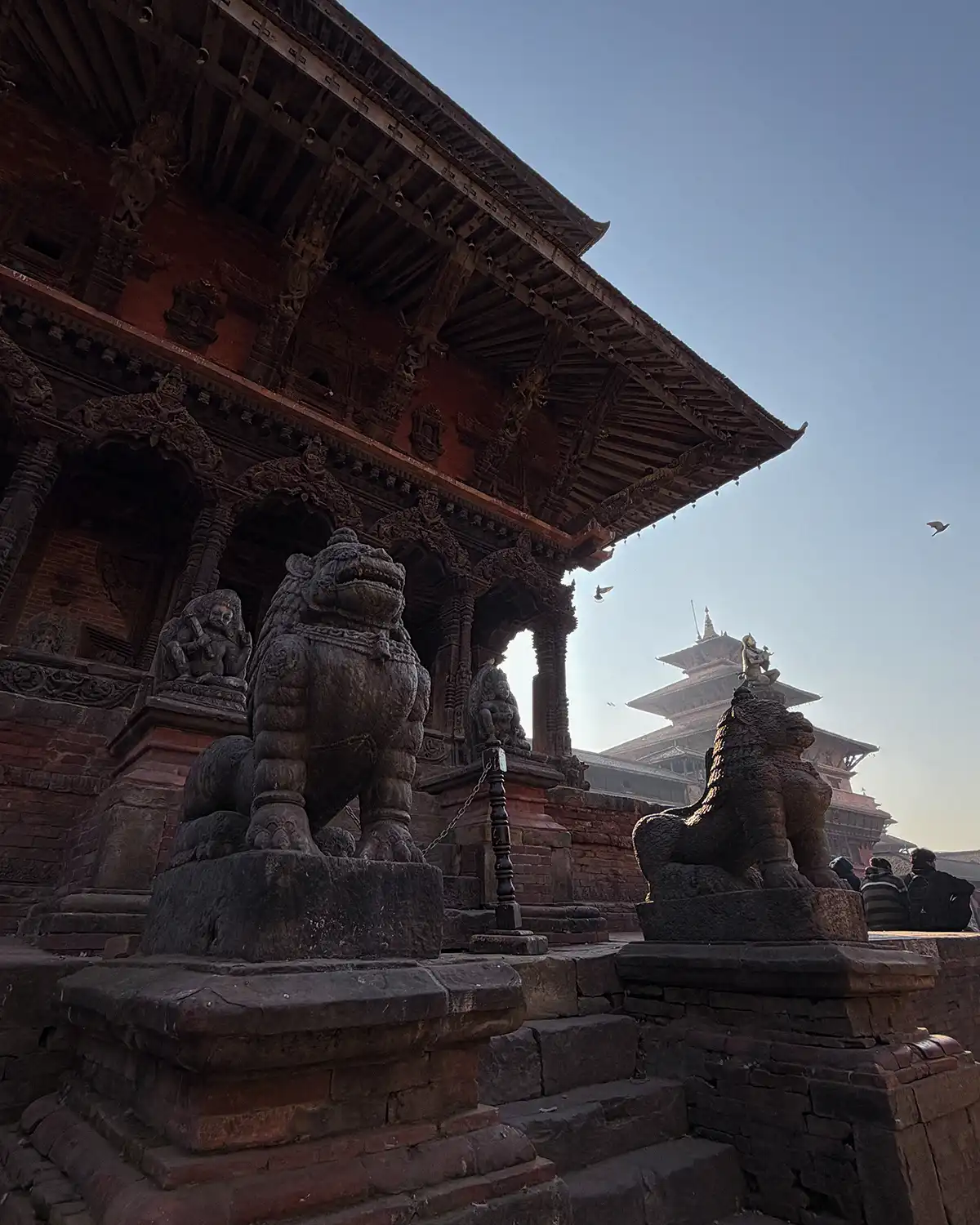
The dream of creating beyond boundaries – geographical, creative and those between people – began to take real shape in 2016 in the Kathmandu Valley. Years later, Anna Orska returned to the source of this story – not to recreate her first journey, but to see what she could perceive in the same place today. The mountains remained the same, but the point from which she viewed them had changed.
In Ramesh’s Workshop
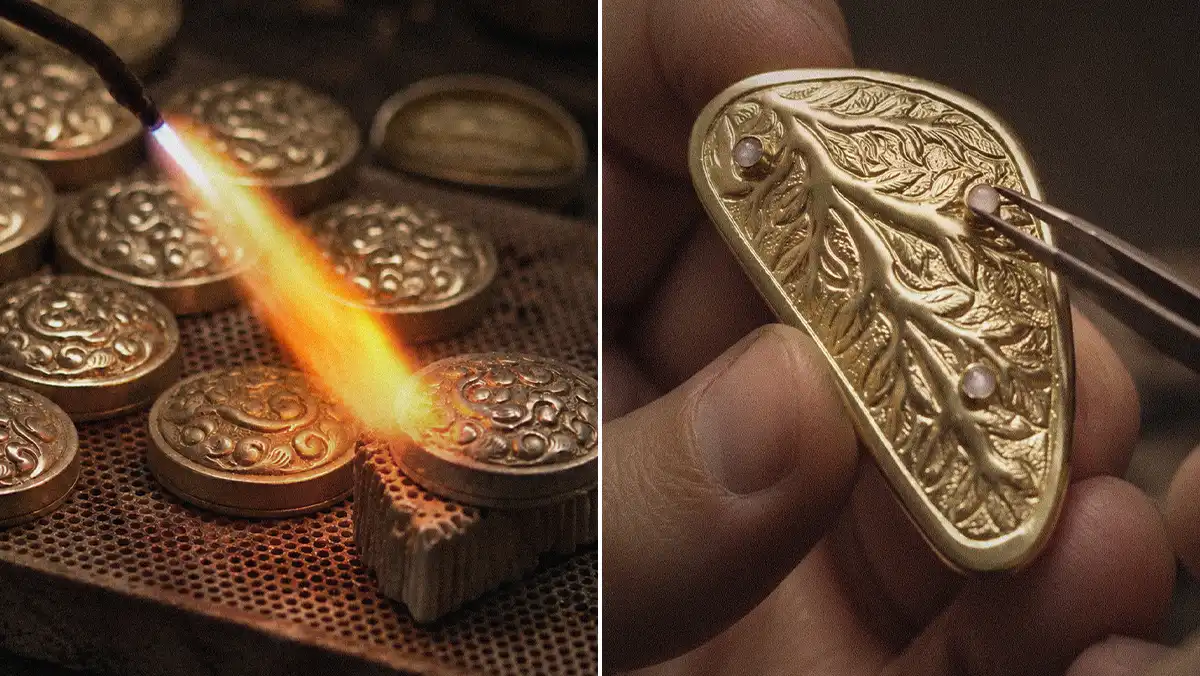
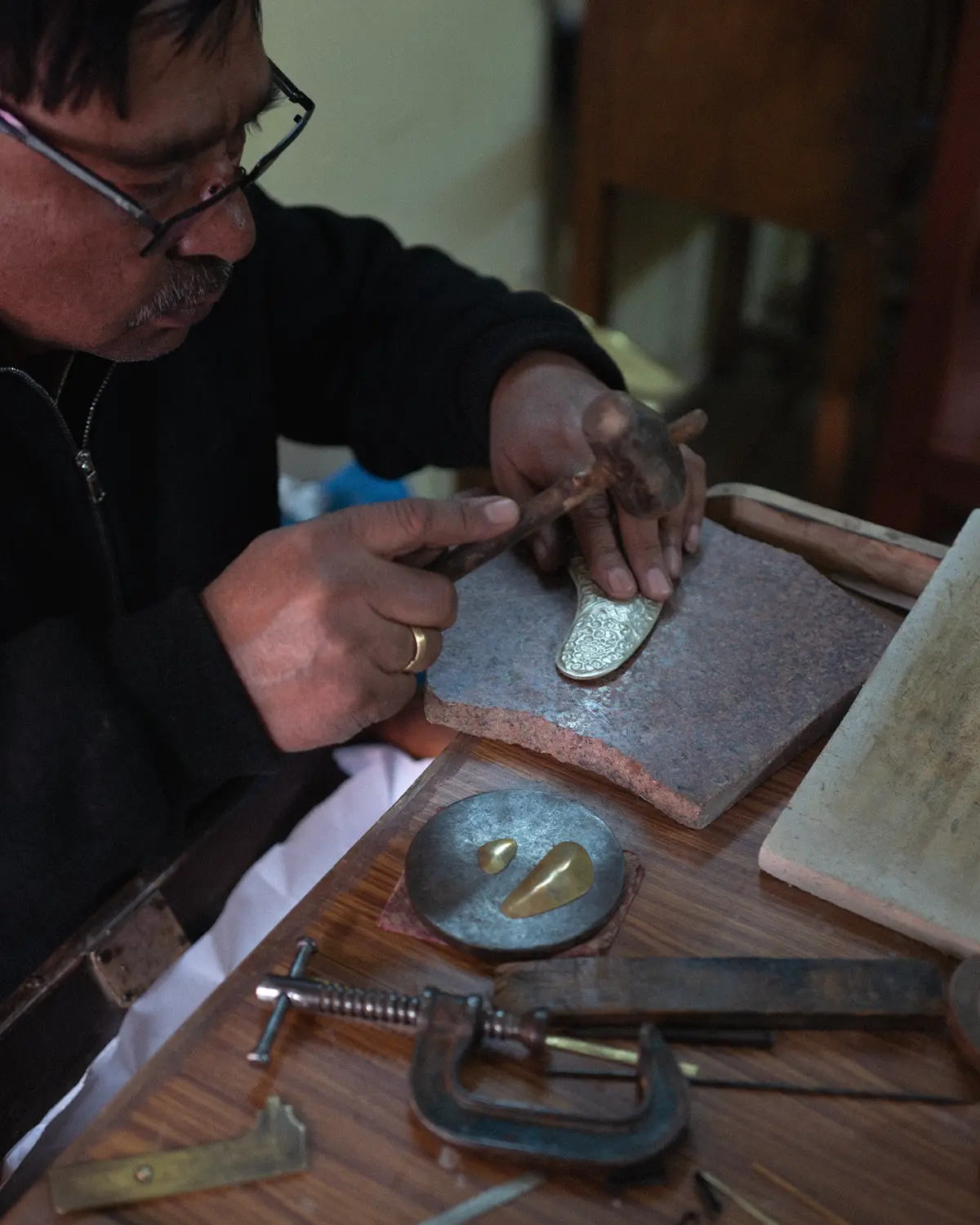
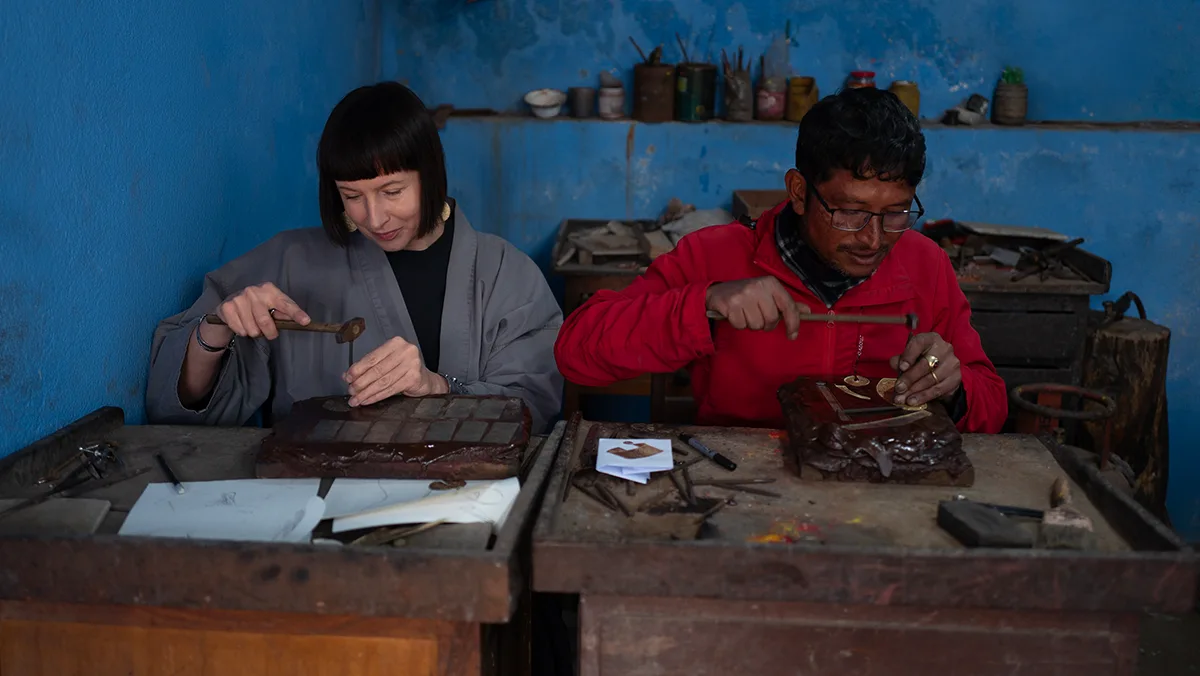
A dozen or so years ago, it was among the Himalayan peaks that she rented a workshop which ceased to exist as a result of a tragic earthquake. To avoid returning to Poland empty-handed, she had to start organizing it again from scratch. Ramesh, a master of repoussé, helped her by going from workshop to workshop to arrange the necessary tools and find people with the required skills. In these extremely difficult conditions, together they created a limited collection of repoussé jewellery. After years of warm contact, the designer returned to him, although this time the jewellery was made not only in Ramesh’s workshop.
Between Heaven and Earth
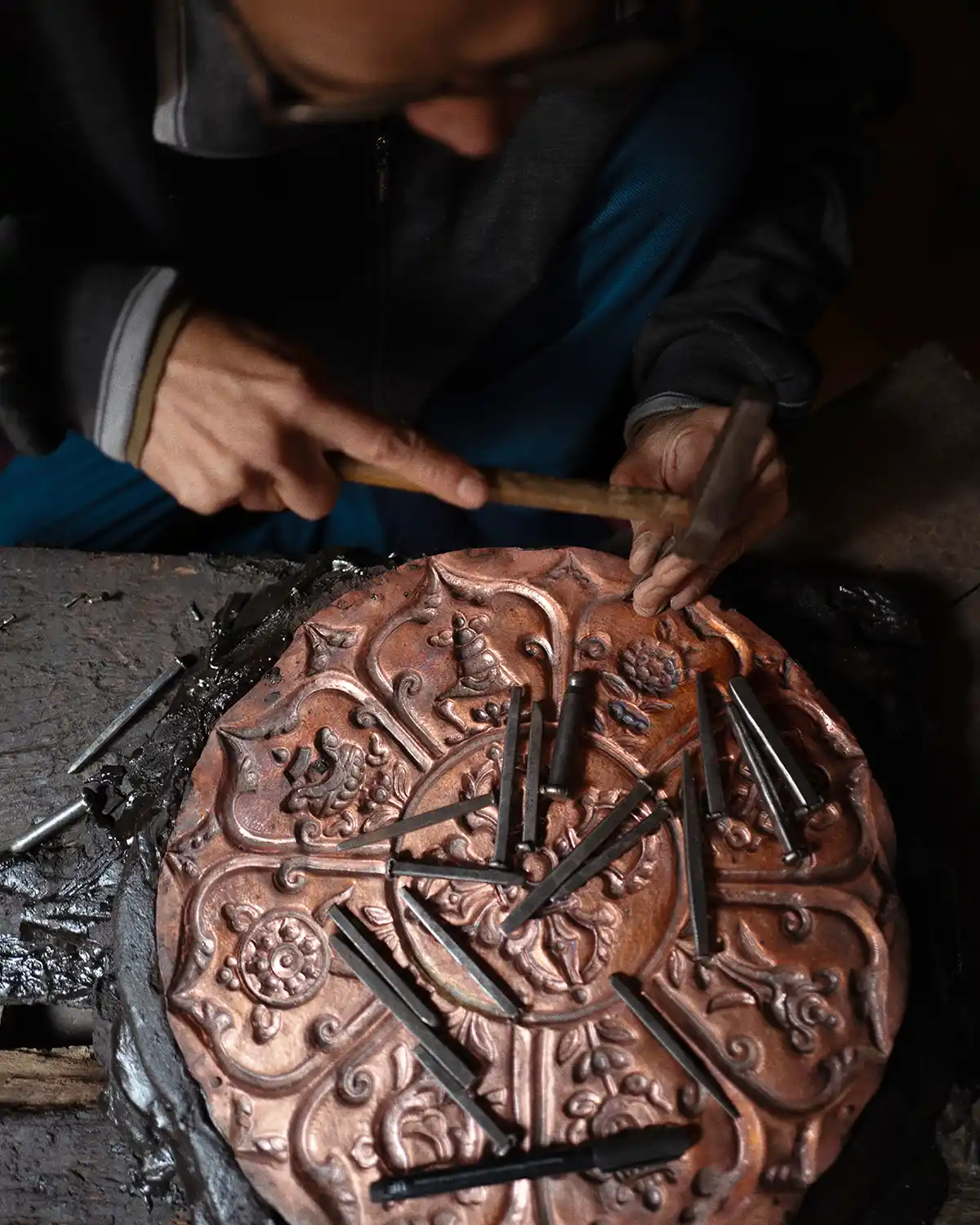
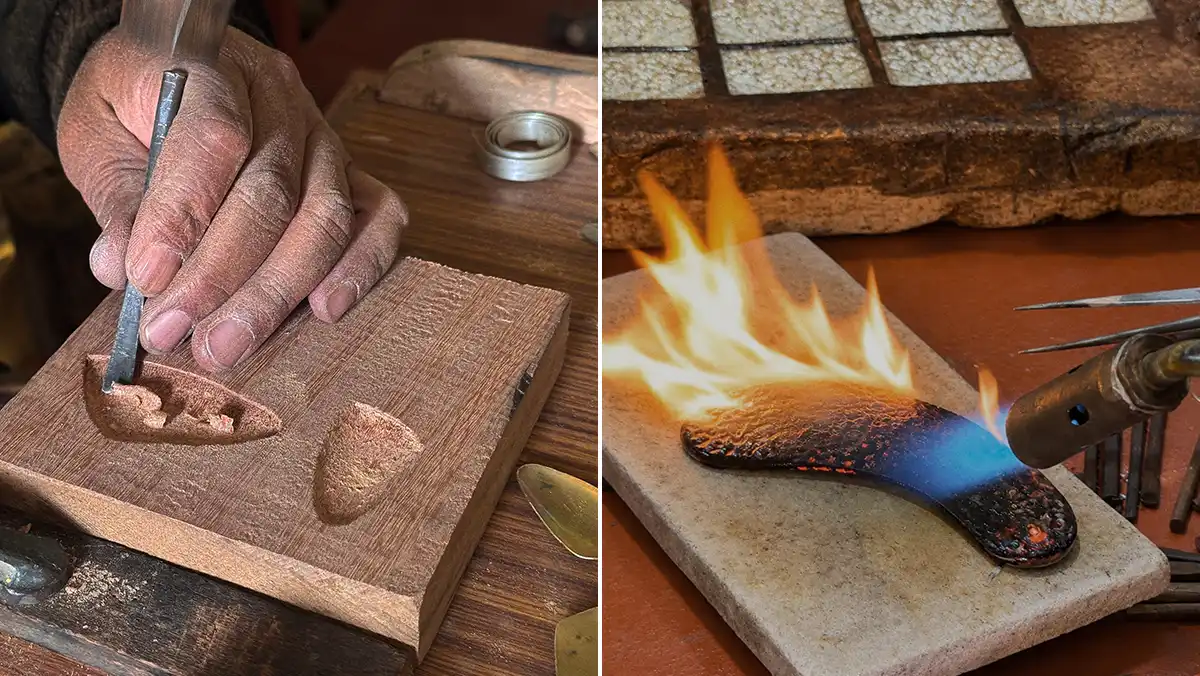
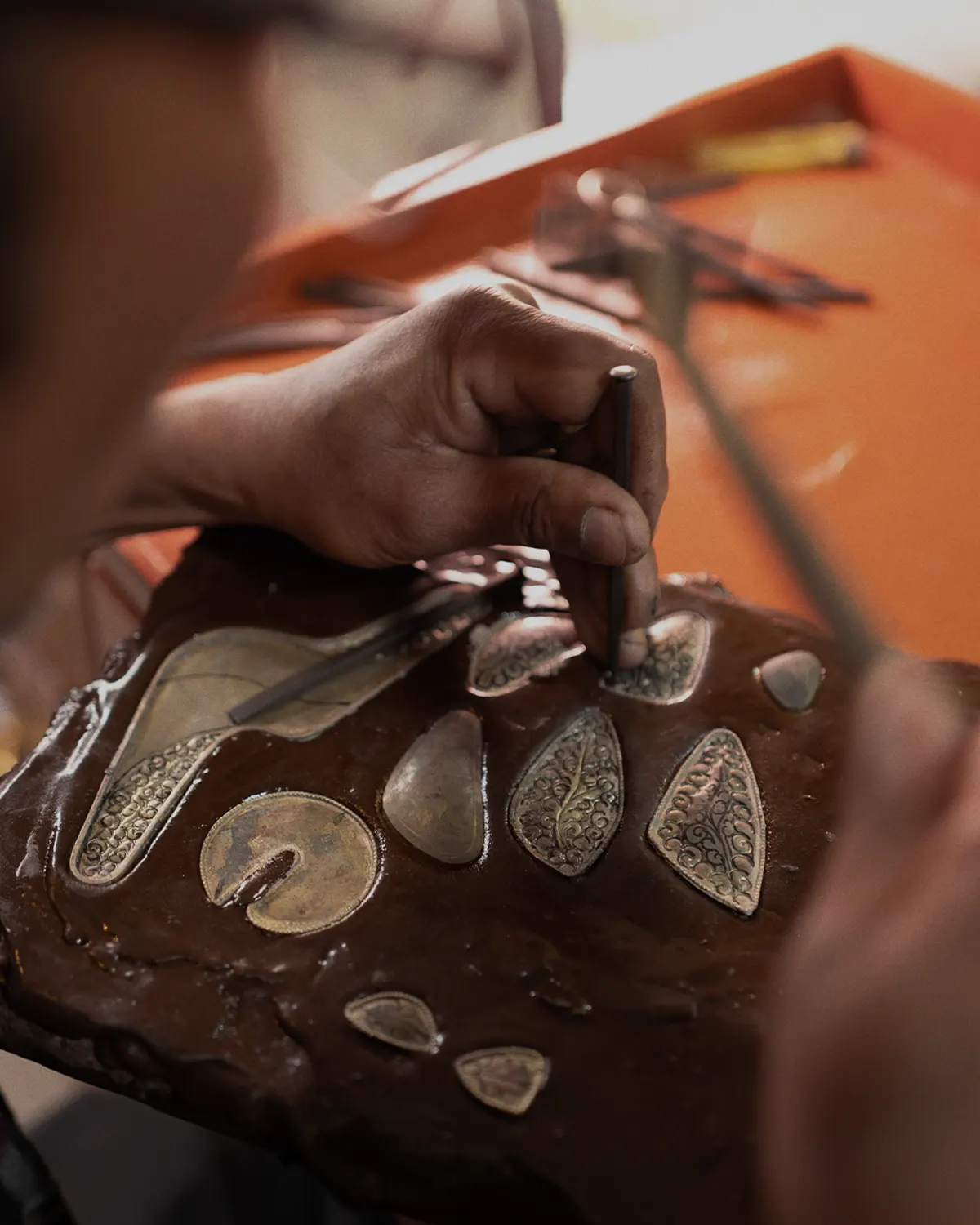
The whole village practices repoussé. The Newars have been perfecting this art for centuries. Thousands of strikes from small hammers fill Nepalese workshops with a steady, almost meditative rhythm. Each strike moves the ornament embossed in the metal by a fraction of a millimetre. Slowly, hour by hour, an ornament emerges from the flat surface. In the next step, the raised relief is chased from the front – the artisan deepens the lines, brings out the details and gives the ornament its final character. Handcrafting means that every decoration retains the individual mark of its maker. Differences in the force of the strike, the angle of the tool and the movement of the hand make every pattern unique.
It takes local artisans around a decade to acquire basic proficiency in repoussé. True mastery, however, is refined over a lifetime. Although the world around them has changed, work in Nepalese workshops is still carried out almost exactly as it was centuries ago. The value of this work is determined by time, precision and the unique gesture of the human hand. Once, handwork was a necessity. Today, these subtle differences are a luxury – proof of authenticity that the object did not come from an anonymous machine.
The Language of Ornament
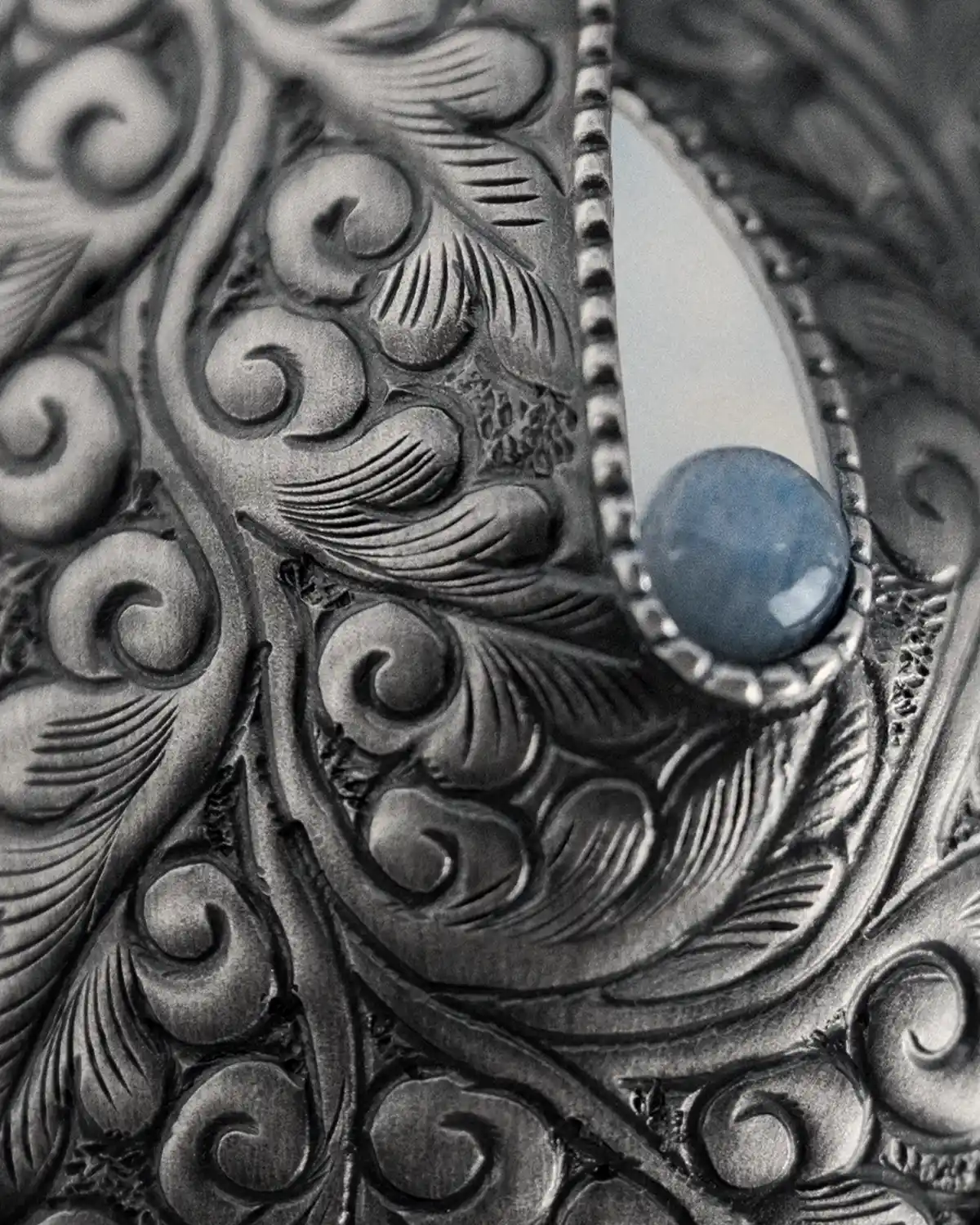
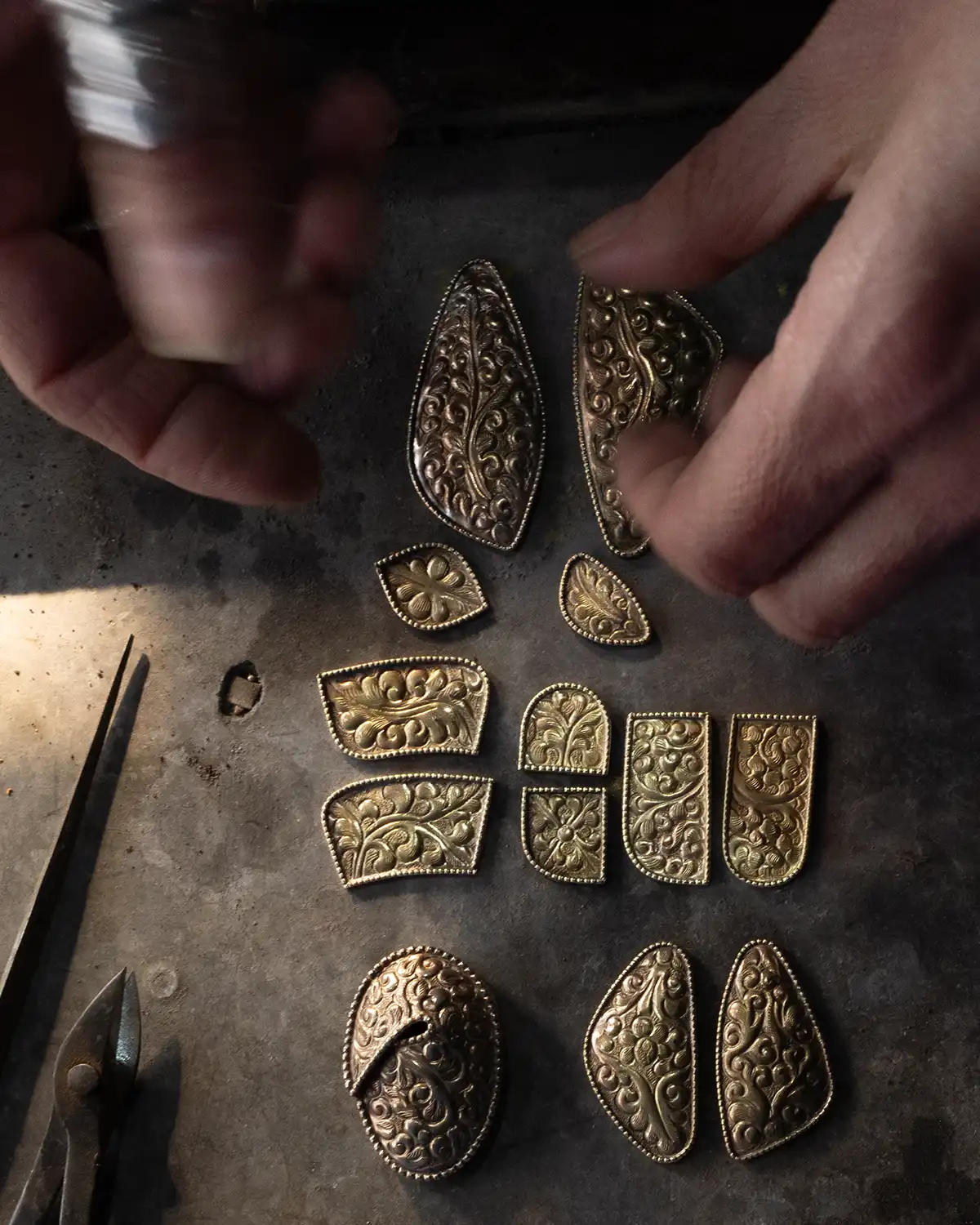
In the Nepal collection, stories are hidden in the surface of the metal. Repoussé vines wrap around necklaces, bracelets and earrings, telling of growth, the continuity of life and constant renewal. They are accompanied by lotus leaves – symbols of purity, transformation and the path towards light. This symbolism is drawn from Indian and Himalayan Buddhism. Each ornament grows out of a language developed by successive generations of Nepalese artisans. The maker does not start with a blank page: they draw on inherited motifs, preserve their meaning and at the same time leave the mark of their own hand. In this way, tradition is not frozen in time but continually takes on new forms.
“I am fascinated by the way nature turns into ornament. A person first observes a leaf or a flower. Then they simplify it into a few lines. The artisan transfers those lines onto metal. The next generation does it a little differently, and after hundreds of years it becomes difficult to say where nature ends and ornament begins. Then I come along, take that sign and move it a little further again. I think that is what continuity of craft means to me. It is not about endlessly repeating the past, but about understanding it and adding a fragment of your own,” Orska observes.
Himalayan Peaks Encased in Stone
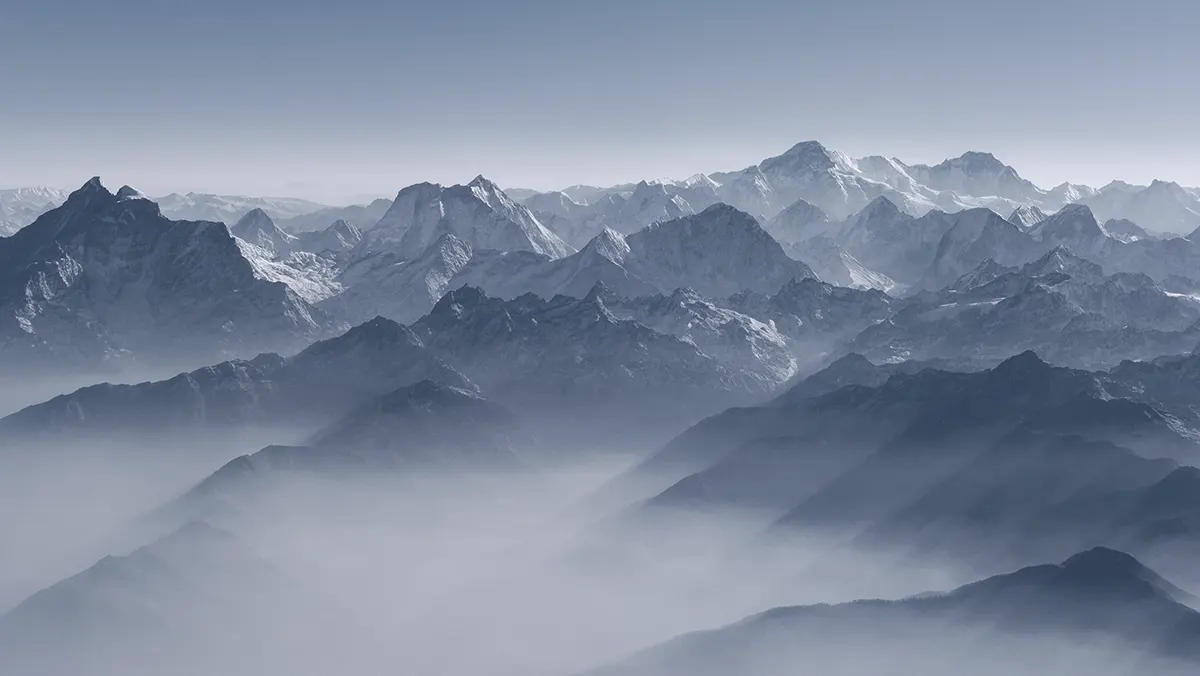
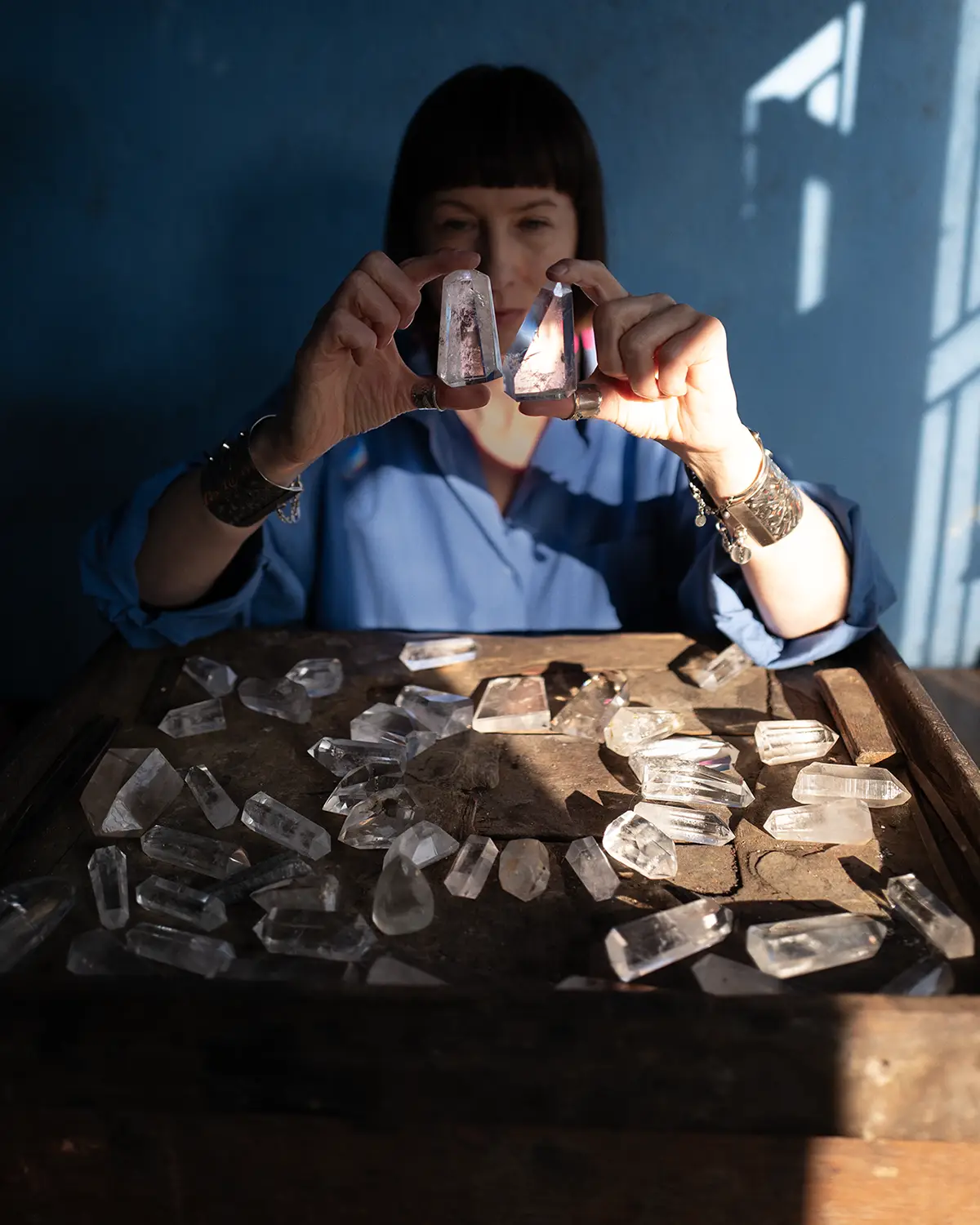
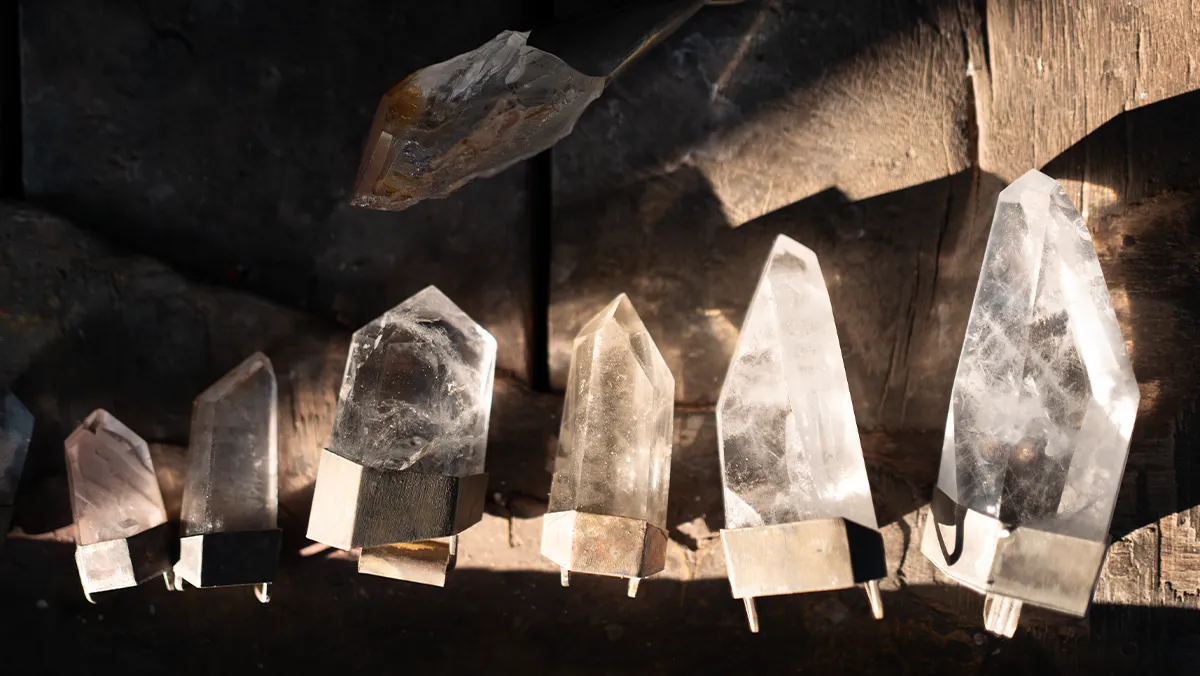
Himalayan crystal, a transparent quartz originating from the Himalayan region, appeared in the Nepal collection as a fragment of the mountain landscape. Its sharp facets resemble rocky peaks, while its natural inclusions look like clouds trapped inside the stone. “Every day I looked at the Himalayas from the workshop and wanted part of that view to return with me to Poland,” Anna Orska says, explaining her choice of this particular stone. The crystals came to her directly from people who had found them in the mountains. Each retained its own cracks, shades, inclusions and rutile needles, formed in the earth over millions of years. The designer did not want to improve them or fit them to a single pattern – the design had to adapt to the stone, which is why each of around 60 unique necklaces received a handmade setting created for a specific crystal, its proportions and cuts.
Epilogue in the Jewellery Workshop
We added the next chapter of this story in our jewellery workshop, where all of Anna’s travel experiences take shape and reach their final form. It is here that components from Nepal are transformed into earrings, necklaces, bracelets and rings. But that is not all. To complete the symbolism of the jewellery, we added natural labradorite to the rich ornamentation, connecting the weight of the earth with the colour of the sky. It is a stone of changing perspective. Seemingly dark and austere, it reveals blue, green and golden reflections as it moves. The light appears only at the right angle, reminding us that a familiar place – like Nepal revisited years later – can reveal an entirely new story.