The Semios collection connects past with future, east with west, you with what you want to remember
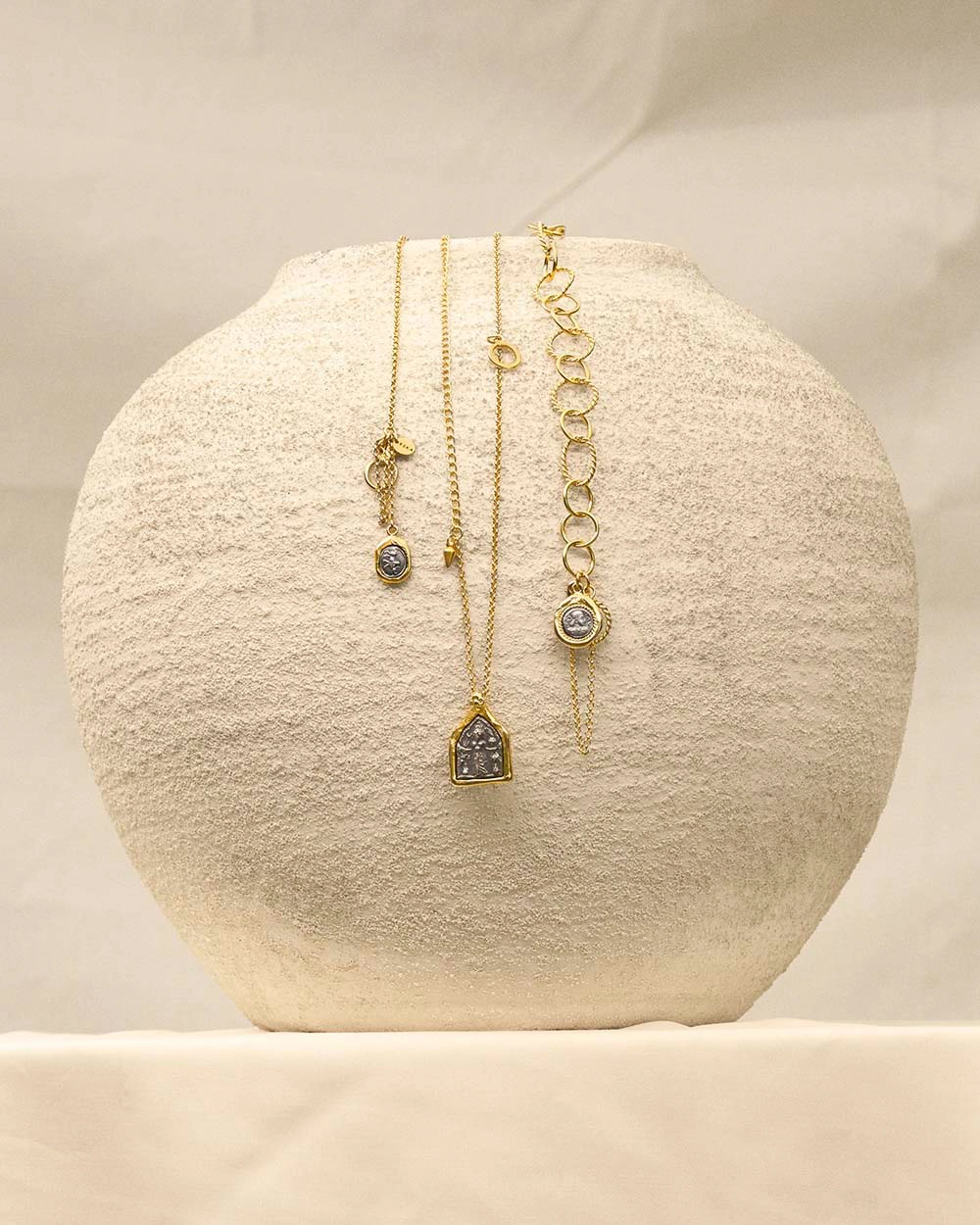
Since the beginning of time, humans have created signs that knew no boundaries – signs that merged, transformed, and flowed. For centuries, these signs have been preserved in amulets and keepsakes as an attempt to capture what is important. The Semios collection is handcrafted jewelry woven from such universal symbols, inspired by Greco-Roman, Hindu, and Central Asian traditions. Fragments of ancient seals, coins, and medallions – depicting rulers, mythological figures, and ornamental motifs – have been combined into original constellations of good signs that protect memories and tell stories. We hope you will find your personal symbol of strength among them.

Semios - the sign
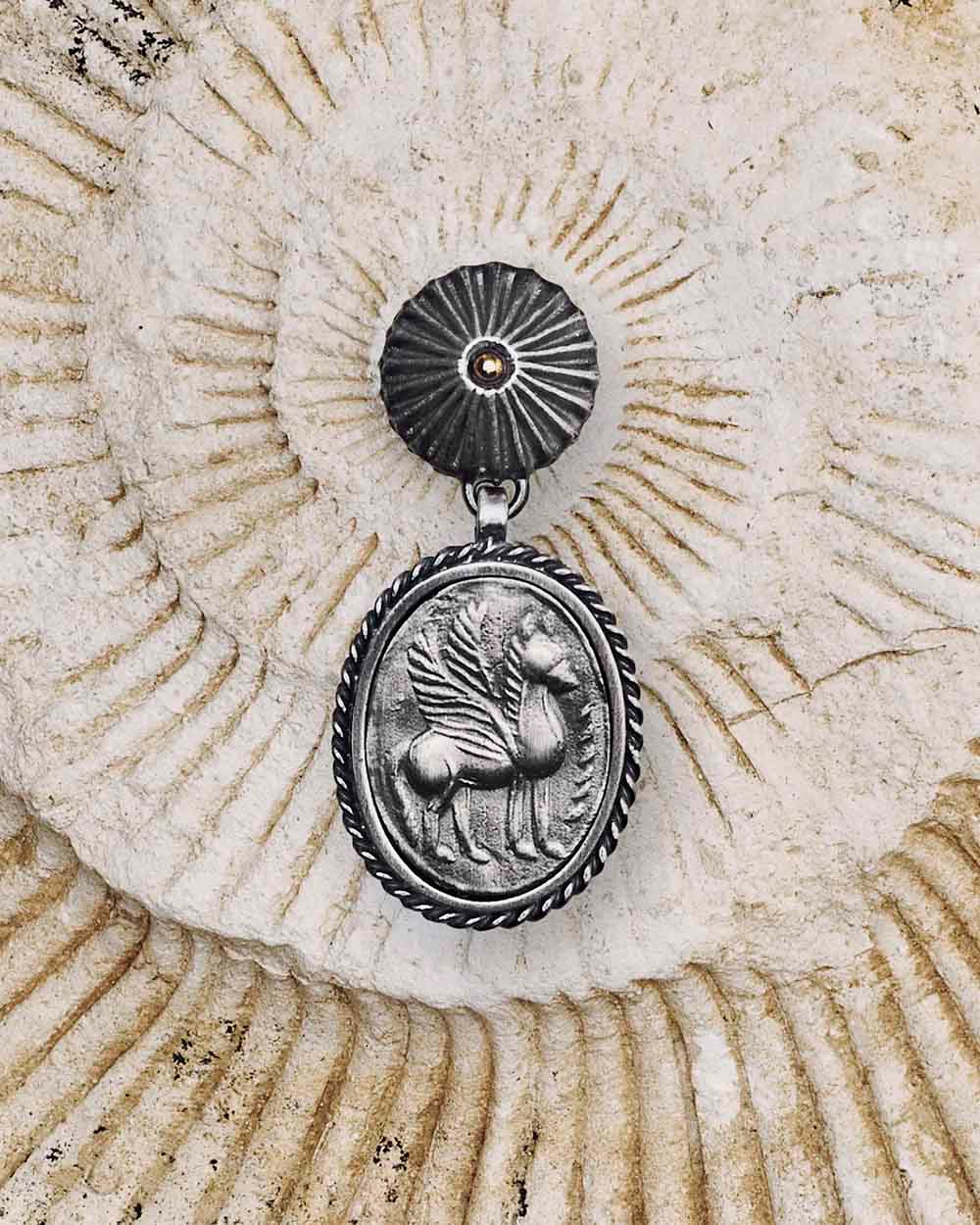
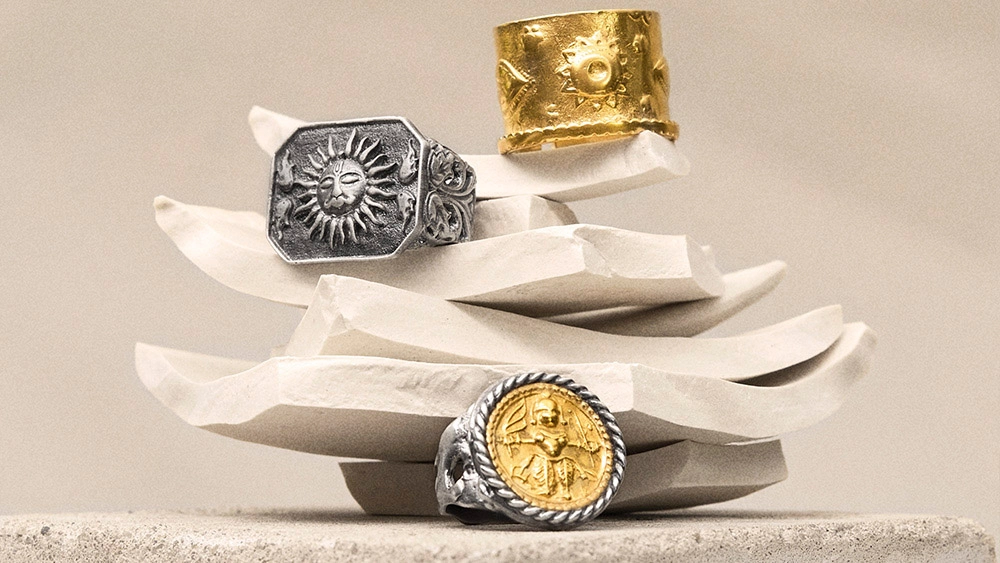
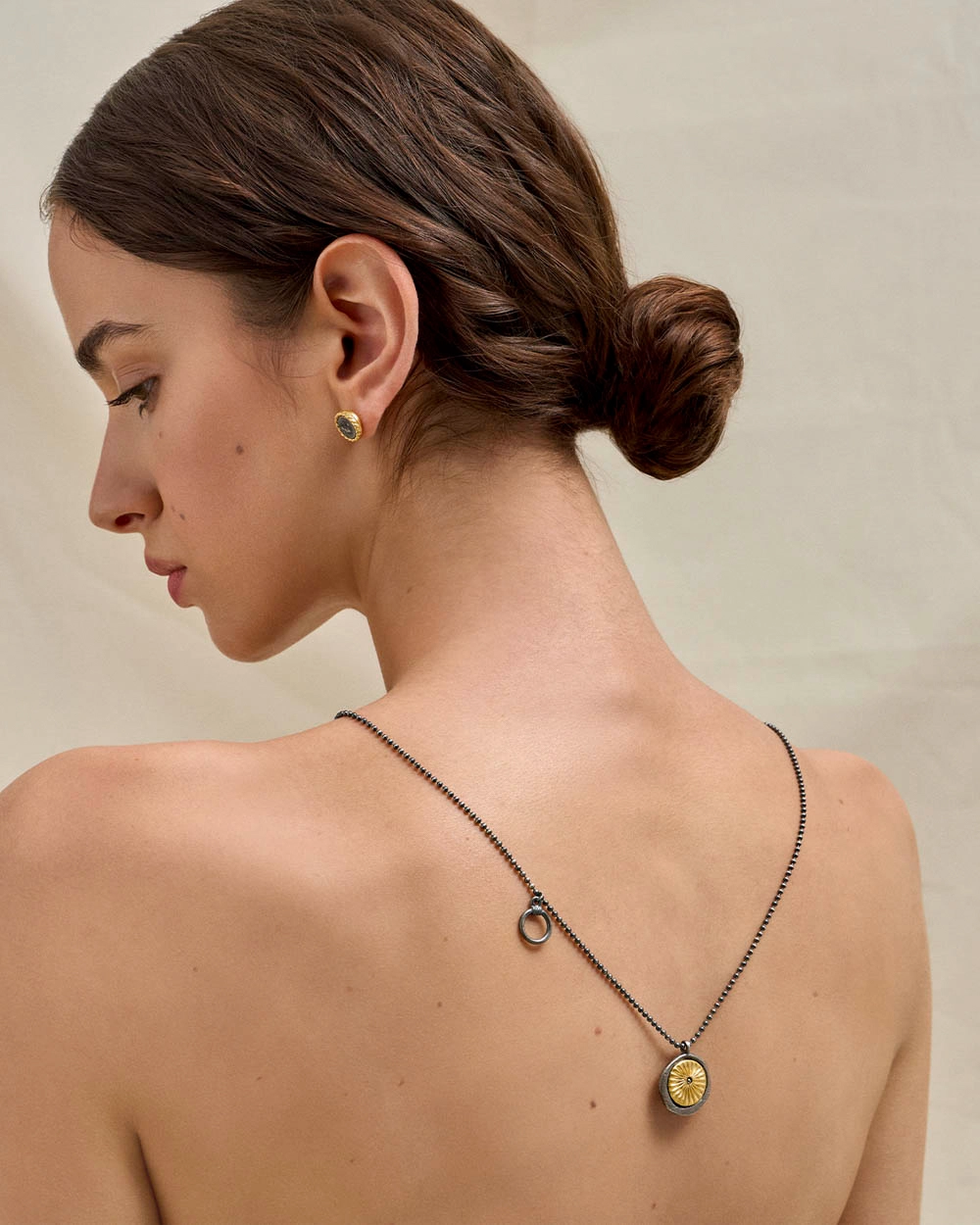
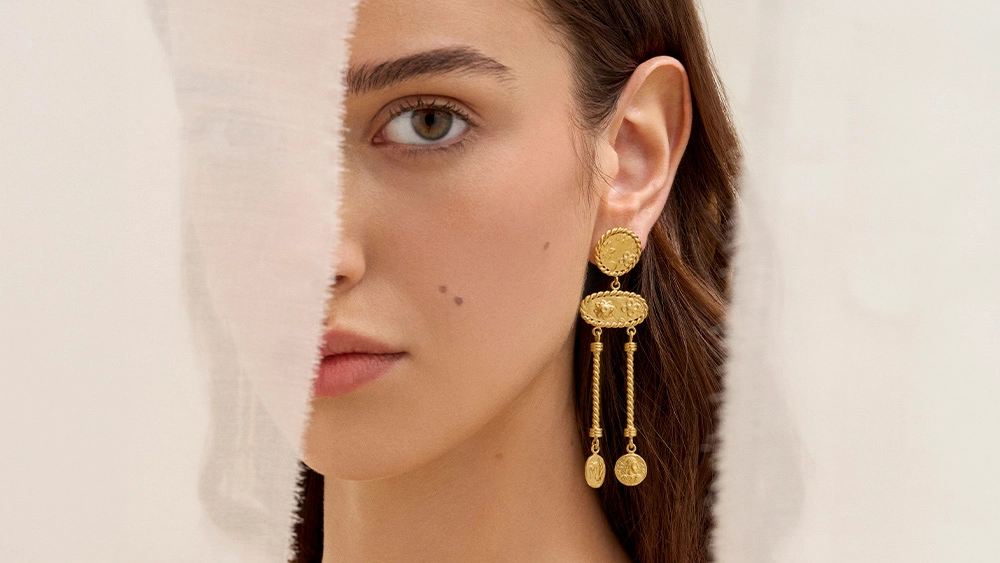
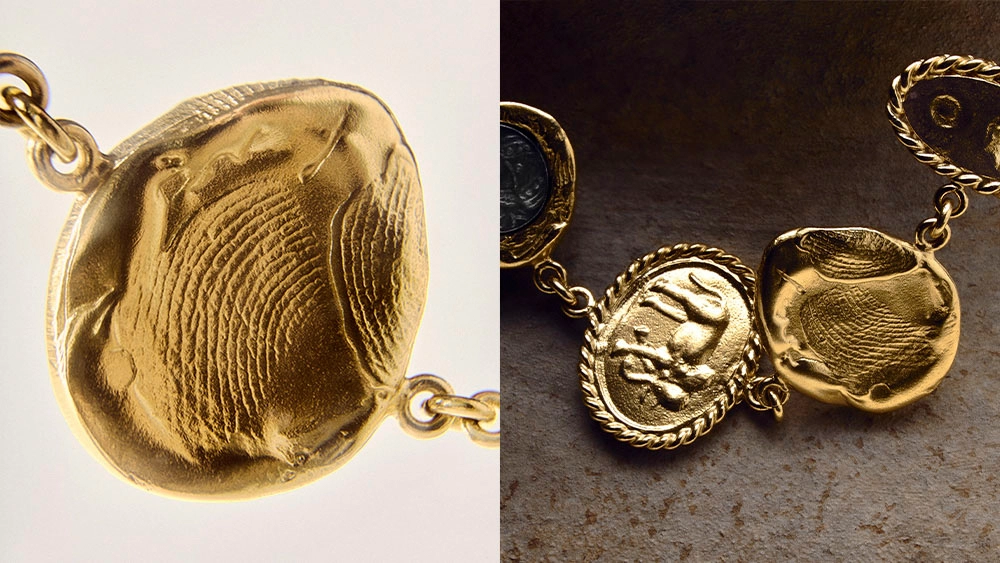
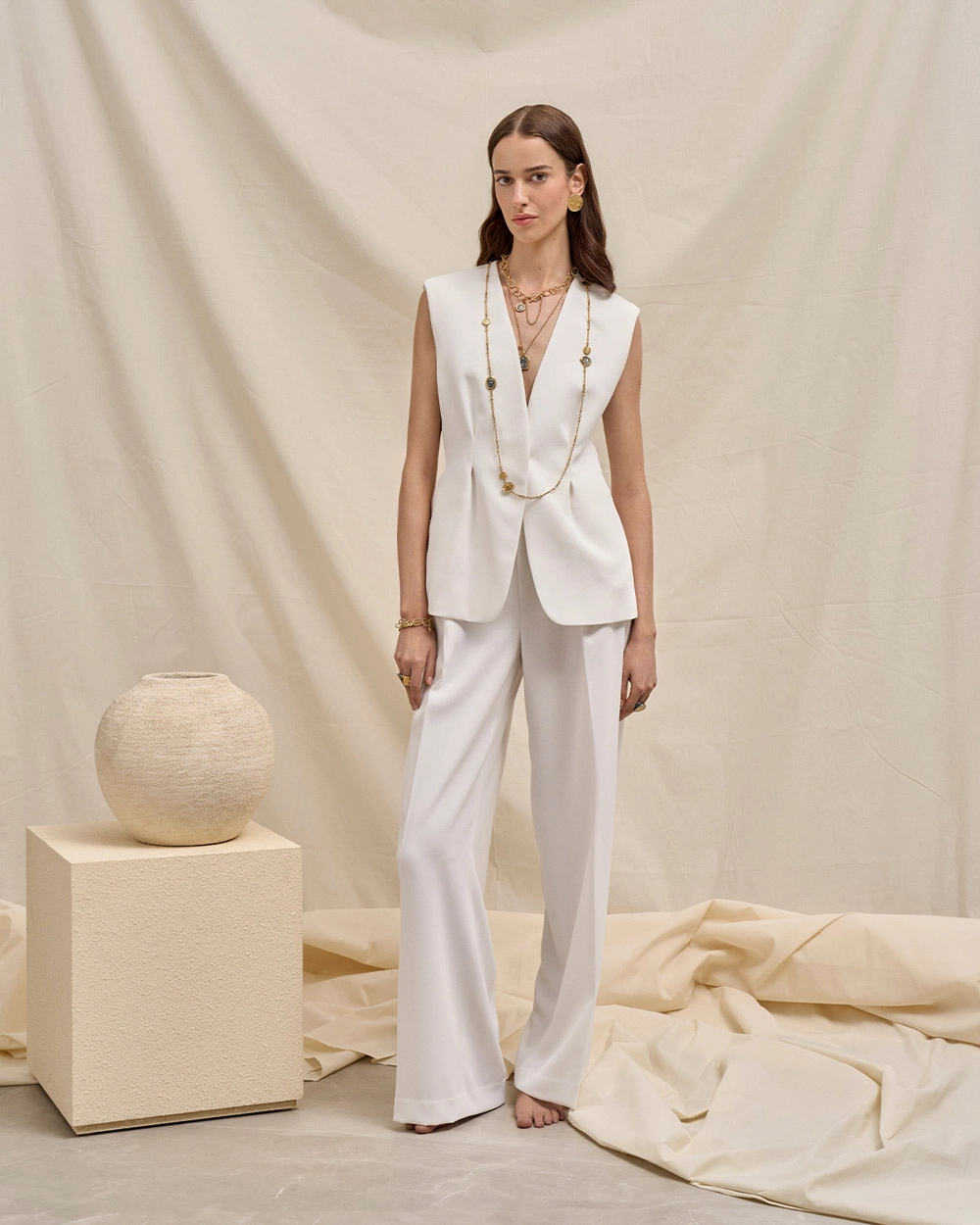
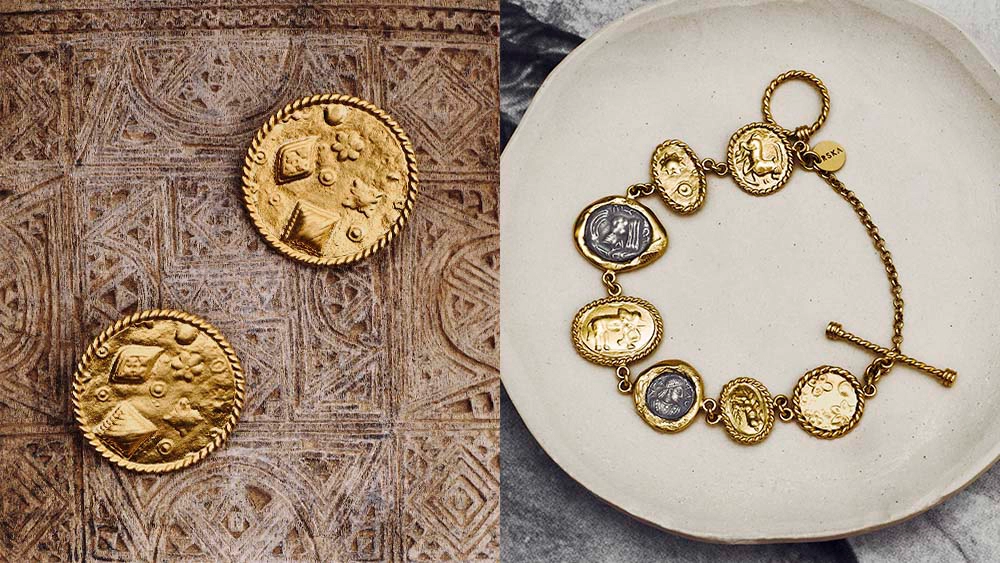
The collection includes opening amulet pendants to hide small, personal treasures; earrings with Pegasus, bracelets with Capricorn, signet rings featuring the sun, and necklaces bearing the image of a female deity. The jewelry captivates with a striking contrast between silver and gold-plated brass. Embedded in its structure is also the fingerprint of the artisans and jewelers who worked on the collection – a unique detail that serves as both a subtle and bold signature, a mark of master craftsmanship, and a reminder that behind every piece stands a human being.

Find your symbol
Capricorn
Capricorn is one of the most intriguing and multilayered symbols – present in both mythology and astrology, it embodies a fusion of the earthly and the spiritual. As a zodiac sign and mythological creature with the body of a goat and the tail of a fish, Capricorn represents deep ambition, overcoming obstacles, and climbing toward the heights – both literal and metaphorical. This hybrid form symbolizes adaptability and the balance between spirituality (water element) and drive and endurance (earth element).
Pegasus
In Greek mythology, Pegasus is linked with inspiration and the arts. According to legend, when Pegasus struck the ground with his hoof, a spring – Hippocrene – burst forth, sacred to the Muses, goddesses of poetry and the arts. Thus, Pegasus became a symbol of creative power and artistic elevation. He also symbolizes freedom and transcendence. His wings allow him to rise above the material world, making him a sign of striving for higher values, escaping the mundane, and transcending limits. In art, Pegasus is often portrayed as a guide of souls, helping them ascend toward light and divinity.
Elephant
In Asian cultures, especially in India, the elephant is a symbol of wisdom, fortune, and divinity. The most iconic representation of the elephant in this tradition is the god Ganesha – a deity with an elephant’s head, worshiped as the patron of knowledge, beginnings, and the remover of obstacles. In this role, the elephant becomes a spiritual guide, a link between the material and spiritual worlds. In Africa, the elephant symbolizes strength, dignity, and community. In traditional tales, it often plays the role of a wise sage or a fair judge. In Western culture, the elephant is also associated with memory and intelligence. Modern symbolism further includes values like peace, patience, stability, and calmness.
The Ruler
The image of the ruler holds a powerful, universal, and deeply symbolic meaning – in culture, religion, and mythology alike. It is not merely a political figure, but an archetype that symbolizes order, authority, divinity, and responsibility. The ruler represents structure over chaos, the light of decision over uncertainty. In this figure lies the idea of setting boundaries, defining direction, and preserving values.
The Goddess Figure
Across many cultures – from the prehistoric Venus figures to the Hindu Kali and Greek Demeter – female deities represent Mother Earth, the guardian of life, nature, fertility, and rebirth. Today, the figure of the goddess also stands for collective feminine power – sisterhood, community, and support among women. In jewelry, the figure of a goddess can serve as an amulet of strength, reminding one of personal power and worth, or as a statement of femininity – not only gentle, but also wild, free, and independent. When you wear a necklace with the figure of a goddess, you give it meaning – you turn it into a symbol of power. Without you, it is merely a beautiful ornament.
The Sun
The Sun is the source of light and life, the heart of our solar system, and one of the most powerful archetypes present in nearly every culture on Earth. As a symbol, it represents creative power, the cycle of rebirth, divine presence, and the inner light of consciousness. In the mythologies of ancient civilizations, the Sun was worshipped as a deity – in Egypt as Ra, the creator god who sailed across the sky in his solar barque and journeyed through the underworld at night. In Greek and Roman mythology, Helios and Apollo were his counterparts – gods of light, beauty, music, and prophetic wisdom. In many other cultures, including the Inca, Aztec, and Japanese traditions, the Sun symbolized power, divine presence, and cyclical renewal. The Sun is also an archetype of masculine, active energy – the yang principle in Chinese philosophy, representing expansion, action, warmth, and logic.