Shooting stars in the anniversary collection
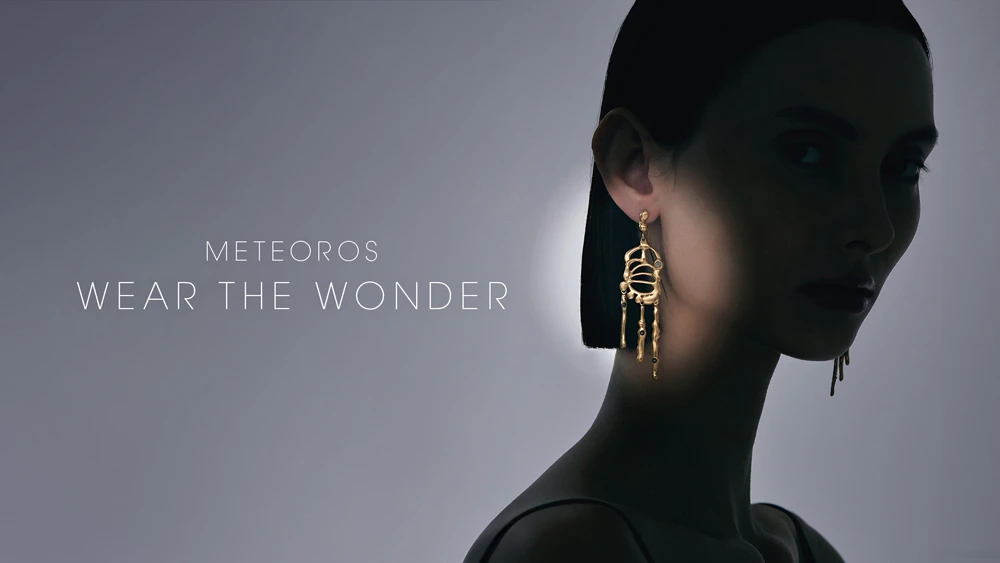
We like to work with unconventional materials. Therefore, when creating the Meteoros collection, we looked to the sky and reached for the stars. From the falling ones, we handcrafted jewelry, thanks to which we brought Cosmos down to Earth. Did you know that meteorites are the oldest stones on our Planet. Scientists estimate that these small pieces of the universe began to form together with the Solar System, about 4.5 billion years ago, making them the most unearthly material in jewelry making. We decorated the jewelry in the Meteoros collection with fragments of Aletai and Campo del Cielo meteorites, adding sparkling pyrite for company. Together they form a composition that will be a cosmic pleasure to wear!




Aletai
The Aletai meteorite is the fifth largest meteorite in the world. It had a mass of 100 tons at the time of its encounter with Earth, and its fragments scattered within a radius of 500 kilometers. It fell in the Xinjiang region of China 10,000 - 15,000 years ago. The cosmic stones are distinguished by nature's carefully designed unique pattern. Intersecting plates of kamacite and taenite (i.e., iron with low and high nickel content) form a distinctive pattern, called Widmanstätten patterns. This finesse could not have been invented by any human being!
Campo del cielo
The Campo del Cielo meteorite impresses with its irregular, rough texture, which makes the raw stone look like an uncut diamond straight from the Cosmos. It began its journey on Earth in Argentina some 4000-6000 years ago. However, it was not encountered for the first time until 1576. Indians of the Chaco tribe believed that this meteorite was a fragment of the Sun and made a pilgrimage to the place where the meteorite hit. According to legend, if the sun's rays fell on the meteorite on a certain day of the year, it transformed into a luminous tree resounding with the sounds of thousands of bells.

Cosmic particles in your fingertips
Created using the cast metal method, the jewelry resembles the irregular surfaces of celestial bodies traversing the galaxy. Silver and gold-plated shapes softly wrap raw and polished meteorites, emphasizing the mysteriousness of these unique stones. And the company of sparkling pyrite helps bring out the silvery glow of the cosmic particles. Some believe that pyrite promotes willpower and determination. So these two “stones” perfectly complement each other. Falling stars encourage dreaming, and pyrite helps turn dreams into reality.
The collection also includes a limited line of necklaces with tektites, or glassy black stones, which were formed 790,000 years ago by a meteorite impact. Each one is different and unique - no two tektites are the same in the entire universe, so no two necklaces are the same.
Tektites
Although tektites have never been to the Cosmos, they have much in common with the distant universe. The earthly relatives of the meteorites found in the Meteoros collection were formed by the impact of falling stars some 790,000 years ago. Our tektites belong to the Indochinite group and were found on the Bolaven plateau in southern Laos. They are distinguished by their glassy texture and dark, almost black color, which evokes associations with the cosmic abyss.