 add to wish list
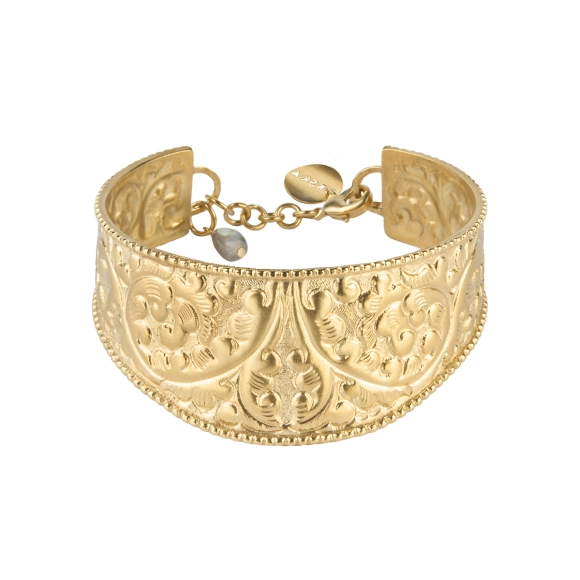
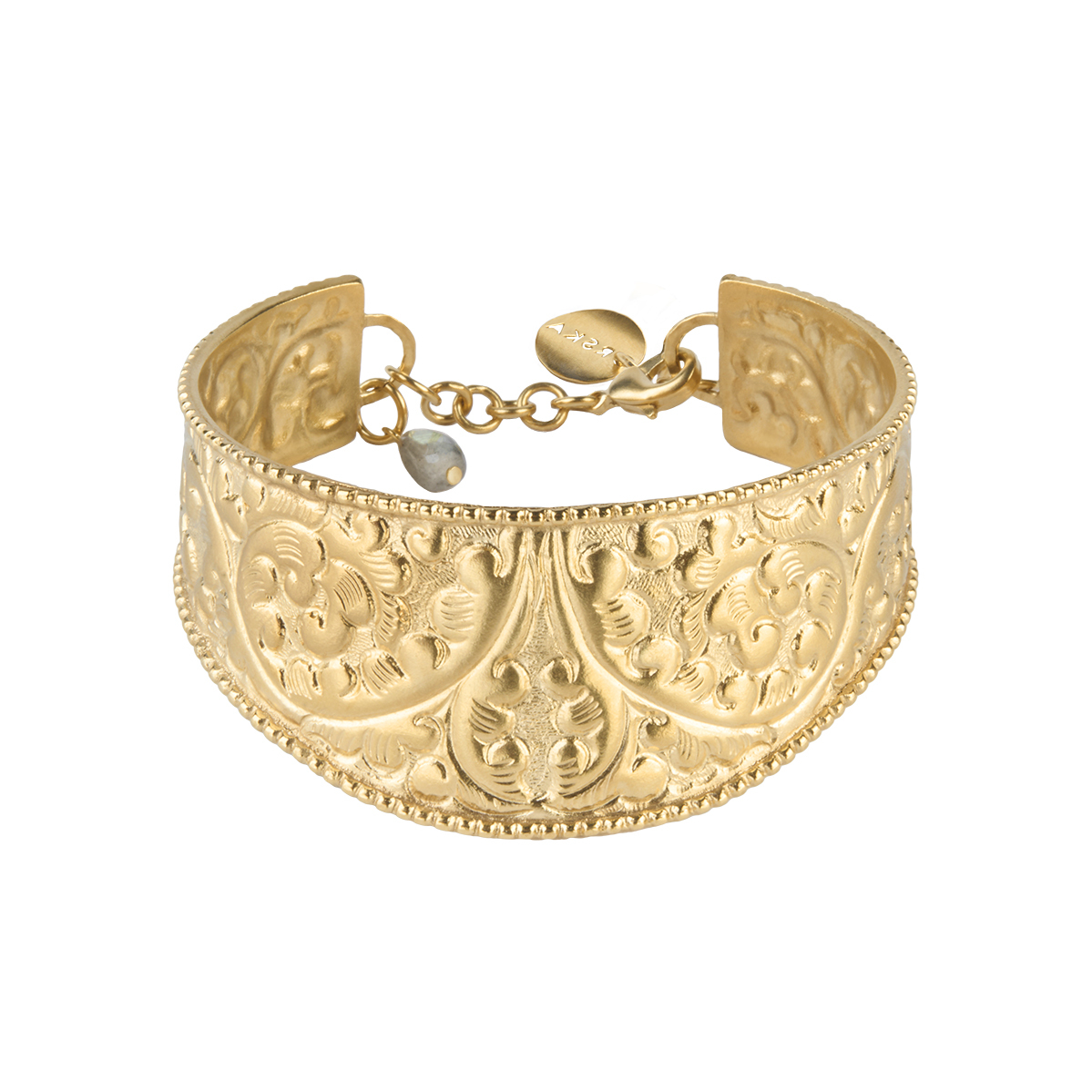
A bracelet with a plant decoration from the Nepal collection
product unavailable
Description
- 95% gold-plated brass, 5% labradorite
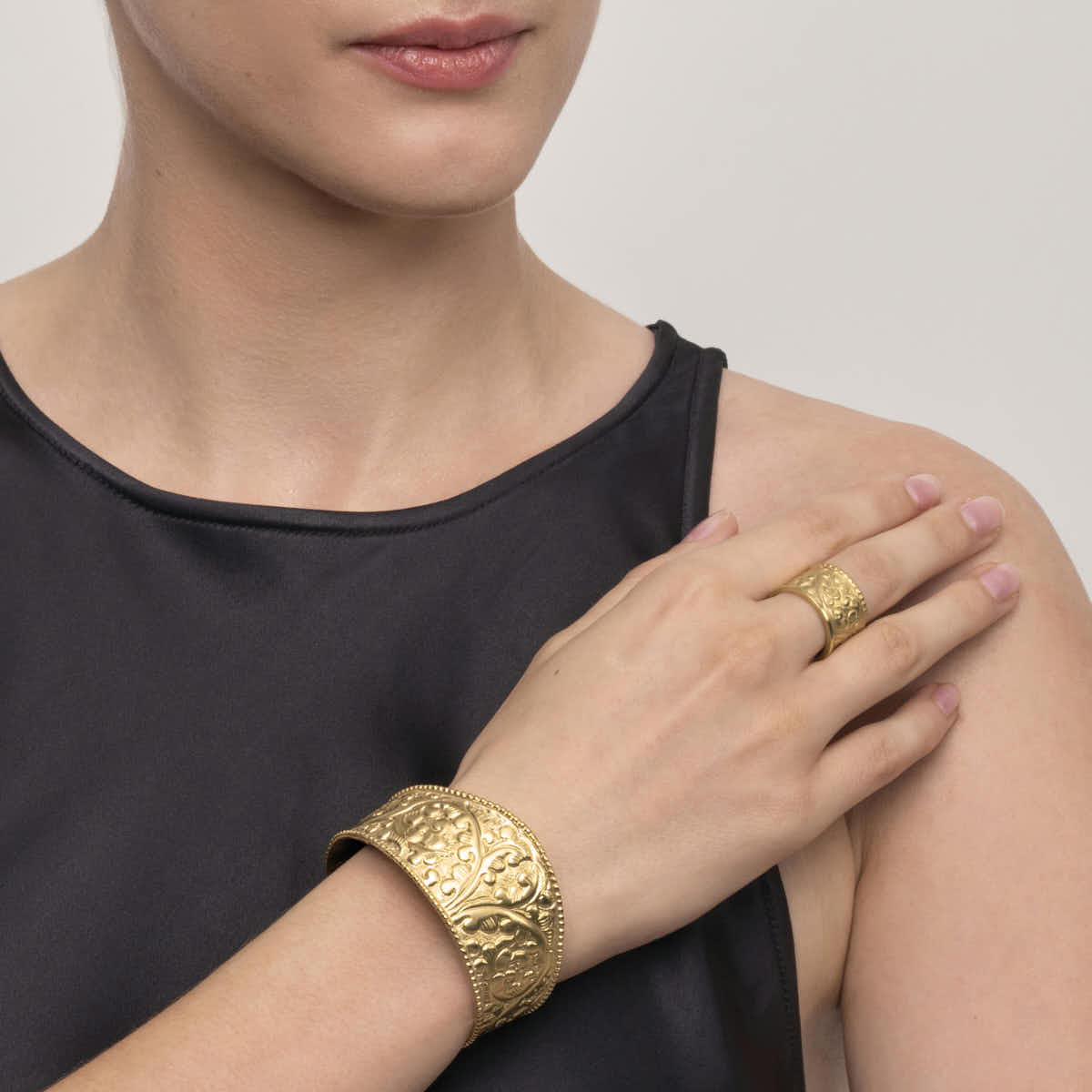
- Width up to approx. 3 cm
- Labradorite length approx. 1 cm
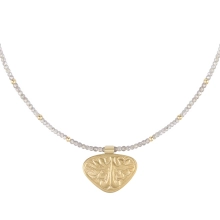
- Suspended logo approx. 1 cm in diameter
- Approximate weight approx. 25 g
Nepal Jewelry Collection - Crafts of the World
The Nepal collection is jewelry created in hand-repoused metal, shaped with thousands of precise chisel blows millimeter by millimeter. Its surface is decorated with traditional plant ornaments, the most important of which is the lotus, a symbol of a change of perspective. The raw rock crystals featured in these limited-edition, unique necklaces evoke the Himalayan horizon: their sharp facets resemble rocky peaks, and their natural inclusions resemble clouds trapped within the stone. The jewelry bears the imprint of the human hand—changes in angle or pressure make each piece one-of-a-kind.
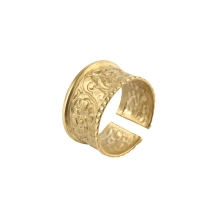
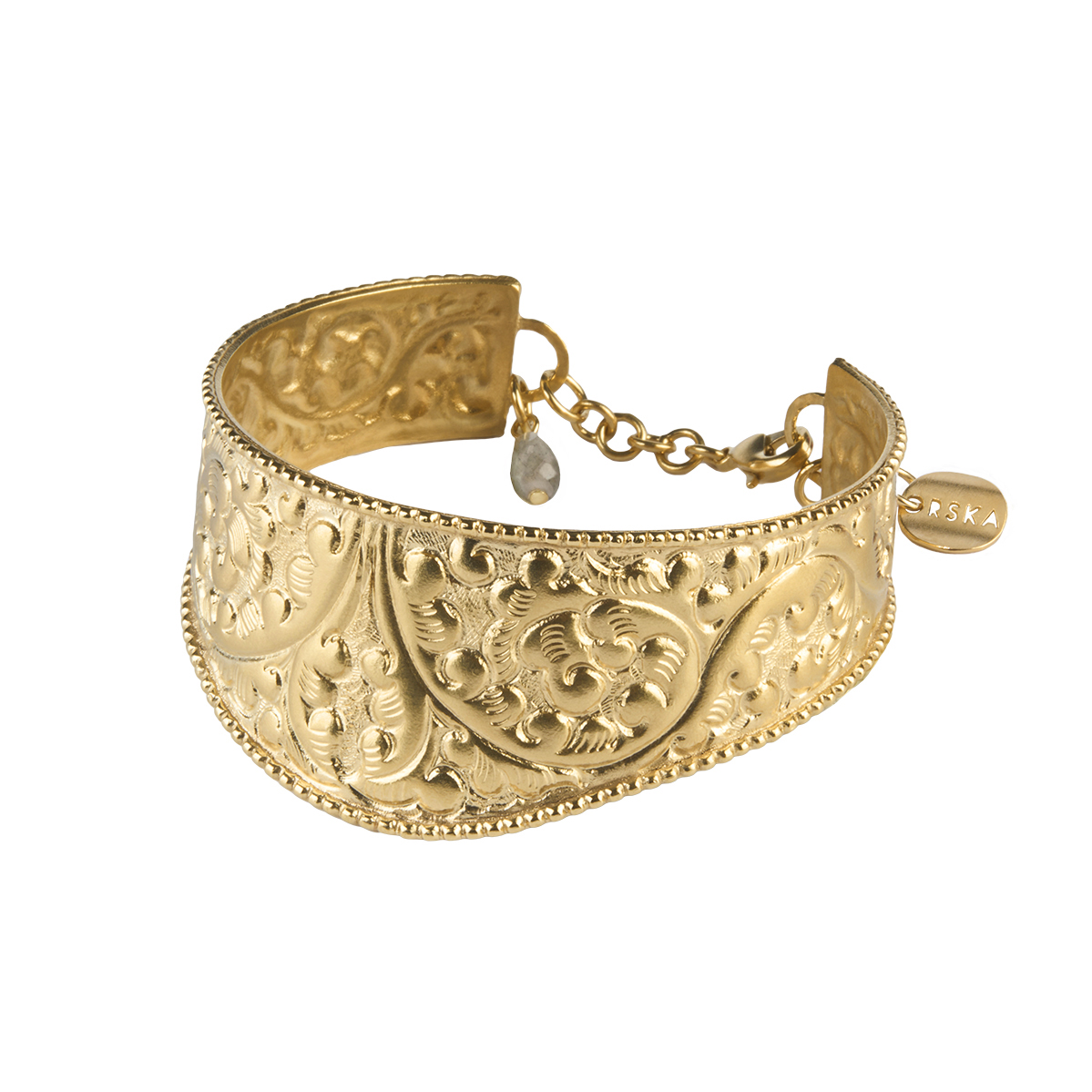
Rigid gold-plated bracelet with a labradorite pendant
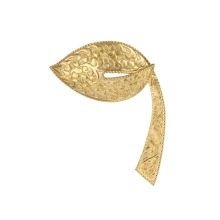
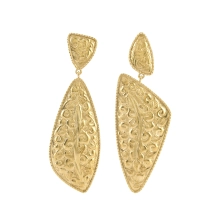
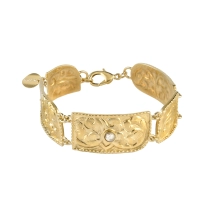
The bracelet is made of a wide band of brass covered with numerous ornaments. Vines wind across the bracelet and lotus leaves bloom. The edges of the bracelet are also adorned with fine ornaments. The plant relief is the work of master metalworkers from a friendly Nepalese workshop. The decorated elements were sent to the ORSKA studio, where jewelers covered them with a layer of gold and added a labradorite droplet pendant to each ORSKA bracelet. The labradorite shimmers with shades of green, blue, gray, and gold with every movement of the hand. The bracelet has a chain securing it from the wrist, finished with the ORSKA logo.
The handcrafted process of creating each bracelets means that individual pieces may differ from the bracelet shown in the photo in terms of the size of the plant vines, their details, and the arrangement of the leaves.
Repusating - a craft from the Kathmandu Valley
Between earth and sky, at the foot of the Himalayas, thin sheets of brass take hours to transform into richly decorated reliefs. They are created by the Newars of the Kathmandu Valley, who have been perfecting the art of metalworking for centuries and passing down its secrets from generation to generation. Using hammers and profiled steel punches, they shape the sheet metal from below. Strike after strike, they extract convex vines, leaves, and flowers from its surface. Then they refine the ornament from the front, deepening the lines, emphasizing the contours, and perfecting the smallest details. Every difference in the force of the blow, the angle of the tool, or the gesture of the hand remains visible in the metal, so no two reliefs are identical.