 add to wish list
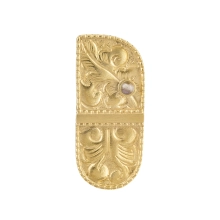
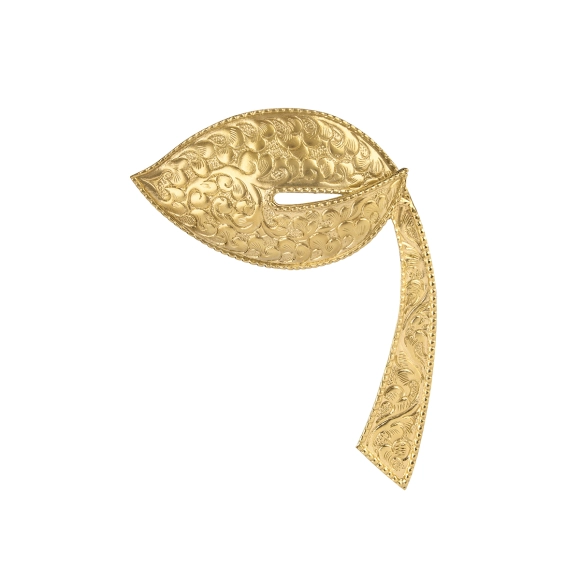
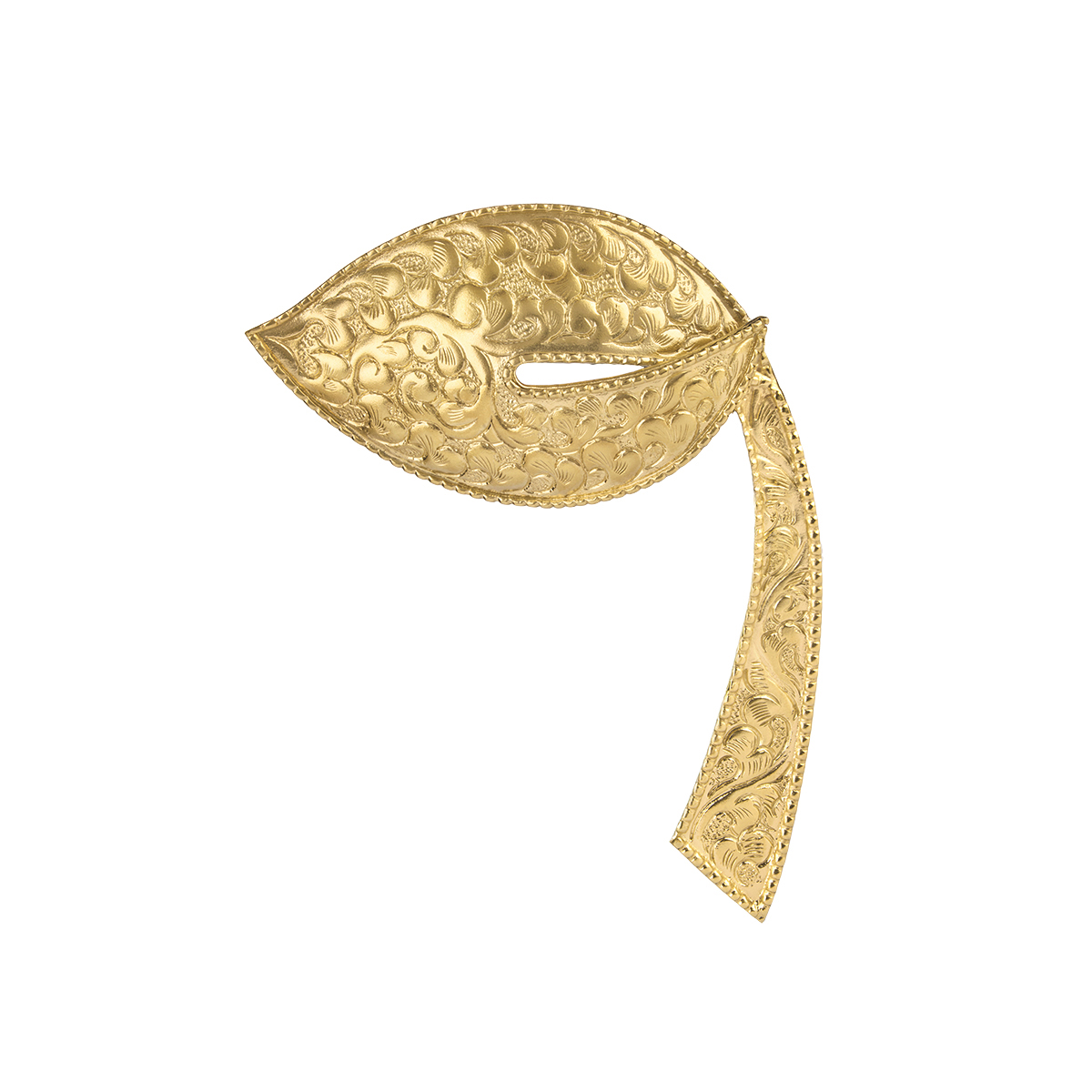
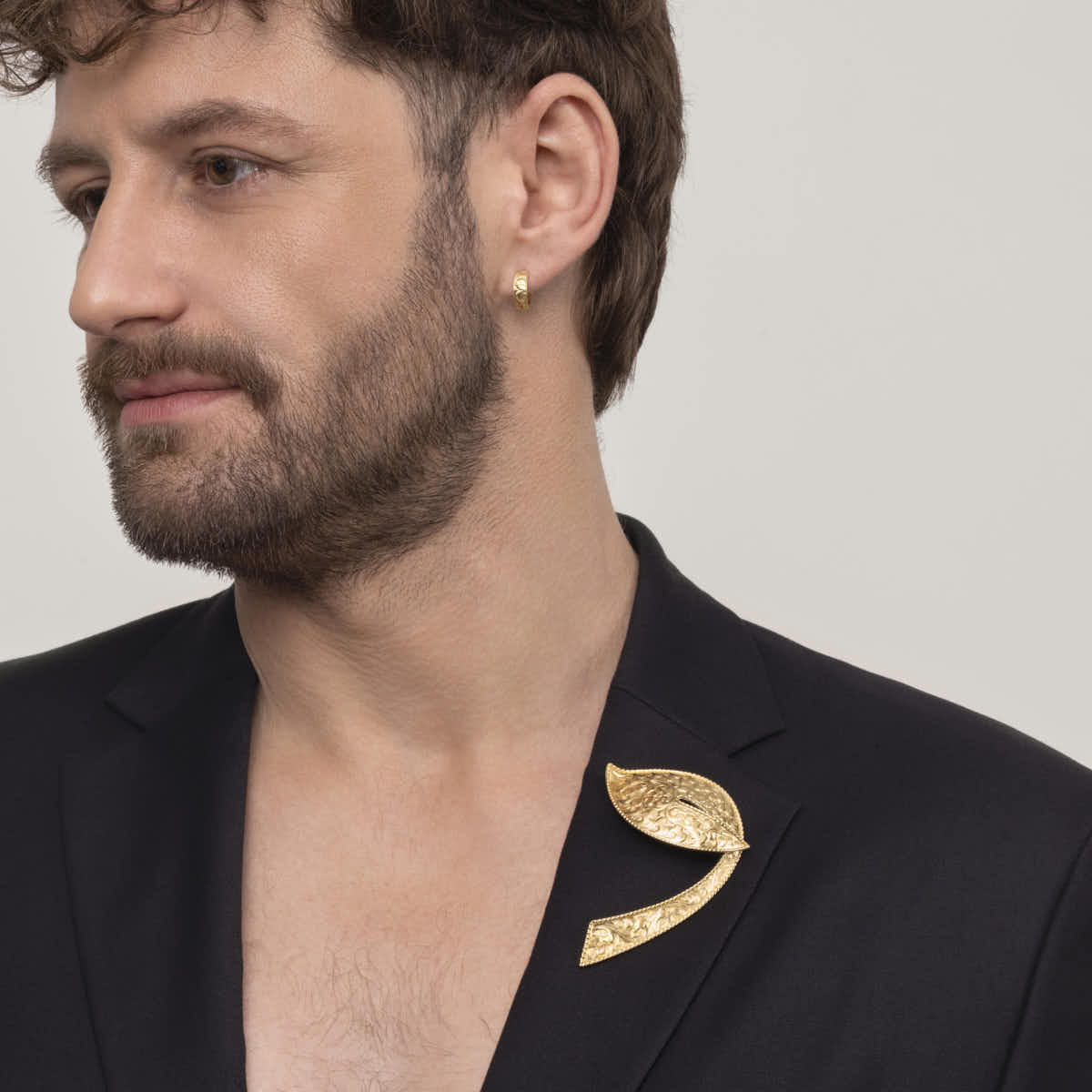
Repoussé brooch from the Nepal collection
product unavailable
Description
- 100% gold-plated brass
- Brooch length approx. 8.5 cm
- Width approx. 6 cm
- Approximate weight approx. 14 g
The sky is not the limit
The Nepal collection leads to where it all began. It was in Kathmandu that Anna Orska found her own design method, based on learning craftsmanship at the source, gaining knowledge through practice, and authentic collaboration with local masters. One of the first to open this world to her was Ramesh, a master of repoussé. Ten years later, the designer stood by his side again. To the rhythm of thousands of hammer blows, the elements of a collection were created, reminding us that sometimes a change of perspective is enough to see a new direction. Because above the clouds, there are no beaten paths, only those we dare to chart.
Repusé brooch from the Nepal collection
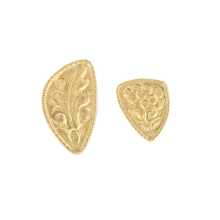
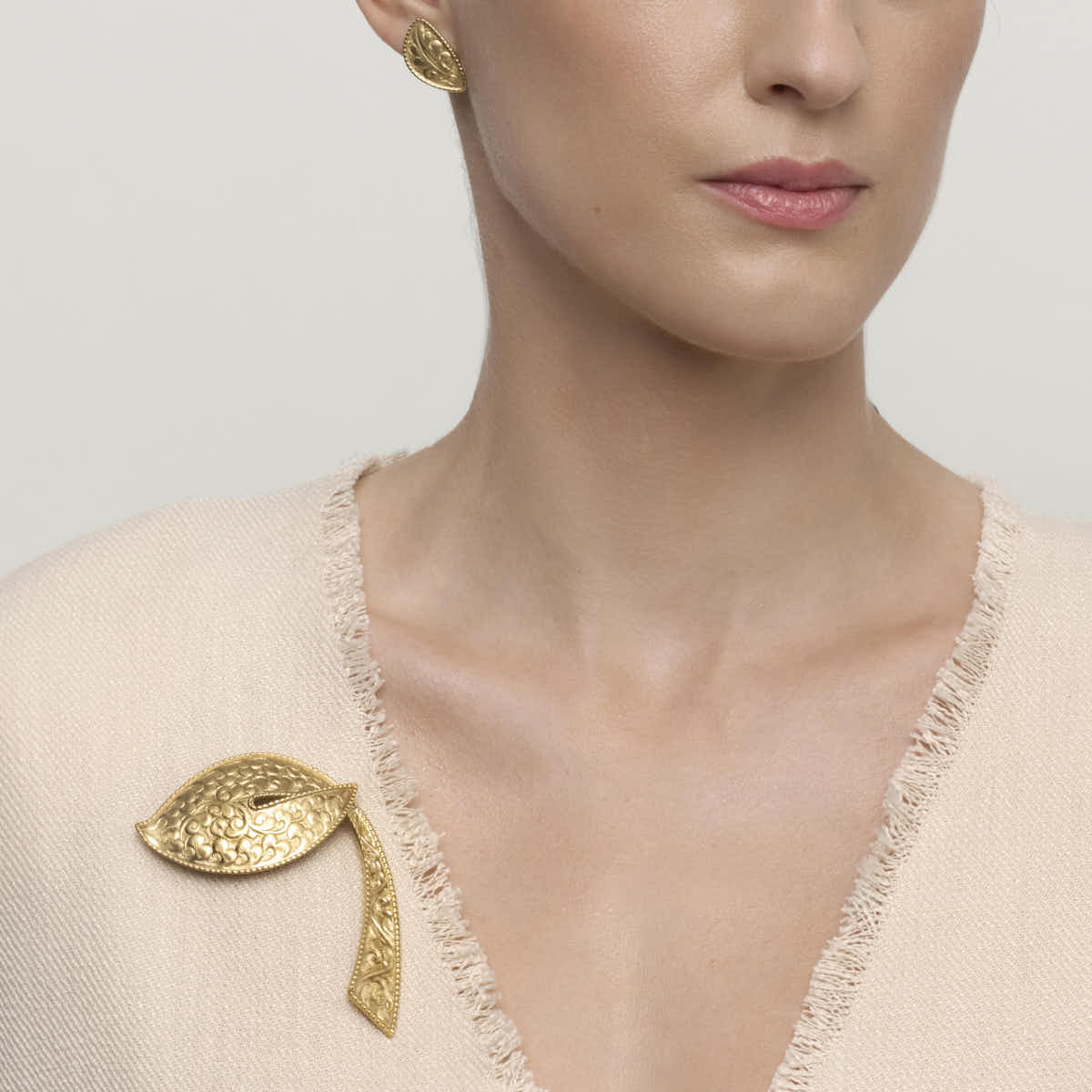
The golden brooch brings to mind a leaf with a softly curled edge and a long, curved stem. Its surface is filled with convex, repoussé ornaments: tiny petals and winding vines that emphasize the movement of the plant form. The openwork cutout adds lightness to the composition, and the intricately decorated edges attract the eye up close. The entire surface of the brooch is covered with ornaments embossed into the metal. Plant spirals, leaves, and vines symbolize growth, rebirth, and the constant movement of nature. The brooch can become a striking accent on a jacket lapel, sweater, or coat.
Repussage - what is this technique?
The heart of the Nepal collection is repoussé, a traditional metal decorating technique perfected for centuries by Newari craftsmen from the Kathmandu Valley. It begins with a thin sheet of metal. Himalayan masters work from the underside, striking contoured points with a hammer. Each stroke shifts the sheet by a fraction of a millimeter, until a raised relief gradually emerges on the other side. The piece is then turned over and chiseled from the front: lines are deepened, contours are accentuated, and the finest details are meticulously extracted. Creating a single ornament requires hundreds, sometimes thousands, of strokes and many hours of focused work. In the Nepal collection, this centuries-old technique takes on a contemporary form: ORSKA jewelry.