 add to wish list
Gold-plated, rigid necklace from the Nepal collection
product unavailable
Description
- 95% gold-plated brass/gold-plated alpaca, 5% labradorite
- Necklace circumference approx. 37 cm + 11 cm chain
- Width approx. 2 cm
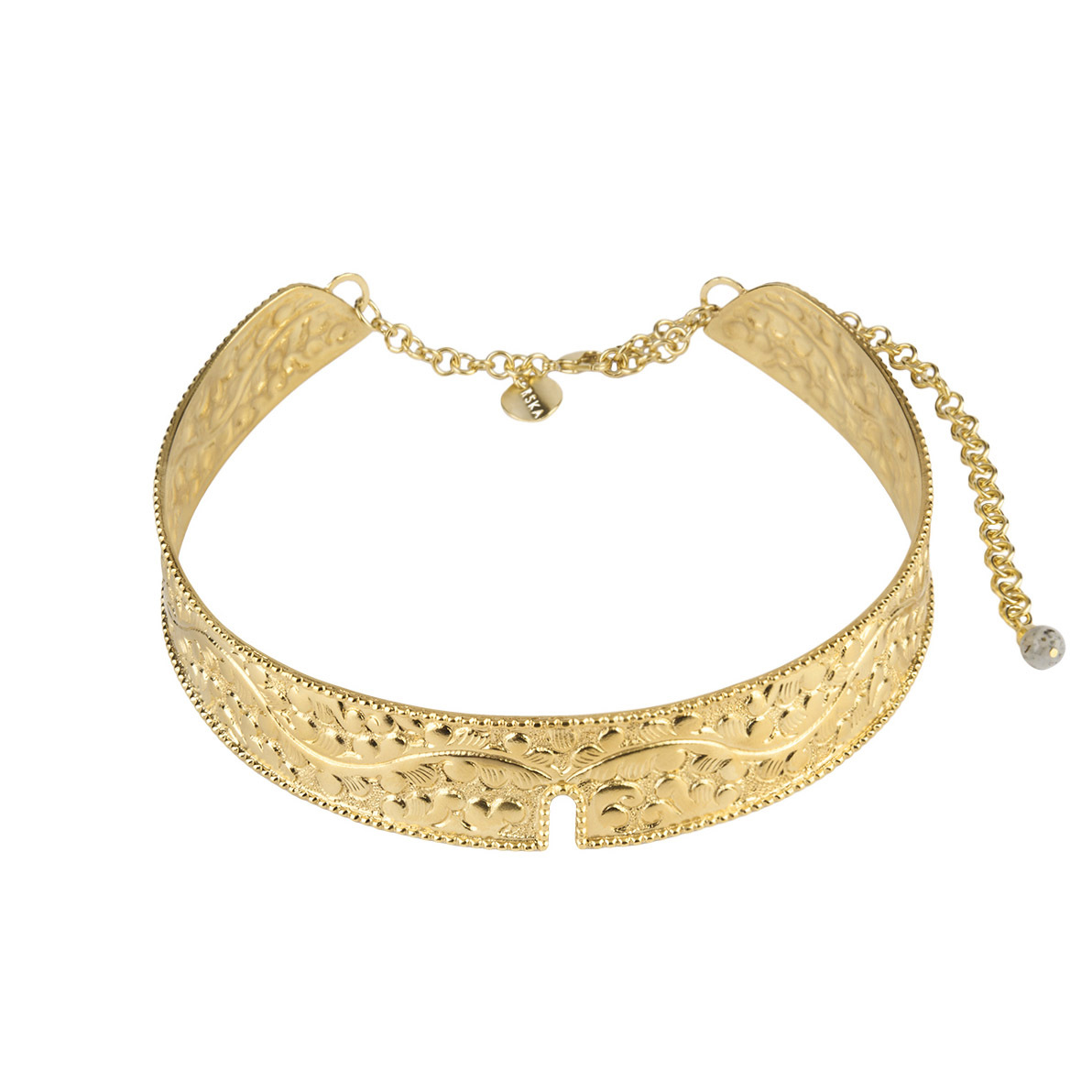
- Suspended labradorite with a diameter of approx. 0.5 cm
- Suspended logo with a diameter of approx. 1 cm
- Approximate weight approx. 45 g
The sky is not the limit
In Nepal, the blue sky, clouds and wind become a symbol of crossing borders - geographical, creative and interpersonal. They remind us that every new path begins where the familiar ends. Nepal was the first step. The first workshop outside of Poland and the first experience of creating together with artisans raised in a completely different tradition. It was there that the dream of creating across borders began to take shape. Returning to the same place after many years is a return to the source of this story and to the people who made that first step the beginning of something greater.
Rigid necklace from the Nepal collection
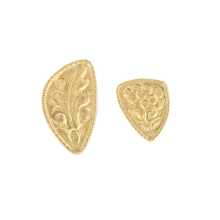
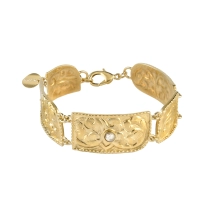
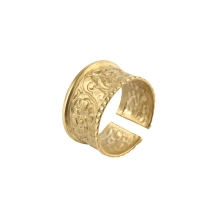
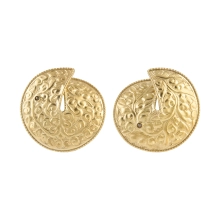
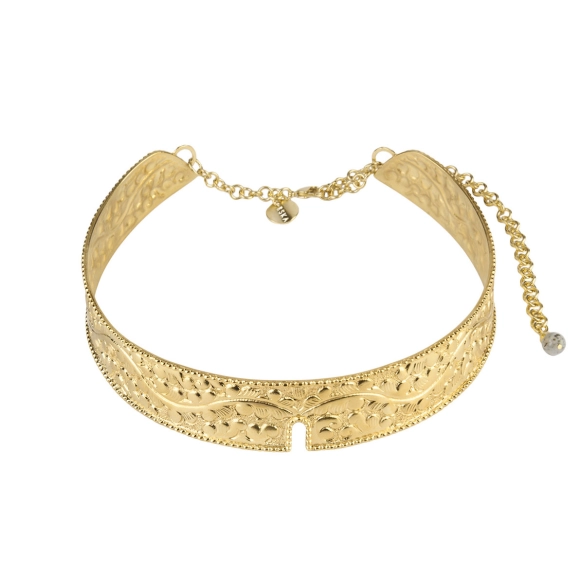
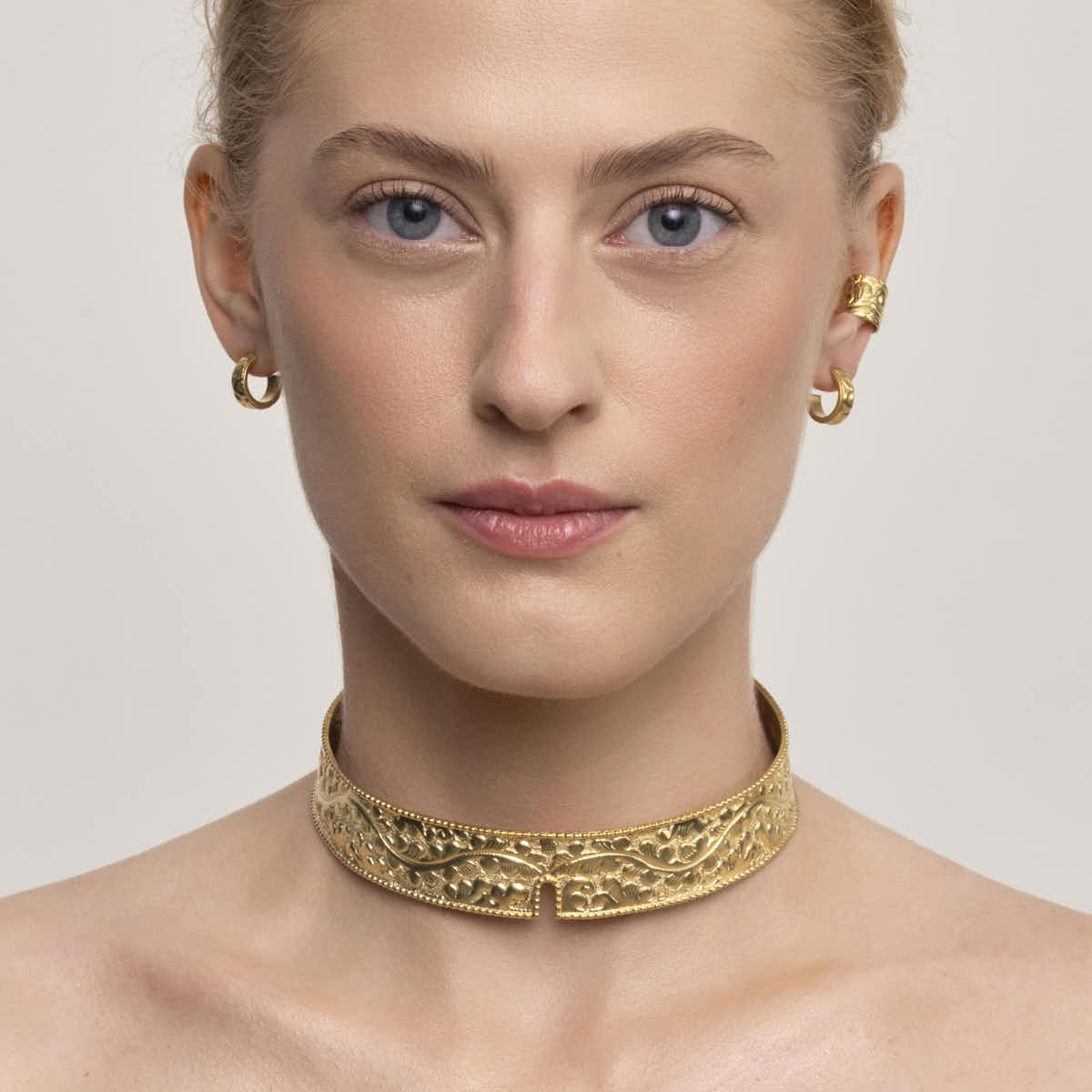
The gold-plated brass necklace has the form of a rigid, geometric collar with a decorative cutout in the center. Its surface is covered with spiraling vines and lotus leaves by master repoussé artists from the Kathmandu Valley. Each piece is handmade, so the arrangement, size, and nature of the ornaments may differ slightly from the pattern shown in the photo. The chain at the clasp allows you to delicately adjust the necklace's position on the neck. A labradorite hanging from its end falls softly on the neck, also adorning the back of the style. Considered a stone of perspective in the Nepal collection, it reminds us that even familiar things can reveal a new dimension when viewed from a different angle.
How are repoussé ornaments created in Nepal?
In the Kathmandu Valley, an ornament is born, strike by strike, millimeter by millimeter. The craftsman works from the underside of a thin sheet of metal, using a hammer and profiled steel punches. He gradually pushes the sheet until a convex relief emerges on the other side. Then he turns the piece over and refines it from the front: deepening the lines, bringing out the details, and giving the design its final character. The metal surface is filled with vines, leaves, and lotus motifs. The plant tendrils symbolize growth, the continuity of life, and rebirth, while the lotus symbolizes purity, transformation, and the path to light. The craftsman draws on the language of ornament developed by previous generations. He retains the meaning of inherited motifs, but leaves his own mark on them. Before the finished piece reaches the ORSKA studio, it spends many hours covering it with intricate decorations. Variations in the force of the strike, the angle of the tool, and the hand gesture ensure that no two reliefs are identical. Each design becomes the creator's personal signature and a fragment of the living tradition of the Kathmandu Valley.