

 add to wish list
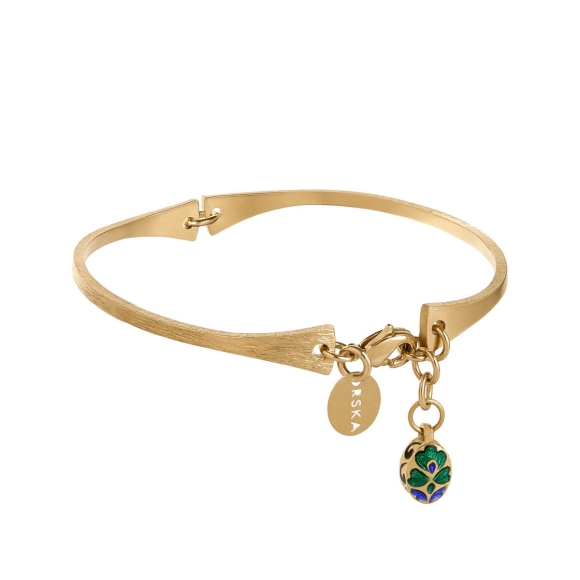
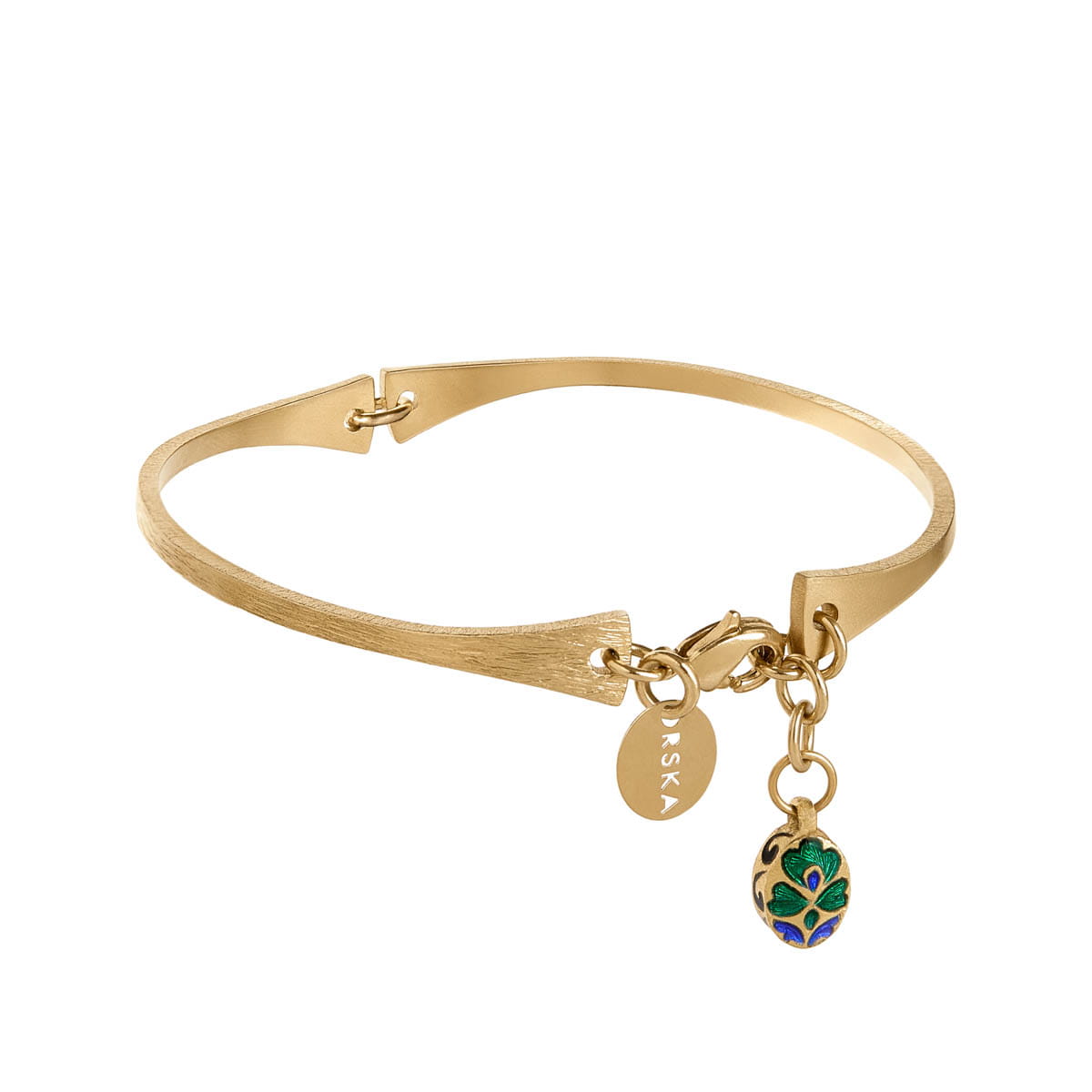
Gold-plated bracelet with a colorful pendant from the Minakari collection
product unavailable
Description
- 70% gold-plated brass + 20% gold-plated silver + 10% enamel
- Width up to approx. 0.5 cm
- Pendant length approx. 1 cm
- Suspended logo approx. 1 cm in diameter
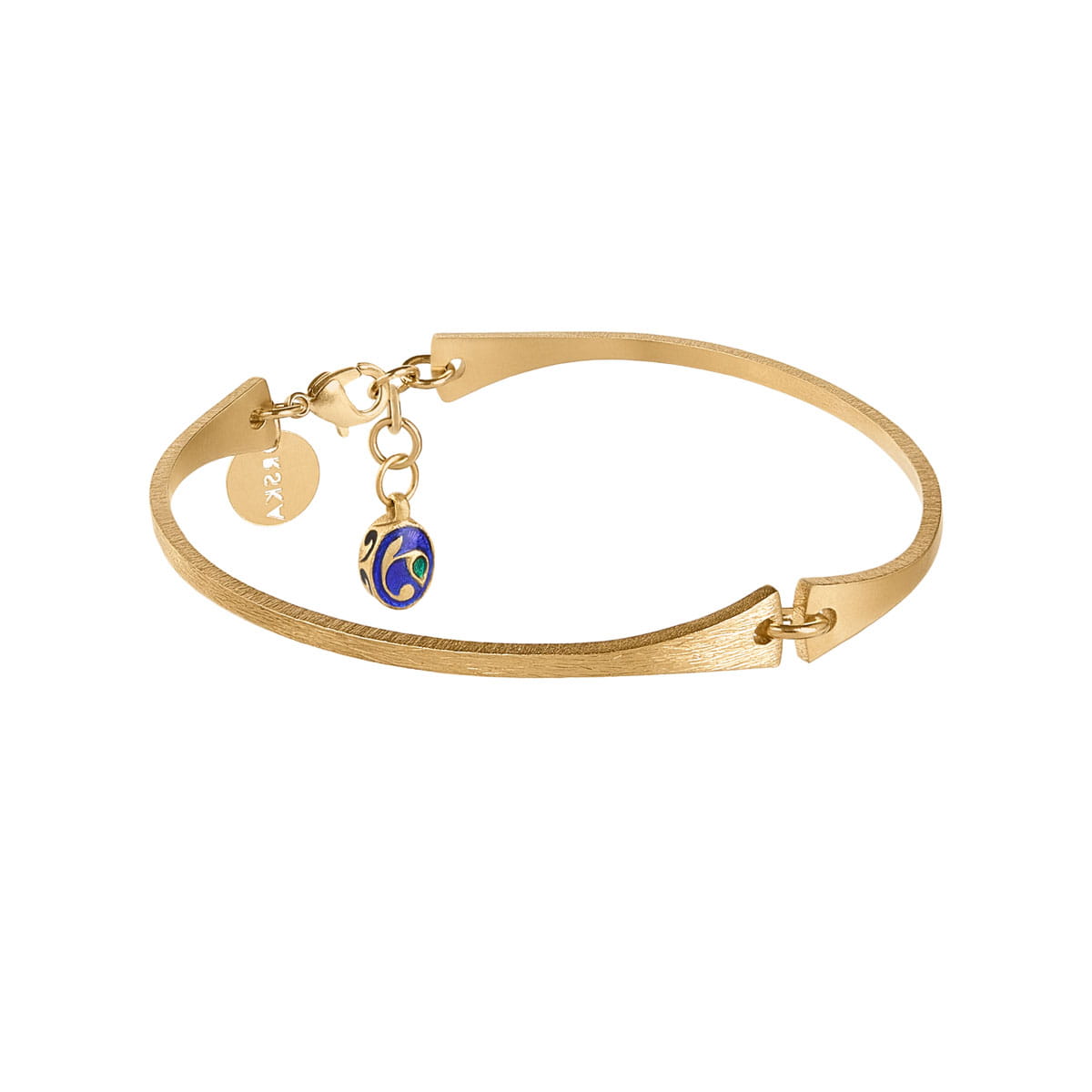
Double-sided jewelry from the Minakari collection – you decide what you want to show
Minakari is a technique, originating in ancient Persia and developed in India, of decorating jewelry with multicolored enamel on both sides – the obverse for the eyes of the world, the reverse for the wearer. This reversibility makes the jewelry reversible and fully flexible. You can wear it with the private side against your skin, keeping your intentions to yourself only. You can reverse it when you want to show off the color and intensity. It's up to you which version you choose today.
Gold-plated bracelet with decorative pendant
This gold-plated silver bracelet was created in the ORSKA studio from two stiff arcs with contrasting surface finishes, connected by a delicate link, creating a light, geometric form. An adjustable extension terminates with a decorative pendant with a colorful pattern. On one side, the pendant features green and blue ornaments arranged in a leaf motif – a symbol of connection, tradition, and continuity. In Indian symbolism, leaves and vines represent a lasting connection with nature and the rhythm of repeating life cycles. The other side is adorned with a floral motif in colored enamel, where green symbolizes harmony and blue represents inner peace. The edges of the pendant are complemented by geometric ornaments in black enamel, giving the entire piece a refined, artistic character. The richly decorated elements were made in a workshop in Rajasthan, which Anna Orska visited during an expedition in search of interesting world crafts.
Minakari - from royal jewels to artistic jewelry
Minakari is an ancient Persian technique of metal decoration, the name of which comes from the words "mina" (sky) and "kari" (work) - literally "sky-colored work". For centuries, this technique has been used to decorate not only jewelry, but also architectural elements of the palaces in Jaipur, furniture, vessels, and figurines of deities. In the Indian and Persian traditions, multi-faceted enamel, decorated on three surfaces: the front, back, and edges, was reserved exclusively for royal jewels and special, ceremonial objects. Today, such jewelry is often classified as artistic crafts. Our Minakari collection continues this tradition, offering jewelry decorated at 360 degrees, where every detail is a testament to human precision and patience. It's not just a decoration—it's a piece of craftsmanship you can carry with you.
How is minakari made?
The work begins with preparing silver elements, which are then hand-engraved. Colored enamel is applied to the resulting recesses, and each shade is set by a separate firing at the appropriate temperature. After each stage, the jewelry is cleaned and polished. This process is repeated many times until the colors gain depth and durability. Despite the delicate final effect, minakari requires exceptional precision, patience, and complete focus. More information about this technique and Anna Orska's design journey to India can be found in the "Crafts of the World" section.


