

 add to wish list
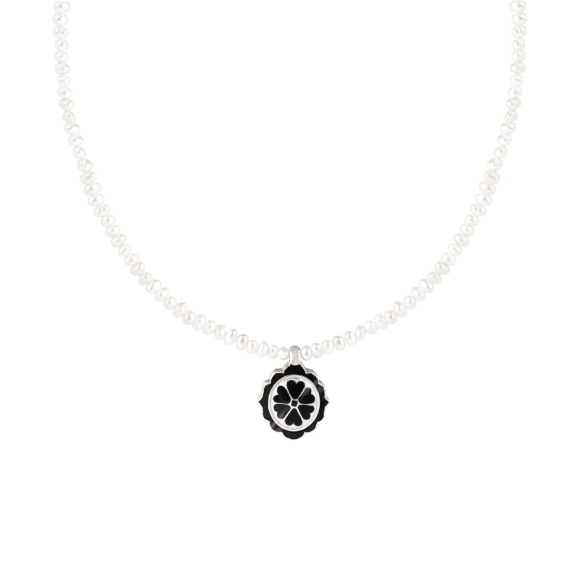
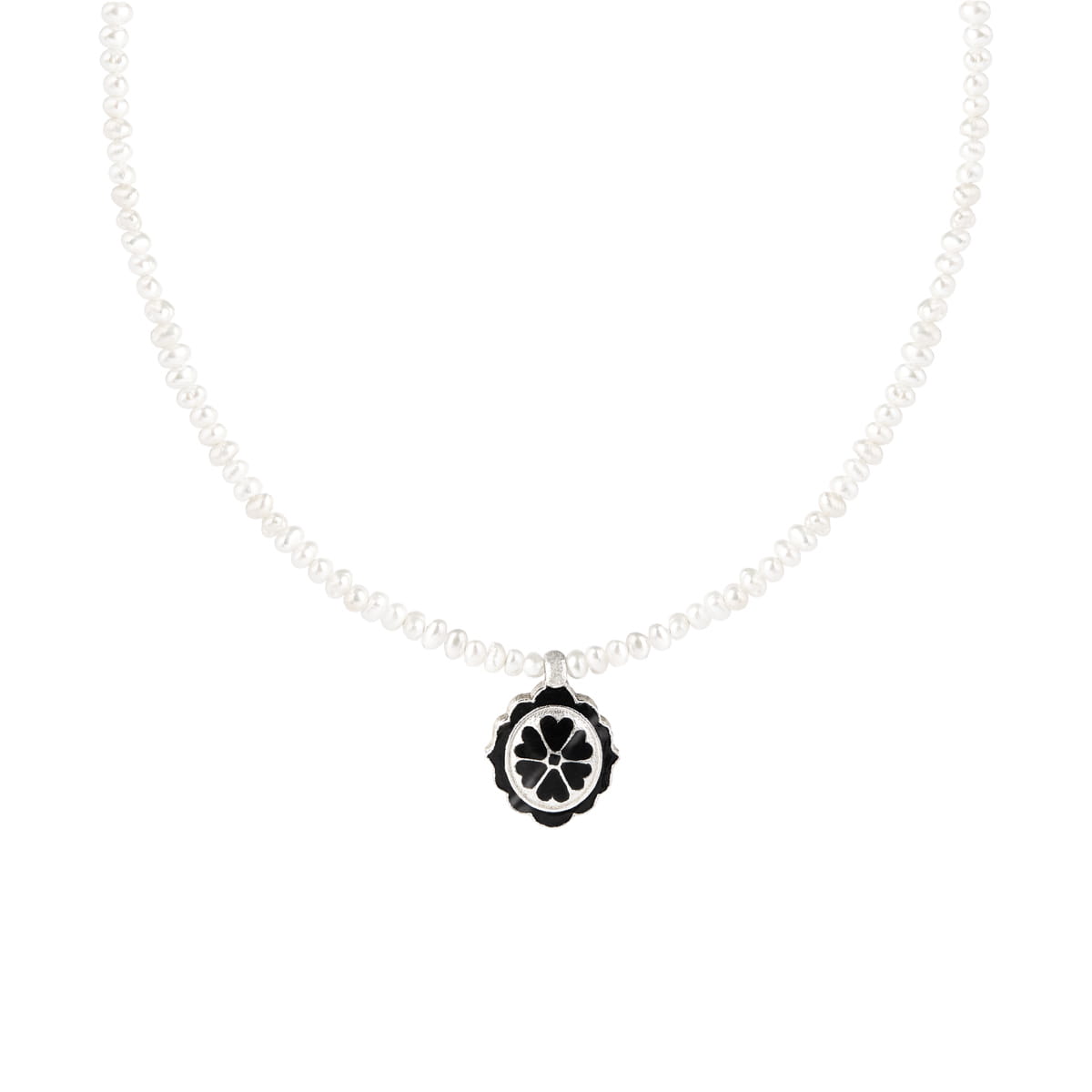
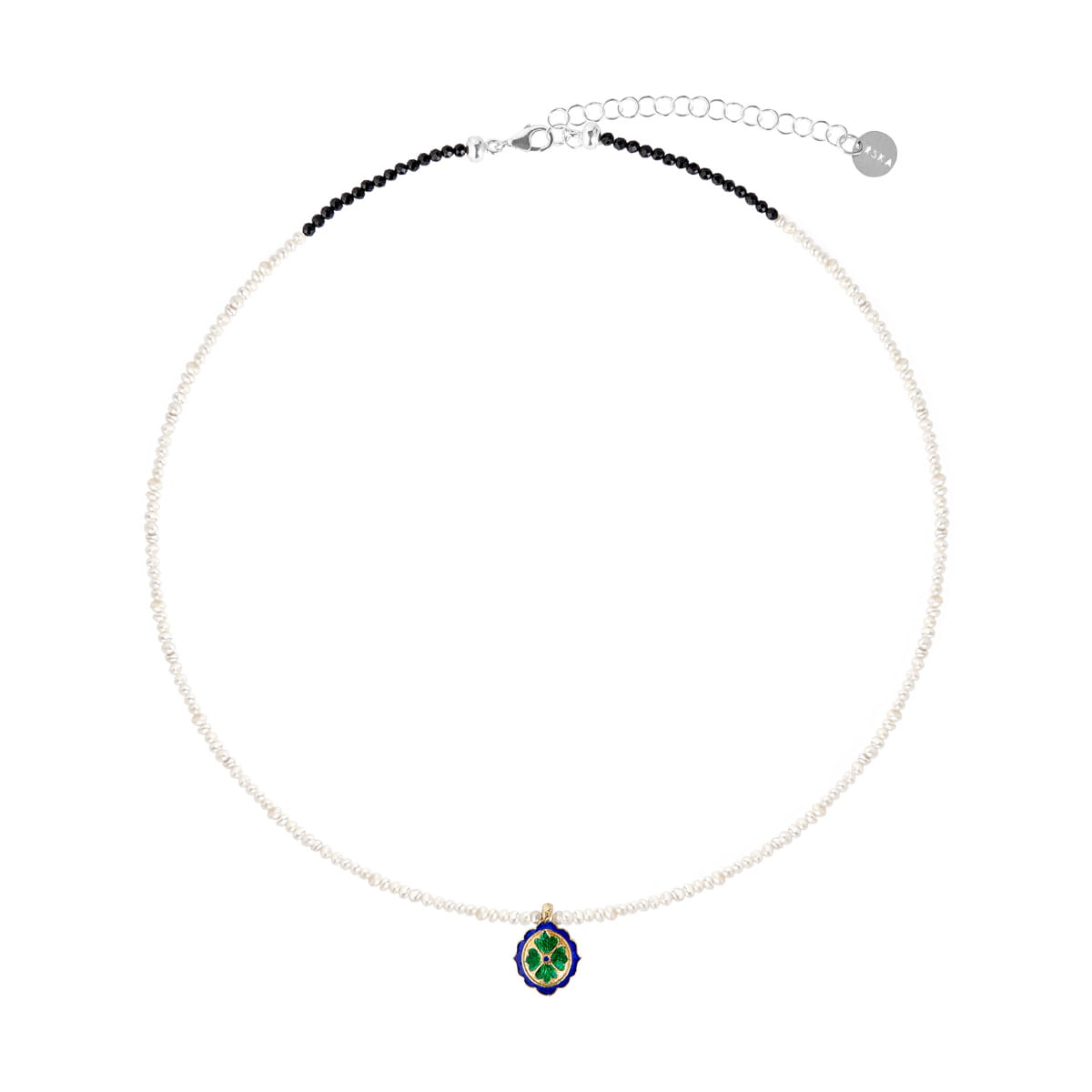
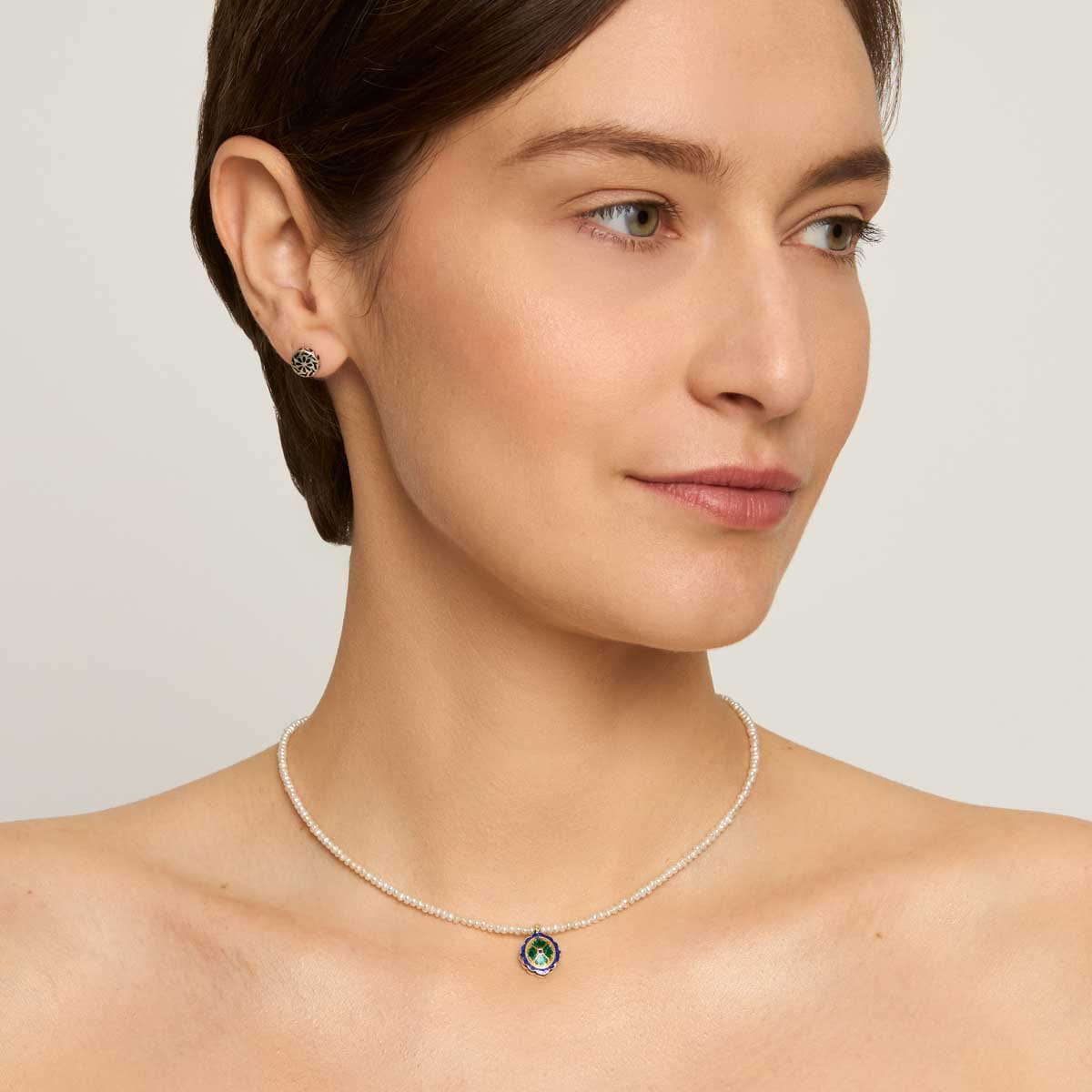
Pearl necklace with a double-sided pendant from the Minakari collection
product unavailable
Description
- 20% silver - partially gold-plated + 10% enamel + 40% pearl + 30% onyx
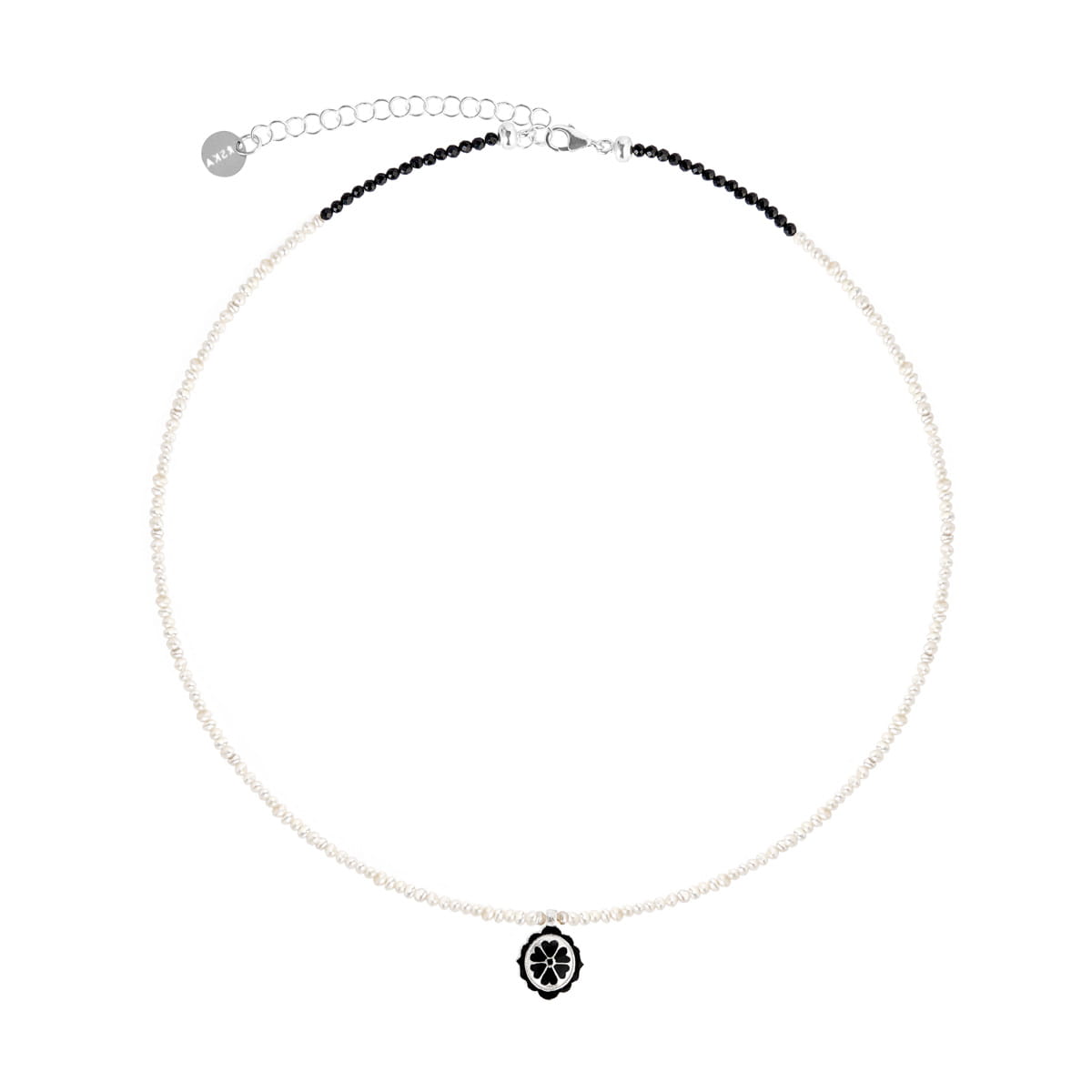
- Necklace length with clasp approx. 42 cm + 6 cm extension
- Pendant dimensions approx. 1 x 2.5 cm
- Suspended molded logo approx. 1 cm in diameter
Jewelry from the Minakari Collection - You decide what you show
In India, jewelry often had two sides: one adorned with gems, the other with minakari. This richer, ornate part often remained closer to the skin, invisible - in keeping with the belief that true beauty doesn't have to be for the eyes, it is enough for the heart. The Minakari jewelry collection continues this tradition, but puts it in your hands. The delicate silver elements are decorated on both sides. You decide which side you show the world and which you keep to yourself. By reversing your jewelry, you change its meaning: one day you wear it as a statement, the next – as an intimate secret. Minakari bracelets, necklaces, earrings, and rings adapt to you, not the other way around.
Necklace with a double-sided pendant from the Minakari collection
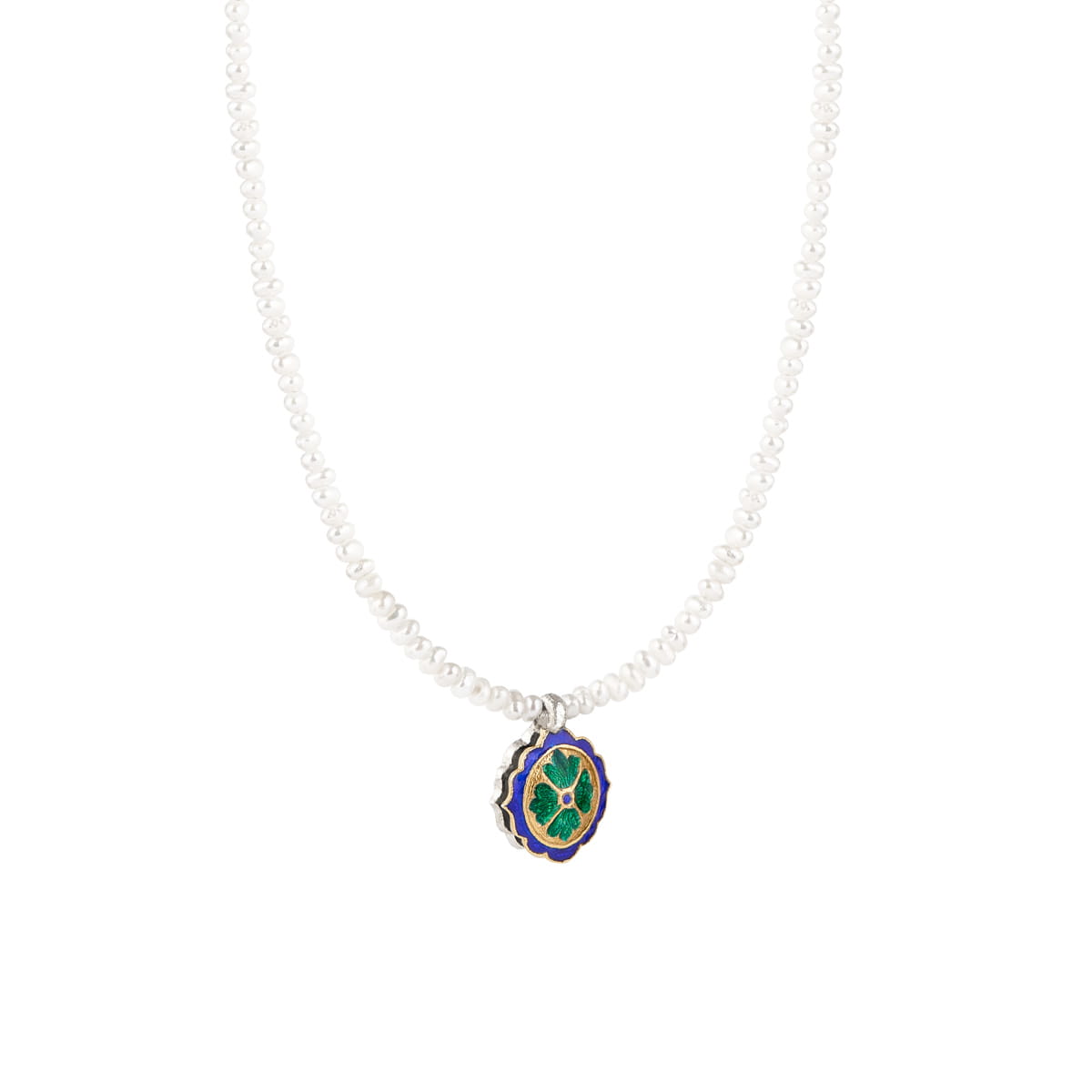
The necklace was crafted in the ORSKA studio from tiny pearls, complemented at the necklace's end with faceted black onyxes. The string of stones is adorned with a double-sided silver pendant placed centrally. One side is elegant, subtle, and subdued – adorned with a black floral rosette. The other side features the same ornament, but painted in blue-green tones, and the silver on this part of the pendant is partially gold-plated, further highlighting the contrasting patterns and giving them a warm glow. The necklace has an additional silver extension with a logo at the end, which allows for length adjustment.
How is minakari made?
The name minakari comes from the Persian words "mina" (sky) and "kari" (work), which together mean "sky-colored work." Minakari is an ancient Persian technique of decorating metal using colored enamel. Engraved gold or silver surfaces are covered with mineral glazes and then fired in a kiln, which permanently sets the patterns and gives them intense, deep colors. Since the 16th century, it has been present in India, where it was further developed and refined (even more vibrant colors and more elaborate patterns). The decorative motifs are rich in symbolism – geometric forms and patterns inspired by nature dominate. For cultural reasons, human figures are not depicted. Minakari is layered. The colors are not applied simultaneously; each layer of enamel is fired separately in the kiln. This allows subtle color transitions to be visible beneath the surface, giving the patterns depth and a sense of movement. This makes the minakari "live" in the light, subtly changing depending on the viewing angle.


