
 add to wish list
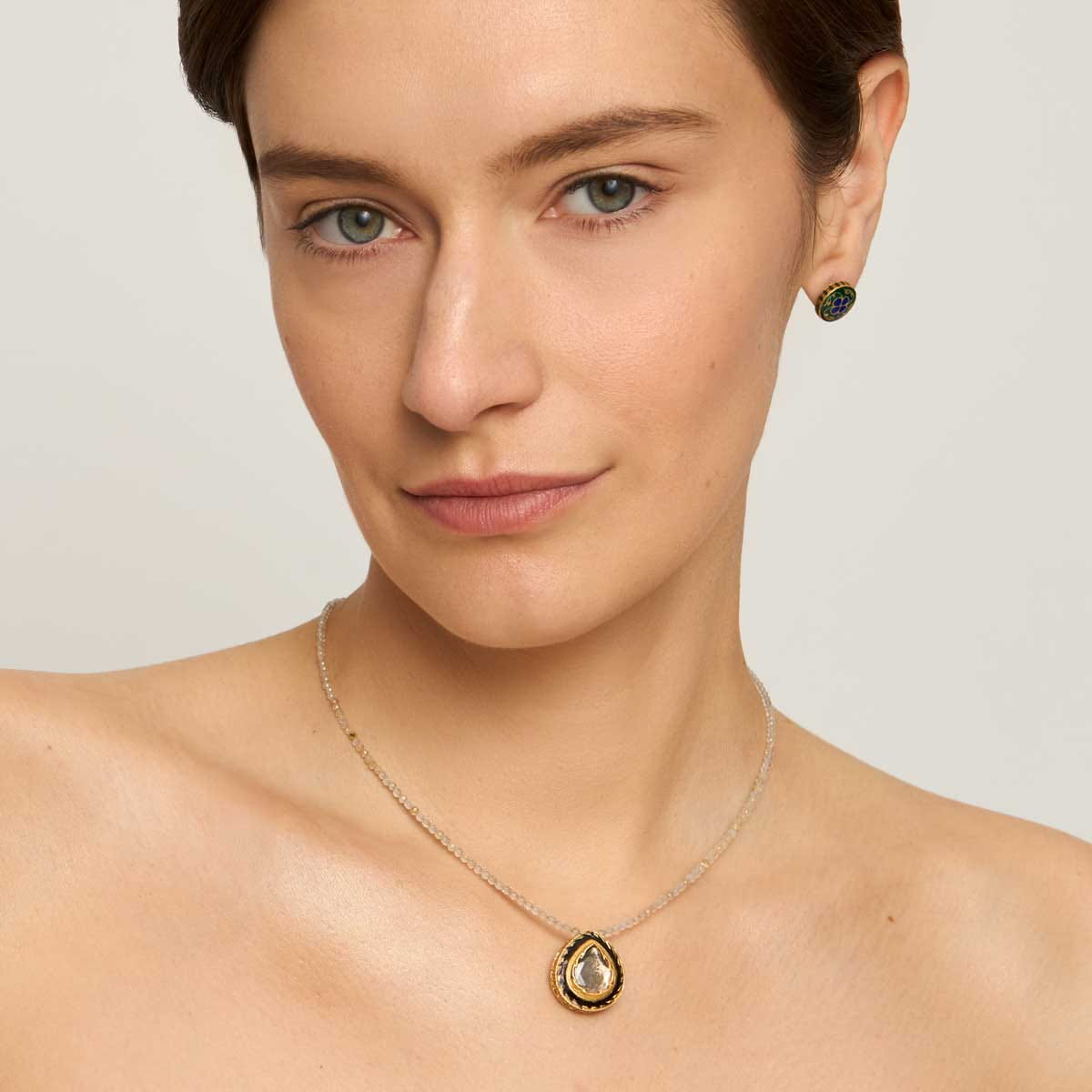
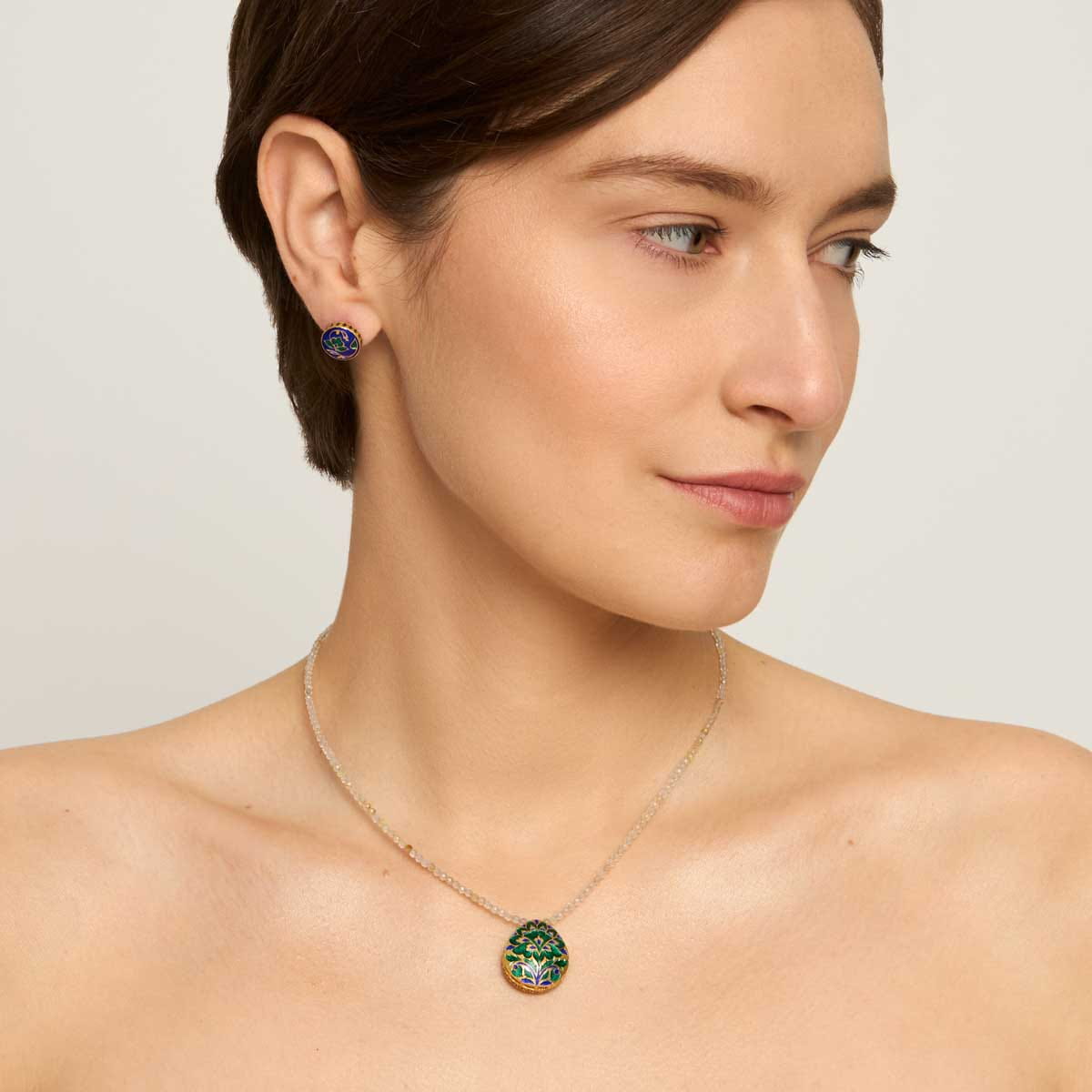
Necklace with a pendant on a string of rutile quartz from the Minakari collection
product unavailable
Description
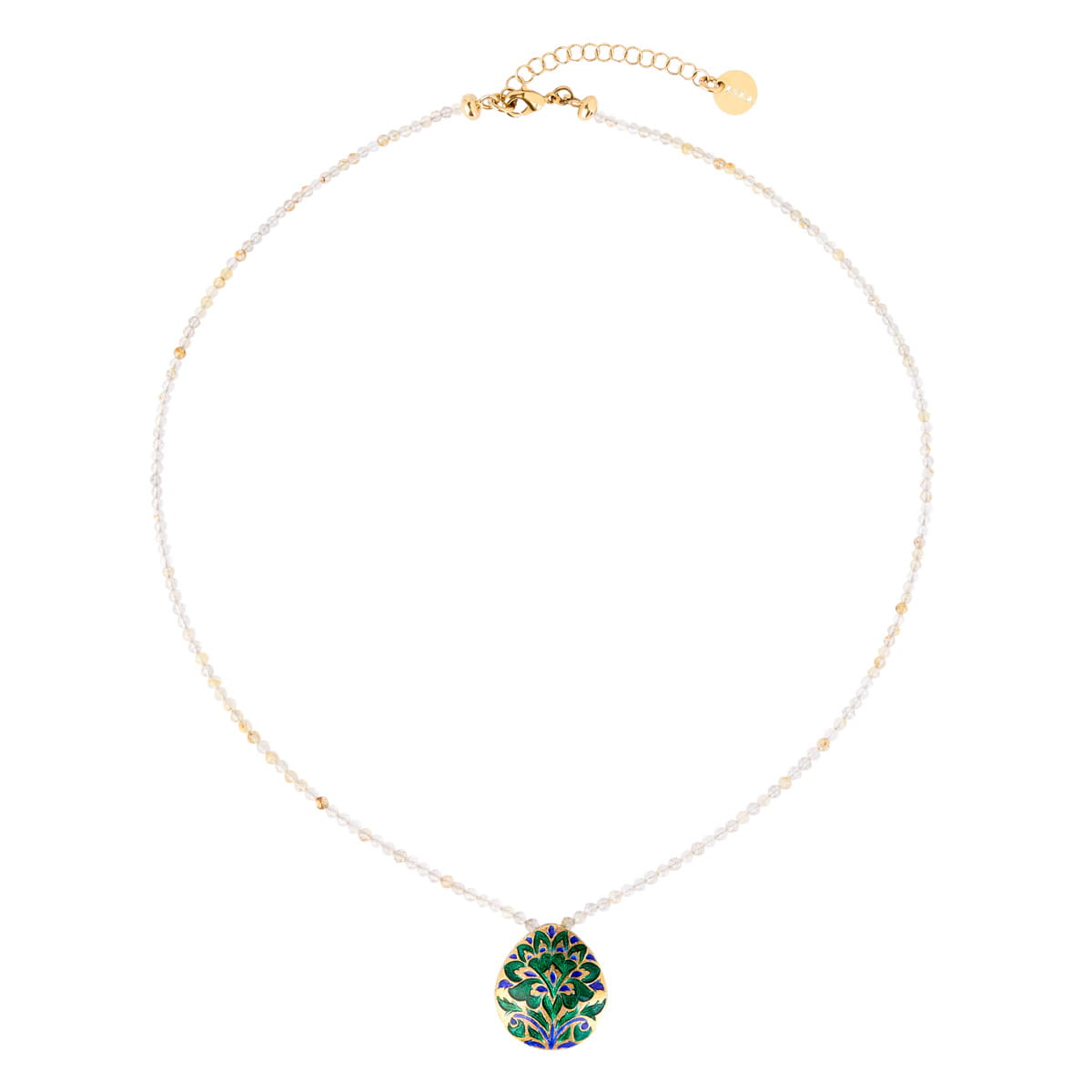
- 50% silver - partially gold-plated + 10% enamel + 30% rutile quartz + 10% kundan glass
- Necklace length with clasp approx. 43 cm
- Additional extension approx. 4.5 cm
- Pendant dimensions approx. 2 cm x 2 cm
- Company logo approx. 1 cm in diameter
Minakari – two sides, full of meaning
In traditional minakari, what is most precious doesn't have to be visible. In India, it is believed that true beauty doesn't have to be visible, it is enough to be close to the heart. The Minakari collection draws on this idea, but puts it in your hands. Made in Rajasthan from enameled, engraved silver, it is double-sided, so it gives you a choice. You decide which side you make visible and which side secret; What you show and what you keep. Depending on the day, your mood, and how much you want to be seen.
Short necklace with rutile quartz and a teardrop-shaped pendant
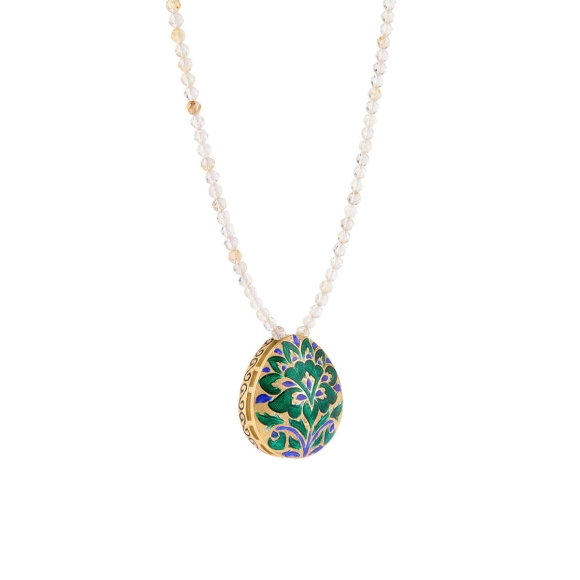
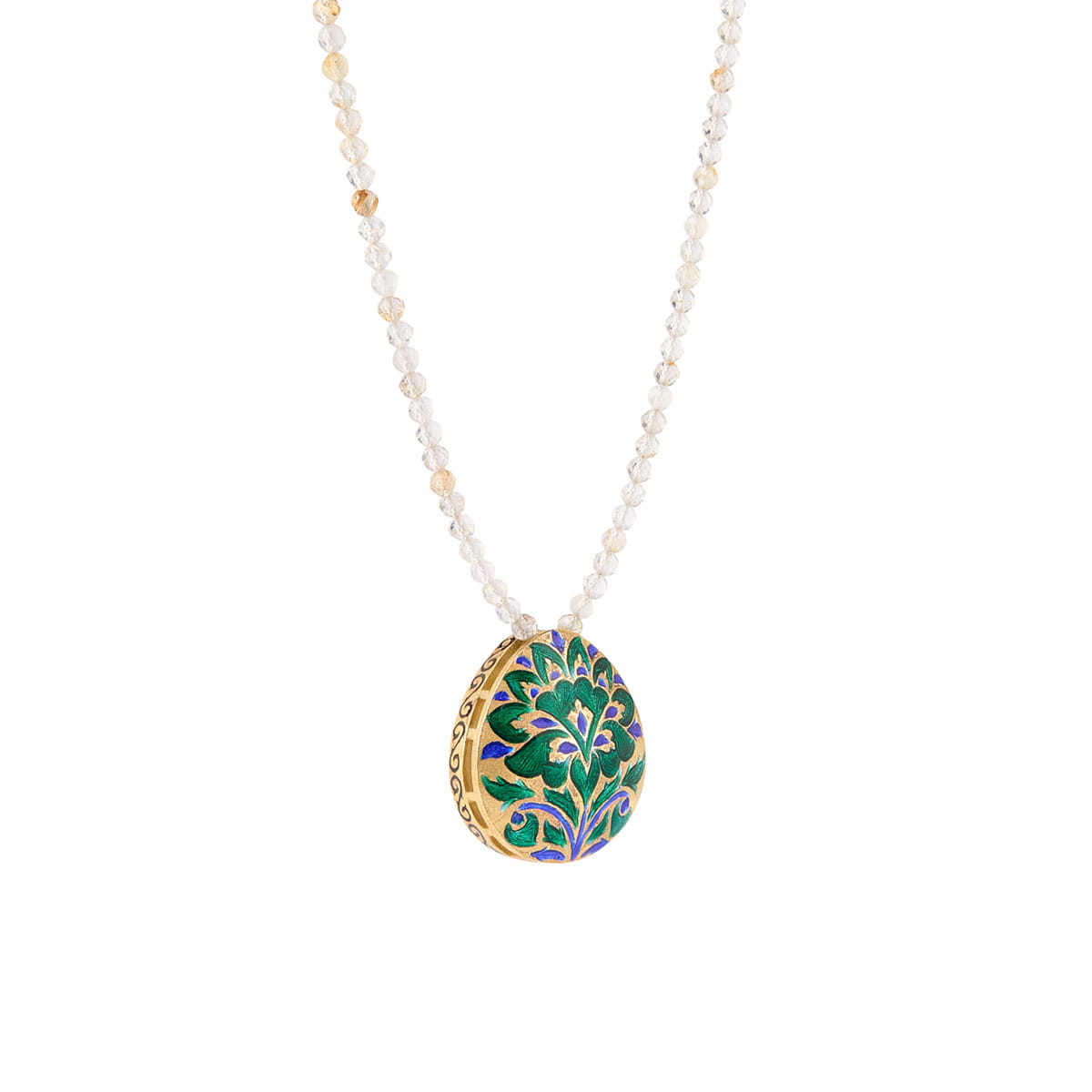
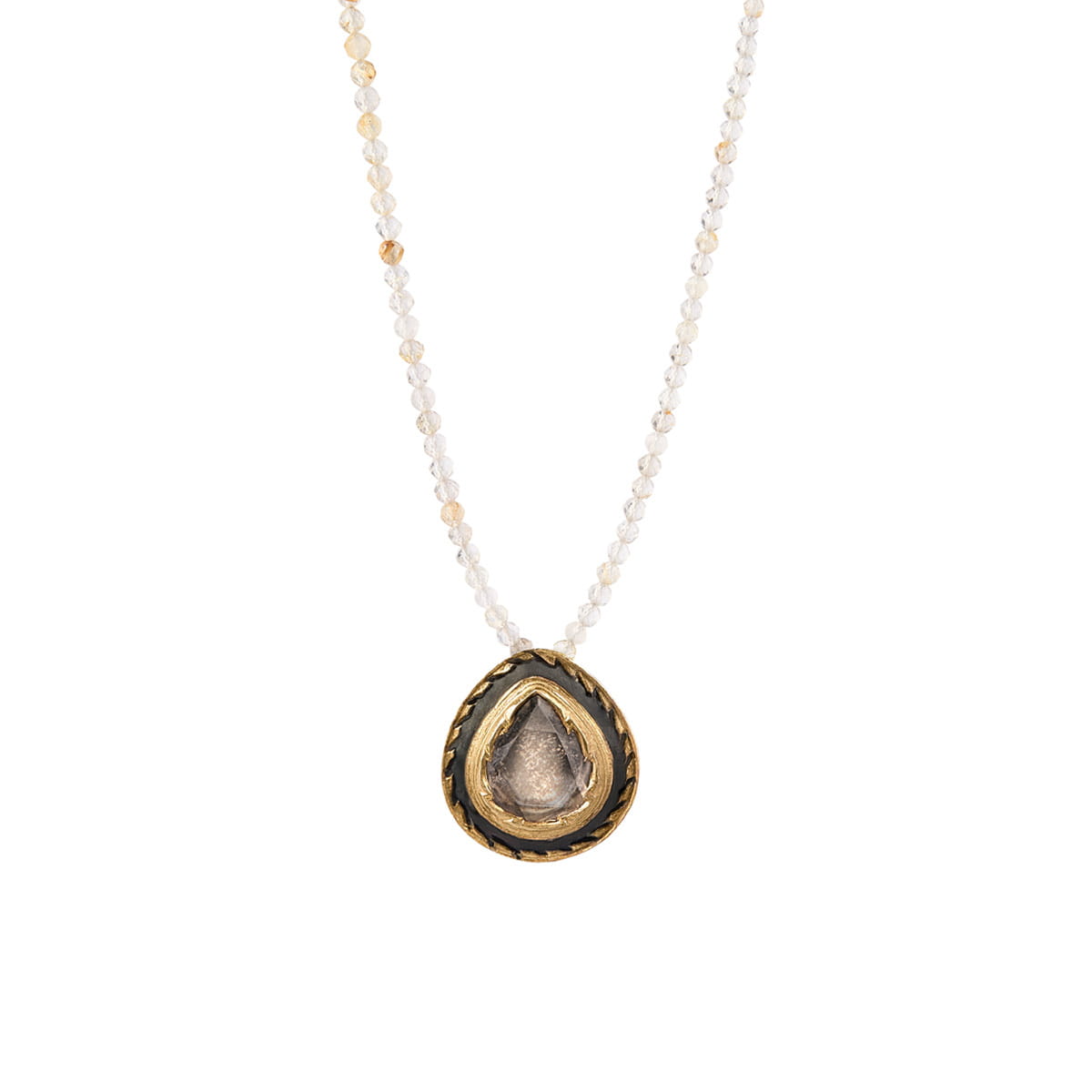
This short necklace on a string of rutile quartz features a teardrop-shaped pendant. Rutile quartz is a unique variety of mineral, characterized by delicate, needle-like inclusions of rutile, which create warm, honey-colored lines in the milky, subtly opalescent stone. These natural structures resemble rays of sunlight trapped within the mineral. The double-sided teardrop-shaped pendant allows for a variety of styling. One side is adorned with transparent kundan glass, high-quality Indian glass set in gold-plated silver frames and complemented by black enamel details. The other is richly embellished with a floral pattern in shades of green and blue, handcrafted by local artisans in Rajasthan using the traditional minakari technique. The edges of the pendant are complemented by an ornament of black vines, emphasizing its artistic and symbolic character.
Stunning Minakari, or Sky-Colored Work
Minakari is an ancient Persian technique of decorating metal with colored enamel. Its name comes from the words "mina" (sky) and "kari" (work), which together mean "sky-colored work." Decorations created using this technique have deep cultural significance in India, Iran, and Pakistan, where they have been a status symbol for centuries. Our collection uses elements created in Rajasthan, in the city of Jaipur, where minakari is cultivated in small family workshops that pass down knowledge from generation to generation. In Indian tradition, the reverse side of jewelry—the side that touches the skin—was a special place. This is where personal symbols were placed, which had power only for the owner. In ancient times, lovers' initials, dates of important events, family or spiritual symbols were hidden under a layer of minakari—creating a personalized "code" that only the owner could understand. The bride often saw the reverse of her wedding jewelry only on the day of the ceremony - this was to symbolize the idea: "Beauty should be for yourself first, not for others." If you are interested in this technique and want to learn more, visit the "Crafts of the World" tab.


